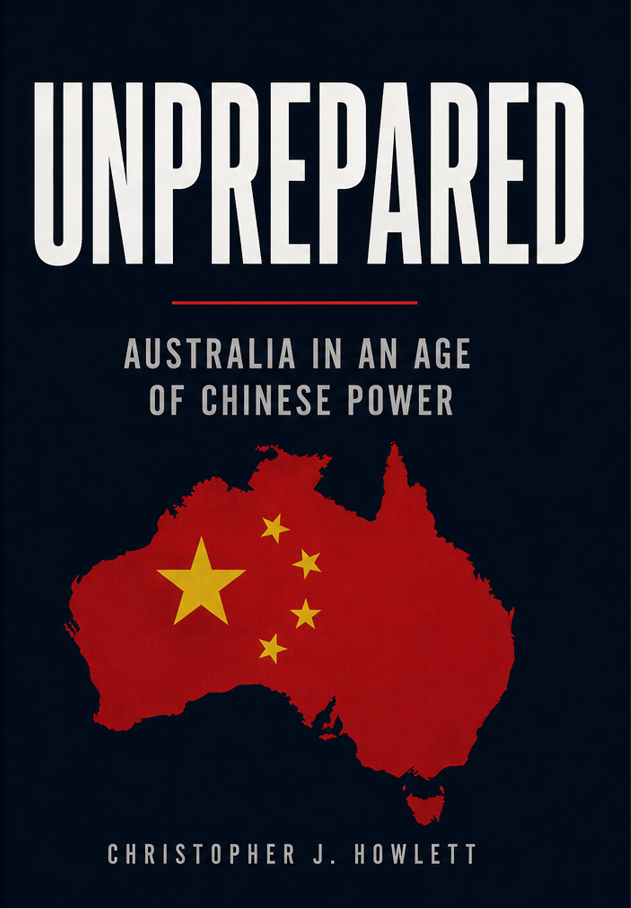
Australia has drifted into a more dangerous world, unprepared
The assumptions the country has relied on for decades are failing at once. This is the most dangerous strategic period since 1945, and Australia has walked into it badly unready. The first in a weekly series drawn from Unprepared.

Australia is entering the most dangerous strategic period it has faced since the Second World War. That is not because war with China is inevitable, nor because every crisis in the world leads directly back to Canberra. It is because the assumptions on which Australia has relied for decades are beginning to fail all at once. Wars that many thought would be short have become long and grinding. Allies are stretched across multiple theatres. Economic coercion has become a normal instrument of statecraft. Cheap drones, missiles, cyber attacks, and maritime disruption are changing the character of war faster than many Western governments seem willing to admit. The world is becoming harder, sharper, and less forgiving. Australia has drifted into that world badly unprepared.
One does not have to look far for evidence. Ukraine has now entered its fifth year of war, still fighting, still dependent on outside support, and still a reminder that democratic sympathy and military capacity are not the same thing. At the same time, the United States is deeply engaged in the war with Iran, while many of its traditional allies have been hesitant or unwilling to commit themselves militarily. That does not mean alliances no longer matter. It means something more uncomfortable: even powerful alliances have limits. A country in Australia's position cannot build its future on the assumption that others will always be willing, able, and available to carry the burden of its security.
That is the starting point.
The problem is not just that the world has become more dangerous. It is that Australia has drifted into this more dangerous world in a condition of profound unpreparedness. Militarily, it lacks mass, readiness, resilience, and strategic depth. Industrially, it has hollowed out much of the productive base required to sustain national power in an age of prolonged competition. Economically, it has accumulated vulnerabilities that constrain freedom of action at precisely the moment freedom of action matters most. In energy, despite extraordinary natural abundance, it remains exposed in fuel security, refining capacity, and the wider question of sovereign energy resilience. Australia remains a wealthy country, but wealth on its own does not amount to preparedness. A country can be rich and still dangerously fragile.
The organising challenge
The organising challenge of this new era is the rise of Chinese power. This is not an argument that China is the only threat Australia faces, nor that every strategic problem in the Indo-Pacific can be reduced to Beijing. The claim is narrower, and more serious: China is the only state that combines the military capability, strategic ambition, economic leverage, geographic reach, political will, and revisionist purpose necessary to pose a fundamental long-term challenge to Australian sovereignty. No other power presents that combination. Indonesia matters enormously, but not as an adversary in the same sense. India is a rising power, but for the foreseeable future a partner rather than a threat. Russia remains dangerous, especially in nuclear terms, but is distant from Australia and lacks the same regional leverage. North Korea is volatile and destructive, but not a plausible organising challenge for Australian grand strategy. Only China meets every condition at once.
That claim rests not on rhetoric, but on evidence. The People's Liberation Army is carrying out the largest military buildup since 1945. Its navy is now the largest in the world by hull count and continues to expand in size, complexity, and reach. Its missile forces have transformed the military balance across the Western Pacific. Its nuclear arsenal is growing at extraordinary speed. Its cyber, space, and information-warfare capabilities show that Beijing thinks about power in a much broader way than many Western strategists once assumed. This buildup has not been accompanied by strategic reassurance. It has unfolded alongside coercion, opacity, militarisation in the South China Sea, escalating pressure on Taiwan, growing influence in the Pacific Islands, and a demonstrated willingness to weaponise economic interdependence for political ends.

Coercion before attack
Australia has already seen enough to understand the pattern. Beijing's trade coercion campaign after Canberra called for an inquiry into the origins of COVID-19 was not an isolated dispute over tariffs and commodities. It was a strategic demonstration. Dependence was turned into leverage; leverage into punishment; punishment into a lesson. The message was plain enough: a country that relies too heavily on China economically can be made to pay for political disobedience. No missiles were required. No invasion was necessary. Sovereignty can be narrowed long before it is formally abolished.
Sovereignty can be narrowed long before it is formally abolished.
This is one of the central arguments here. The gravest danger to Australia may not arrive first in the form of outright attack. It may arrive through coercion, pressure, economic strangulation, political intimidation, cyber disruption, or the strategic manipulation of dependence. A country does not cease to be free only when its territory is occupied. It can also cease to be truly free when its choices are constrained by fear of retaliation, when its supply lines are exposed, when its leaders know that certain decisions carry intolerable economic or strategic costs, and when its national life becomes contingent on the restraint of a stronger and increasingly hostile power.
Yet the problem lies not only in the growth of Chinese power. It lies also in the habits of mind Australia formed in an easier period. For decades, Australian strategic thinking was shaped by the belief that serious conflict remained comfortably beyond the horizon. Defence planning proceeded slowly. Industrial capability was allowed to erode. Fuel vulnerability was tolerated. Strategic reserves remained shallow. Dependence on foreign manufacturing deepened. Economic debate treated efficiency as an overriding good even where efficiency created fragility. Governments and oppositions alike continued to speak the language of security while presiding over a country that had become, in many of the foundations of national power, progressively less secure.
Wealth is not preparedness
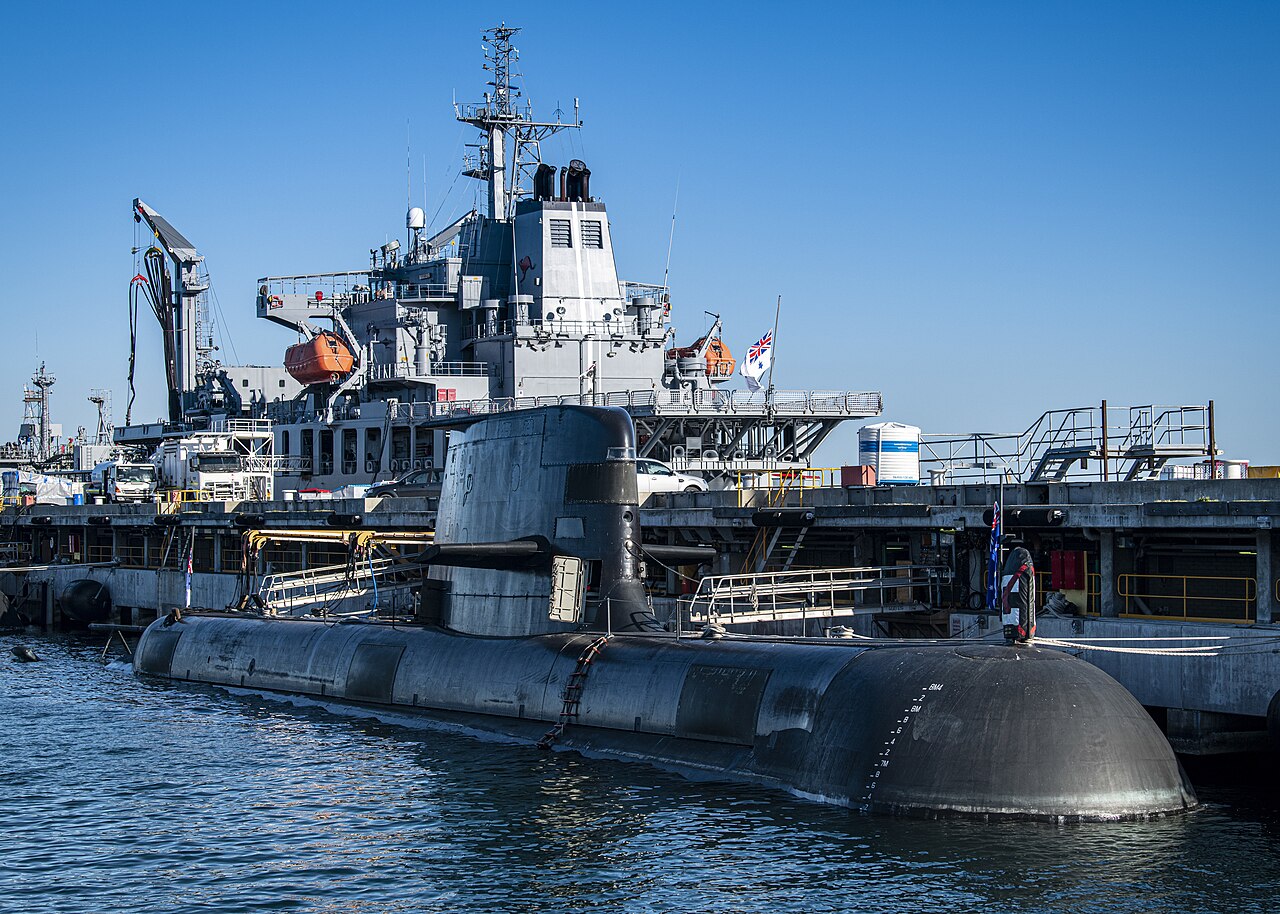
The result is a peculiar and dangerous contradiction. Australia is, by any ordinary measure, a prosperous nation with immense natural wealth, strong institutions, a highly educated population, and enviable geographic advantages. Yet in strategic terms it is increasingly brittle. It exports energy but remains insecure in fuel. It is rich in minerals but has allowed much of the higher-value industrial chain to lie elsewhere. It spends substantial sums on defence yet struggles to generate the force structure, readiness, and self-sustaining depth appropriate to its circumstances. It talks often about resilience while depending heavily on exposed maritime trade routes, imported manufactures, foreign refining, and external security guarantees. The country has resources, but not enough sovereignty over the systems that turn resources into enduring national power.

A country can be rich and still dangerously fragile.
The passing of primacy
That condition cannot be understood apart from the larger transformation in the international system. The period of unchallenged American primacy is passing. That does not mean the United States is collapsing, nor does it mean the alliance has ceased to matter. On the contrary, the United States remains the most powerful force for stability in the world and Australia's alliance with it remains indispensable. But an indispensable alliance is not the same thing as a sufficient national strategy. The United States is increasingly stretched across multiple theatres and obligations. It must think first in terms of American priorities, as any great power would. It may help Australia in a crisis. It may help decisively. But Australia cannot build its future on the assumption of automatic rescue, perfect availability, or uncontested American dominance in Asia. Mature alliances require capable partners, not dependants.

This is why preparedness matters so much. The question is not whether Australia can become a superpower. It cannot. Nor is the question whether Australia can match China in scale, mass, or resources. It cannot. The question is whether Australia can become strong enough, resilient enough, and self-directed enough to make coercion prohibitively costly, to sustain itself in a period of severe disruption, to act with greater strategic independence, and to contribute meaningfully to a regional balance that prevents domination by any single hostile power. That is a realistic ambition. In the world now taking shape, it is also a necessary one.
Diagnosis and programme
The argument is that Australia must undertake a deliberate national transformation if it is to remain a sovereign, prosperous, and free country through the middle of the twenty-first century and beyond. That transformation must begin with a clear recognition of the threat, but it cannot end there. It must also grapple with Australia's own condition. A country that is militarily thin, industrially hollowed, economically exposed, and energy insecure cannot simply announce strategic seriousness into existence. It must rebuild the foundations of power. It must generate the fiscal capacity to pay for defence and resilience. It must recover industrial competence. It must secure energy abundance not merely as a commercial asset but as a strategic one. It must reduce dangerous dependencies. It must think seriously about population, family formation, and the long-term demographic basis of national strength. In short, it must become less complacent, less fragile, and more capable.
That is why what follows is both a diagnosis and a programme. It begins with the external challenge, because strategy starts with reality rather than wishful thinking. It then turns to Australia's own vulnerabilities, because no threat assessment is meaningful without an honest assessment of national condition. From there it sets out the economic, industrial, energy, military, and demographic measures required to turn Australia from a strategically exposed middle-sized state into a far more formidable regional power. The purpose is not to indulge in fantasy, nor to present a shopping list detached from cost and trade-off. It is to show that Australia possesses, within its own endowments and possibilities, the means to become far stronger than it is. The country is not doomed by geography, nor by demography, nor by poverty. It is constrained chiefly by drift, timidity, and a failure to align national policy with strategic reality.
The timing matters. Strategic problems of this scale cannot be solved quickly. Defence capability takes years to build. Industrial ecosystems take longer still. Demographic renewal takes decades. The period between now and the mid-2030s is therefore critical. It is precisely the wrong time for a country in Australia's position to go on assuming that the world will remain permissive while it deliberates at leisure. Delay is not neutral. Delay means entering a harsher era with fewer options, weaker capacity, and more leverage in the hands of others. Delay makes every eventual remedy more expensive and less likely to succeed.
The argument is therefore simple, though not easy. Australia faces a strategic challenge more serious than anything it has confronted in generations. China is the organising problem around which that challenge must be understood. Australia, in its current state, is fundamentally unprepared for the world that is emerging. But it remains rich enough, free enough, and favourably placed enough to change course. Whether it does so will depend less on fate than on political will: on whether Australians are prepared to think clearly about power again, to distinguish comfort from security, and to accept that sovereignty in the twenty-first century must be built and maintained, not merely inherited.
Sovereignty in the twenty-first century must be built and maintained, not merely inherited.
What follows is an argument for that reconstruction. It begins where any serious strategy must begin, not with what Australia would prefer the world to be, but with the world as it actually is. The first chapter sets out that world: protracted wars, stretched allies, contested sea lanes, and coercion as a routine instrument of statecraft.
Next in the series: the age of strategic comfort is over.