Federal Coalition vows to scrap national EV subsidy, along with home battery rebates and other green stuff
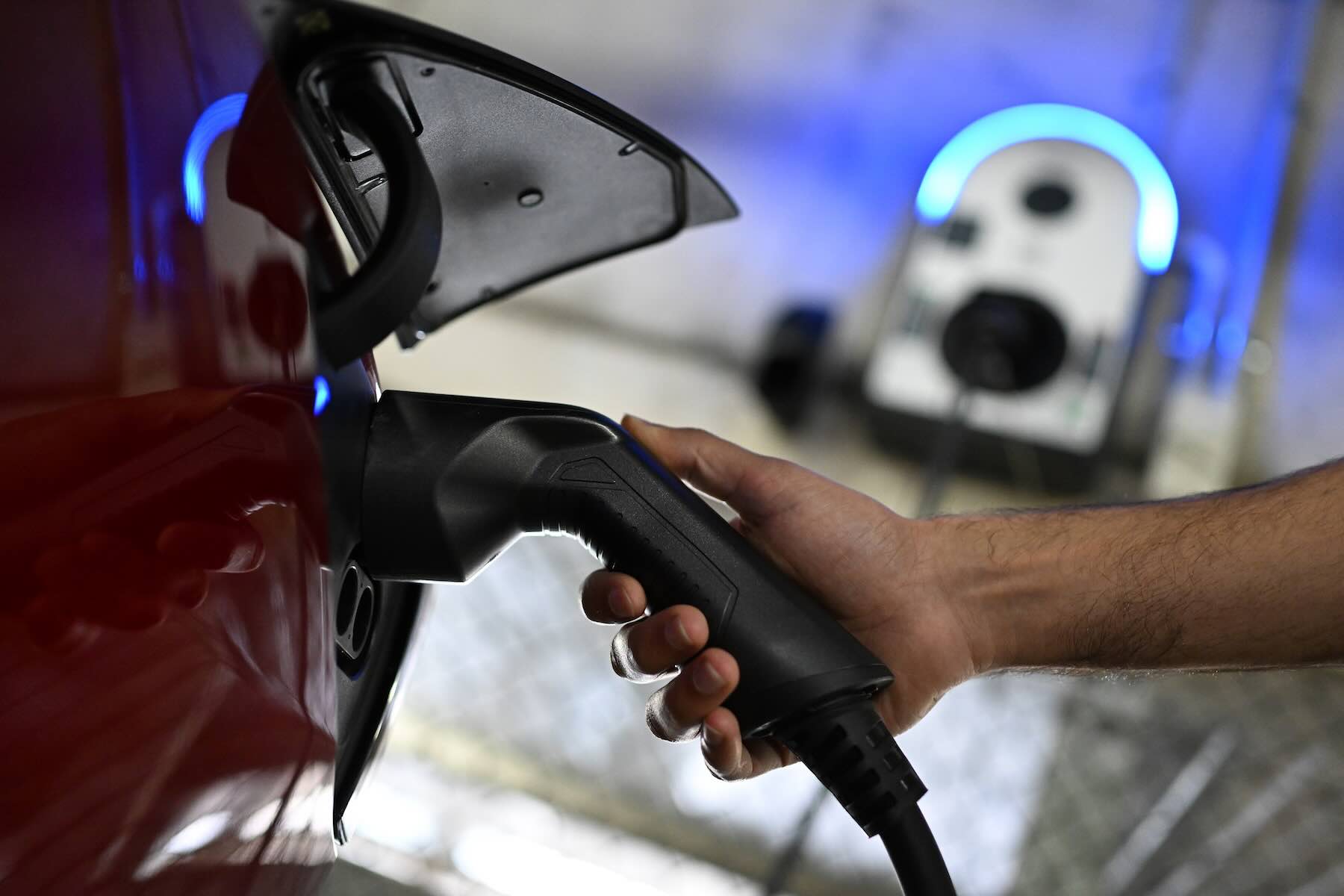
The Coalition has committed to scrapping the federal EV subsidy, home battery rebates, and cuts to the Australian Renewable Energy Agency if elected in 2028, claiming $31 billion in savings over four years. The EV subsidy, a fringe benefits tax exemption worth up to $89,332, is valued at $2.1 billion across three financial years. Shadow Attorney-General Michaelia Cash framed the cut as fiscal discipline, saying "the Australian taxpayer should not be subsidising" vehicle purchases.
Where this fits
This bears on the cost pillar of the renewables transition. The EV subsidy and home battery rebate are demand-side policies that attempt to shift consumer behaviour toward distributed storage and electric transport, but they do so at public expense. Their removal signals a political pivot away from subsidy-driven electrification, which is honest on fiscal grounds. However, the deeper issue is that home batteries and EVs are downstream of the grid problem: if firming capacity and transmission infrastructure must be built to accommodate weather-dependent renewables, those hard infrastructure costs exist whether or not consumers adopt batteries and EVs. Cutting subsidies does not reduce the whole-system bill; it simply shifts who pays.
What it means
Removing EV and battery subsidies will slow distributed uptake, but it does not solve the fundamental challenge of reliably supplying electricity from variable renewables. Australia will still need firm dispatchable power to back the grid. Gas plants will continue to provide that firming at marginal cost. The structural question remains unaddressed: whether weather-dependent renewables, firmed by gas, is the lowest-cost, lowest-emissions path to decarbonisation, or whether firm, energy-dense nuclear generation offers a superior trade-off in cost, land use, materials and emissions once the full supply chain is counted.
By the numbers
enough for 1–2 TWh a year of firm, always-on power, generating for ~60 years. Source: CSIRO GenCost 2024-25 (A$8.5–13.2bn/GW), IAEA capacity factor.
Figures are indicative conversions from the article's stated quantity using published cost, material and capacity factors (CSIRO GenCost, BNEF, IEA, IAEA). Ranges, not precise forecasts.
Go deeper on the numbers
The bigger picture
Energy security is national security. This connects to the wider case at Unprepared: Australia's dependence on a strategic rival, and how ready it is for the world that is coming.
Reported by The Driven. Read the original report ↗
Related coverage
Billions in limbo as WA gas carve-out hangs in the balance - The West Australian
Submission: Senate Inquiry into the Domestic Gas Reservation Bills - Institute for Energy Economics and Financial Analysis (IEEFA)
Domestic gas reservation policy will "fundamentally change" Beach Energy - Energy News Bulletin
Webinar: Supersizing Australia’s solar rooftops and battery storage
The numbers, as they move
A short, sourced brief when the figures shift: a transmission blow-out, a supply-chain move, a milestone.