350 GWh Snowy 2.0 project cost update now peaks at $25 billion
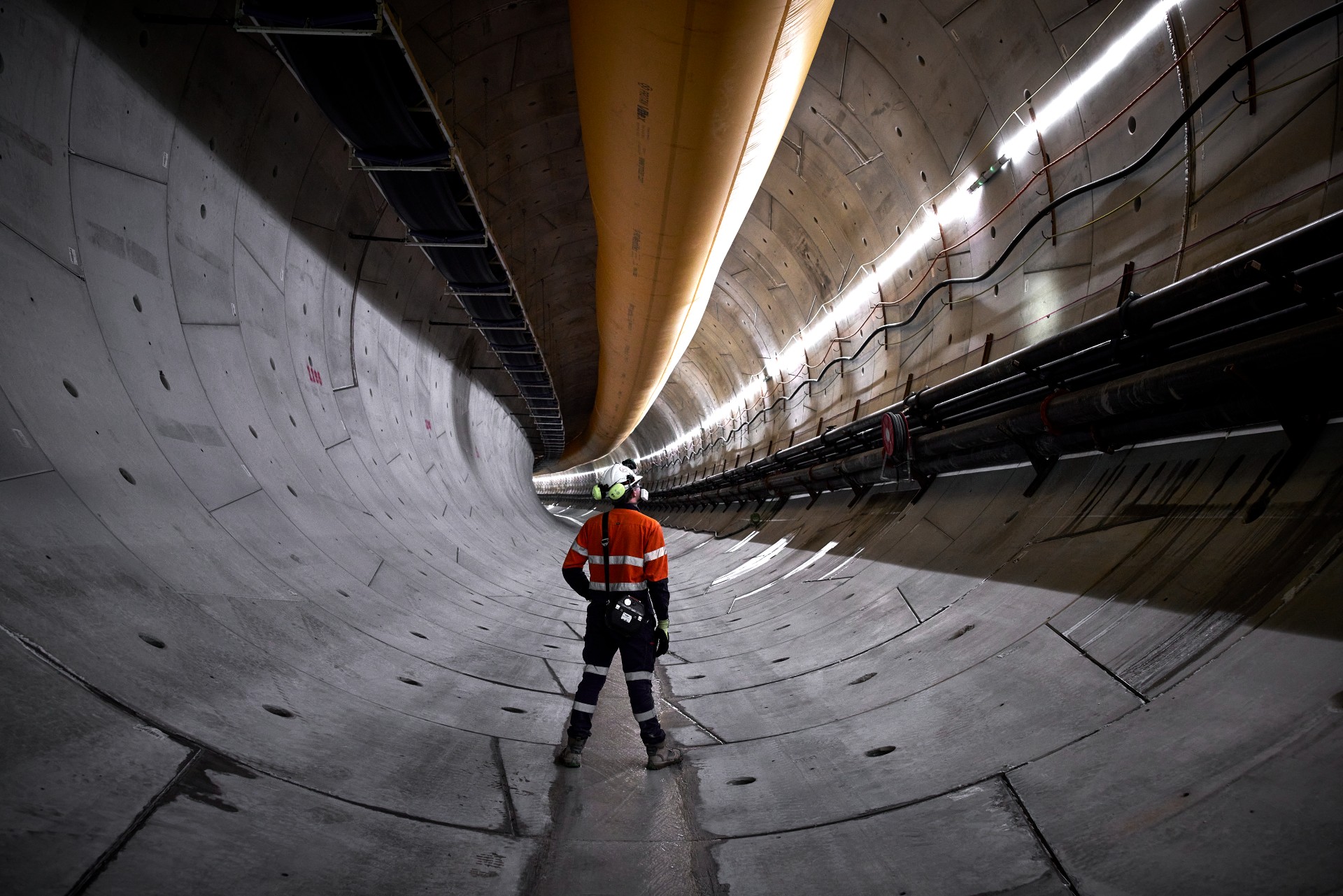
Snowy Hydro has updated the cost forecast for Snowy 2.0 to between $22.5 and $25 billion at commissioning in 2029, up from $12 billion estimated in 2023 and a 2017 opening bid of $2 billion. The contractor, Future Generation Joint Venture, attributes the escalation to underestimated delivery scope, missed productivity targets due to construction complexity, design revision following technical analysis, and global cost inflation on equipment and labour. The project moved off a fixed-price contract in 2023, shifting cost risk from the contractor to Snowy Hydro and ultimately taxpayers.
Where this fits
Snowy 2.0 is firm, dispatchable storage and essential firming infrastructure for a renewables-heavy grid. The cost trajectory, from $2 billion to $25 billion in nine years, is a textbook case of whole-system cost undercount. It bears hardest on the sovereignty and cost pillars: Australia is spending $25 billion to build storage capacity to back weather-dependent generation, money that could have accelerated the one firm, low-emission, low-material power source already permitted and fully domestic: nuclear energy.
What it means
A 12-fold cost overrun on a storage megaproject reflects the real complexity of firming a wind and solar grid at scale. Snowy 2.0 will work, long-duration storage is genuine capacity, but it illustrates why the all-renewables path requires not just panels and batteries, but vast civil infrastructure, all priced and built in an inflationary era. Australia is now committed to spending $25 billion on storage to keep the lights on when the sun does not shine and the wind does not blow. That money is being spent because alternatives are ruled out by law.
By the numbers
at ~A$600–1000/kWh installed. Source: BNEF, CSIRO GenCost 2024-25. Indicative.
of average national (NEM) demand if fully dischargeable, then it needs recharging. Storage shifts power, it does not generate it.
lithium, graphite, nickel, copper and cobalt (~35000 t lithium content). Replaced roughly every 12 years. Source: IEA, Argonne GREET. Indicative.
~75% of cells are China-made. Source: IEA cell-manufacturing share.
enough for 125–325 TWh a year of firm, always-on power, generating for ~60 years. Source: CSIRO GenCost 2024-25 (A$8.5–13.2bn/GW), IAEA capacity factor.
Figures are indicative conversions from the article's stated quantity using published cost, material and capacity factors (CSIRO GenCost, BNEF, IEA, IAEA). Ranges, not precise forecasts.
enough for 22–35 TWh a year of firm, always-on power, generating for ~60 years. Source: CSIRO GenCost 2024-25 (A$8.5–13.2bn/GW), IAEA capacity factor.
Figures are indicative conversions from the article's stated quantity using published cost, material and capacity factors (CSIRO GenCost, BNEF, IEA, IAEA). Ranges, not precise forecasts.
Go deeper on the numbers
The bigger picture
Energy security is national security. This connects to the wider case at Unprepared: Australia's dependence on a strategic rival, and how ready it is for the world that is coming.
Reported by PV Magazine Australia. Read the original report ↗
Related coverage
Snowy 2.0: A monument to this nation’s energy policy hubris - The Australian
Gas reserve ‘could blow away $330bn’ - The Australian
It might not feel like it, but our power is among the world’s cheapest - AFR
First new steel mill in Australia in 35 years to be the first to be powered by 100 per cent renewables - Renew Economy
The numbers, as they move
A short, sourced brief when the figures shift: a transmission blow-out, a supply-chain move, a milestone.