Snowy 2.0: The potentially $50 billion shambles that really needs a proper cost-benefit analysis
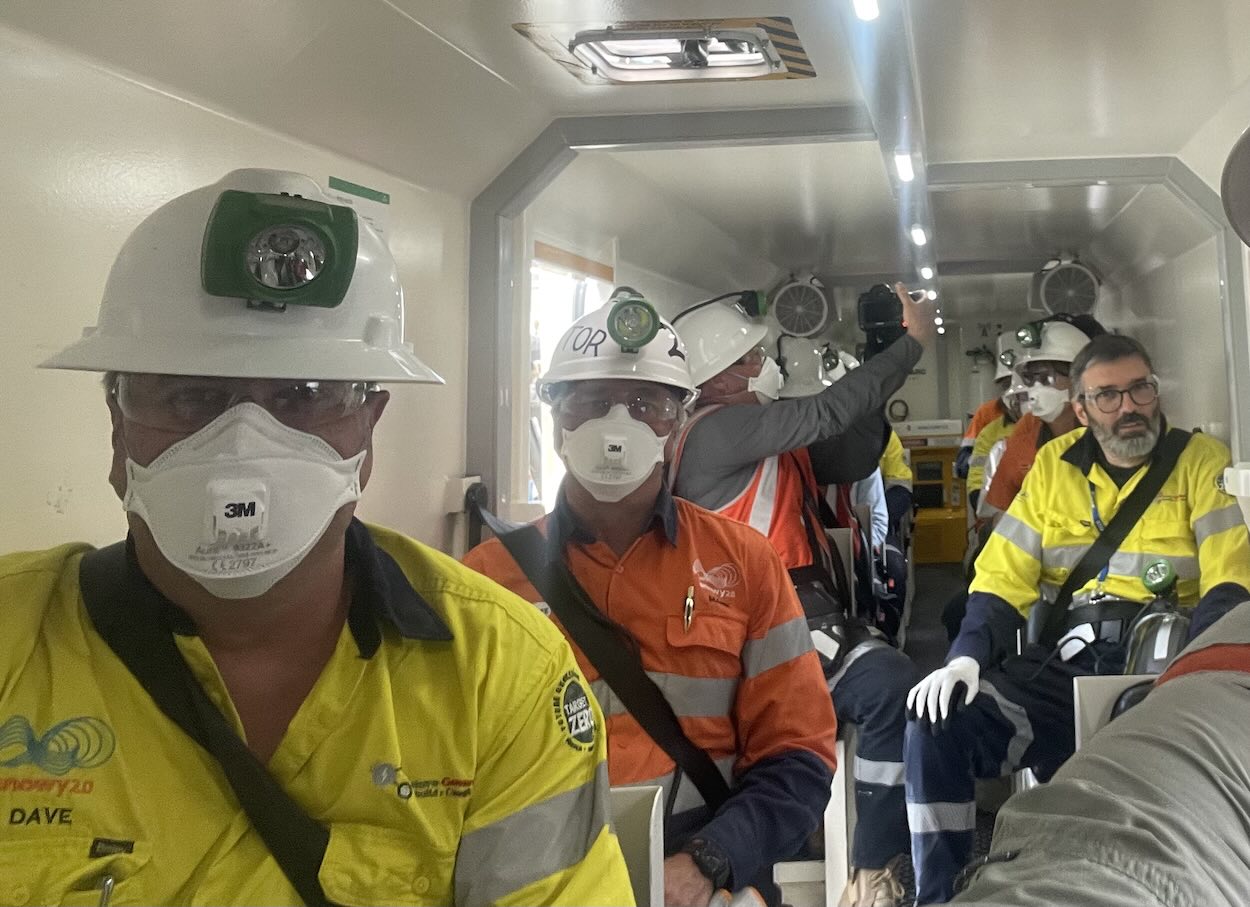
Snowy 2.0 cost estimates have more than doubled in less than a decade. The project was announced in March 2017 at $2 billion with a four-year build and no government funding required. The latest estimate for main works sits at $22-25 billion, with full project costs approaching $50 billion. The scheme's fundamental flaw is technical: its two reservoirs are 27 kilometres apart, an unprecedented distance globally. Industry practice places reservoirs a few kilometres apart to manage construction risk, water friction losses, and response times. The government has never commissioned an independent expert review, instead accepting advice from Snowy Hydro throughout multiple review cycles.
Where this fits
Snowy 2.0 exemplifies the hidden cost of a renewables-dependent grid. It is being built to firm weather-dependent solar and wind output, yet the bill for that firming has exploded beyond any honest business case. The project absorbs capital that could have been directed to firm dispatchable generation. It also shows the cost of Australia's energy policy being shaped by corporate proposals rather than independent engineering review, a vulnerability that extends to the entire transition pathway.
What it means
Australia is spending tens of billions on a technically suboptimal storage scheme to compensate for the intermittency of renewable generation, when that capital could have secured firm, low-emission power from sources that do not require such elaborate and costly workarounds. The pattern is systemic: renewables impose whole-system costs that are consistently underestimated or hidden in subsidiary projects like this one. Without independent scrutiny, Australia risks locking in a grid that is both expensive and dependent on infrastructure that may never deliver promised economics.
By the numbers
enough for 30–46 TWh a year of firm, always-on power, generating for ~60 years. Source: CSIRO GenCost 2024-25 (A$8.5–13.2bn/GW), IAEA capacity factor.
Figures are indicative conversions from the article's stated quantity using published cost, material and capacity factors (CSIRO GenCost, BNEF, IEA, IAEA). Ranges, not precise forecasts.
Go deeper on the numbers
The bigger picture
Energy security is national security. This connects to the wider case at Unprepared: Australia's dependence on a strategic rival, and how ready it is for the world that is coming.
Reported by RenewEconomy. Read the original report ↗
Related coverage
Australia’s most powerful turbines – up to 9.5 MW – mooted for giant wind project outside... - Renew Economy
“Tipping point”: Australia’s appeal to global offshore wind farm investors hangs in the balance, conference hears
Australia’s most successful renewables and storage developer seals huge debt deal to pave way for nex... - Renew Economy
Neoen Australia 1.8 billion debt finance raise backs a 1.2 GW portfolio
The numbers, as they move
A short, sourced brief when the figures shift: a transmission blow-out, a supply-chain move, a milestone.