Spanish giant wins contracts for transmission projects to connect offshore and onshore renewables
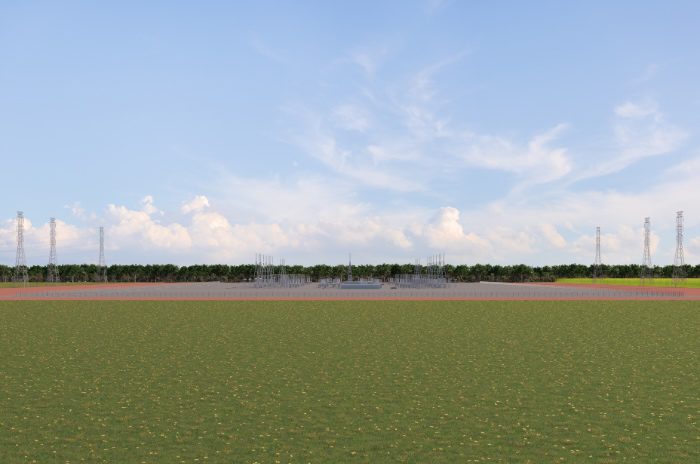
Acciona, a Spanish energy company, has been selected as the preferred development partner for a 60 km, 500 kilovolt transmission line connecting the first 2 GW of offshore wind from Gippsland to Victoria's grid near Loy Yang Power Station. The line is one element of infrastructure needed to eventually host up to 9 GW of offshore generation by 2040. A separate contract in Western Australia saw Acciona join Genus Plus and UGL Engineering to deliver the Clean Energy Link, East. Both projects are part of Australia's grid expansion to accommodate renewable energy targets: Victoria aims for 2 GW offshore wind by 2032 and 4 GW by 2035. The Gippsland line is expected to complete in 2031, pending environmental and planning approvals.
Where this fits
This is transmission overbuild: the hidden cost of a renewables-heavy grid. Offshore wind requires dedicated, long-distance high-voltage lines to reach population centres and existing grid nodes. These assets are capital-intensive, take years to permit and build, and sit idle when wind output is low. The reliance on weather-dependent supply at scale forces grid operators to build far more wires and substations than a firm, dispatchable generation source would require. The cost is real but rarely folded into per-megawatt-hour comparisons that make renewables appear cheaper.
What it means
Australia is locked into a transmission build-out whose scale and cost are driven by the intermittency of wind and solar, not by the underlying demand for electricity. A nuclear plant sited near load would require no such transmission spine. Instead, Australia is contracting foreign firms to wire the country for weather-dependent supply, while domestic expertise in firm, energy-dense generation atrophies under legal ban. Grid resilience and cost now depend on the speed and price of infrastructure Australia does not own designing.
By the numbers
at ~A$2000–3200/kW installed. Source: CSIRO GenCost 2024-25. Indicative.
at a ~38% capacity factor, and only when the wind blows, so it still needs firming.
enough for 2–6 TWh a year of firm, always-on power, generating for ~60 years. Source: CSIRO GenCost 2024-25 (A$8.5–13.2bn/GW), IAEA capacity factor.
Figures are indicative conversions from the article's stated quantity using published cost, material and capacity factors (CSIRO GenCost, BNEF, IEA, IAEA). Ranges, not precise forecasts.
Go deeper on the numbers
The bigger picture
Energy security is national security. This connects to the wider case at Unprepared: Australia's dependence on a strategic rival, and how ready it is for the world that is coming.
Reported by RenewEconomy. Read the original report ↗
Related coverage
Snowy 2.0: A monument to this nation’s energy policy hubris - The Australian
Gas reserve ‘could blow away $330bn’ - The Australian
It might not feel like it, but our power is among the world’s cheapest - AFR
First new steel mill in Australia in 35 years to be the first to be powered by 100 per cent renewables - Renew Economy
The numbers, as they move
A short, sourced brief when the figures shift: a transmission blow-out, a supply-chain move, a milestone.