US-Turkey agreement to accelerate SMR deployment
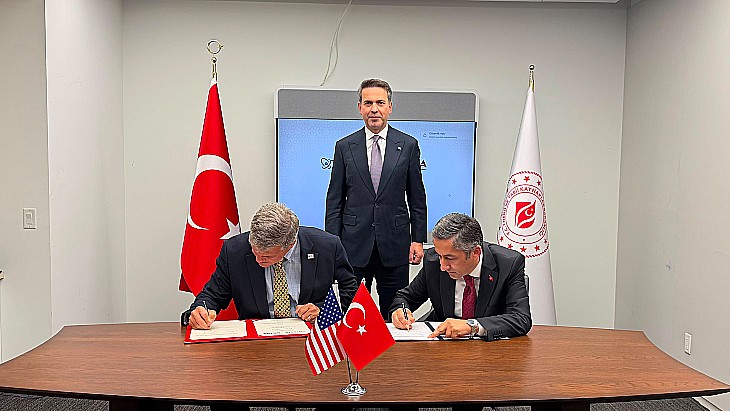
The US Trade and Development Agency has agreed to fund technical assistance for Turkey's nuclear development enterprise to establish regulatory and financial frameworks for small modular reactor deployment. The work, budgeted at around USD2 million and running for one year, will assess four US SMR designs and five fourth-generation reactor designs against Turkey's energy needs. Turkey's government has set a target of 5000 MWe of SMR capacity by 2050, in addition to 12 larger reactors. The study will culminate in technical reports and policy recommendations to Turkey's Ministry of Energy and Natural Resources and Nuclear Regulatory Authority.
Where this fits
This agreement demonstrates how firm, dispatchable nuclear generation is being pursued by strategic US allies as a tool for energy security and independence. The contrast with Australia's trajectory is sharp: Turkey is moving to build regulatory and industrial capacity for nuclear deployment while Australia remains locked out of the technology by law, forcing continued reliance on weather-dependent renewables paired with gas firming. The US is strategically positioning its nuclear suppliers in emerging markets; Australia has ceded that sovereignty to China's dominance of solar, battery and inverter supply chains.
What it means
Turkey's SMR push signals that industrial democracies view nuclear as essential infrastructure, not a sideshow. For Australia, it underscores the cost of the nuclear ban: not only the higher whole-system expenses of a renewables-gas grid, but the strategic vulnerability of depending on China for the physical plant of the energy transition. While Turkey builds institutional capacity to deploy firm power, Australia must either lift the ban or accept that its grid will remain weather-dependent and its supply chains foreign-owned.
Go deeper on the numbers
The bigger picture
Energy security is national security. This connects to the wider case at Unprepared: Australia's dependence on a strategic rival, and how ready it is for the world that is coming.
Reported by World Nuclear News. Read the original report ↗
Related coverage
Nuclear Reactor Developers Target Indiana, Kentucky, for Sites and Customers
Australians believe nuclear should be part of nation’s energy future - Mining.com.au
South Korea Builds Reactors Fast; Licensing Slows Them Down
Slovakia connects Mochovce 4 nuclear unit to grid after brief delay - oEnergetice.cz
The numbers, as they move
A short, sourced brief when the figures shift: a transmission blow-out, a supply-chain move, a milestone.