Bushfire smoke chokes output from solar farms, even more than 100 km away, researchers find
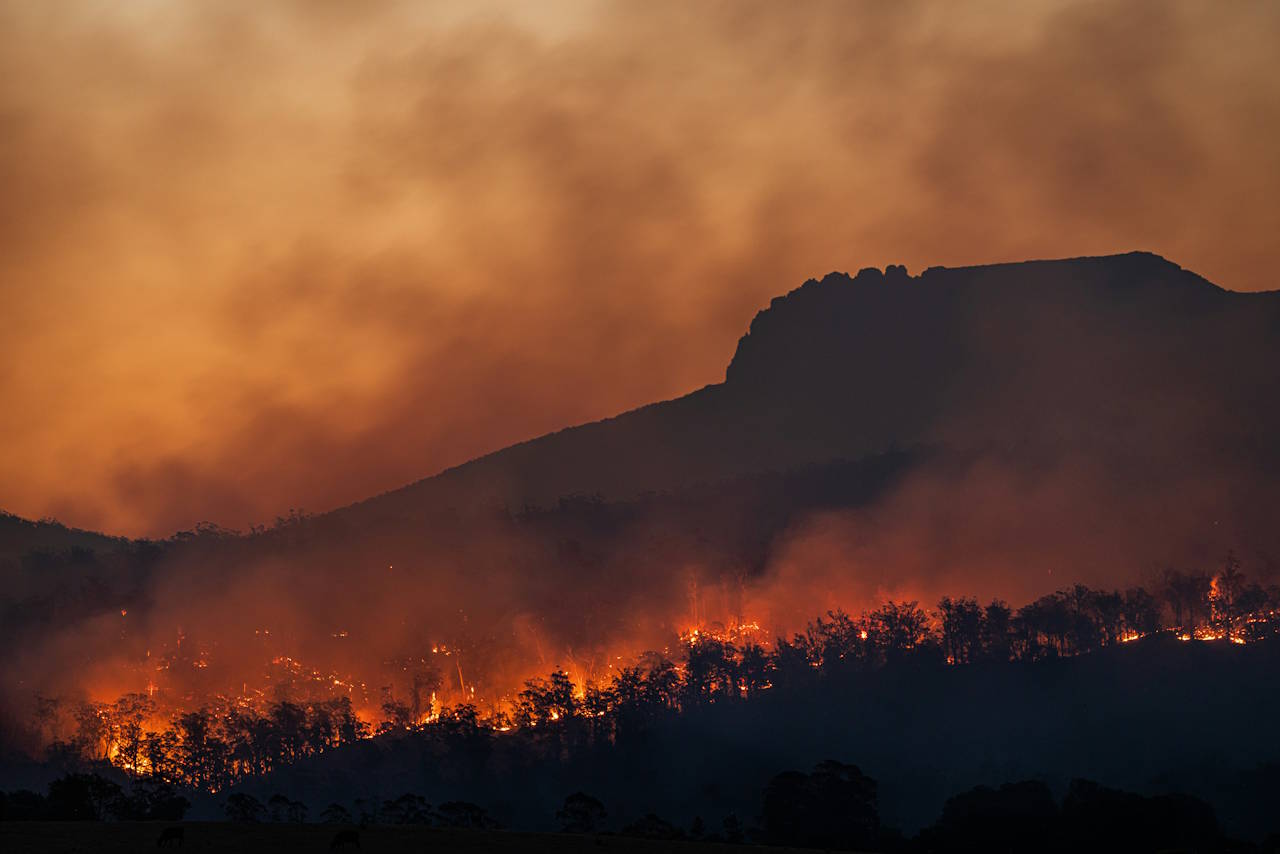
University of New South Wales researchers modelled the effects of major Australian bushfires on solar farm output using historical weather and satellite data from the Black Summer fires of 2019-2020 and Victoria's 2009 Black Saturday fires. They estimated solar generation would fall by up to 70 per cent within 50 kilometres of active fire zones and around 40 per cent at distances over 150 kilometres, due to smoke reducing incoming solar irradiance and ash accumulating on panels. The modelled reductions for Black Saturday were smaller: 18 per cent near hotspots and 4 to 10 per cent over 100 kilometres away. The researchers recommend improved smoke trajectory forecasting, more frequent panel cleaning and inspection, and operational changes to solar systems.
Where this fits
This finding adds a temporal reliability problem to solar's weather dependence. Australia's renewable grid already faces output variability from cloud cover and seasonal cycles. Bushfire smoke now emerges as a regional, seasonal risk that can degrade generation across a wide area for days or weeks, precisely when demand for cooling load is highest. This is a firming problem: when solar output drops 40 to 70 per cent across a region, gas plants or storage must cover the shortfall. The firm alternative, nuclear, produces full output regardless of atmospheric conditions.
What it means
Australia's transition assumes solar can shoulder baseload and peaking roles. Bushfire seasons expose a gap in that assumption: weather events that degrade solar output over large areas do not disappear because the grid is renewable-heavy. Backup capacity must exist, must be paid for, and must be available to run when smoke arrives. The modelled data does not tell us how often this occurs or for how long, but the principle is clear: a weather-dependent grid requires firming infrastructure that a solar-only strategy does not yet cost into its whole-system budget.
Go deeper on the numbers
The bigger picture
Energy security is national security. This connects to the wider case at Unprepared: Australia's dependence on a strategic rival, and how ready it is for the world that is coming.
Reported by RenewEconomy. Read the original report ↗
Related coverage
Big battery durations are headed to double figures, and their chemistries are changing – again
Does Snowy 2.0 still have a place in a world of batteries? - ABC News & Headlines – Australian Broadcasting Corporation
Queensland energy plan assumes zero data centre demand - AFR
The power cable that could make or break Victoria - AFR
The numbers, as they move
A short, sourced brief when the figures shift: a transmission blow-out, a supply-chain move, a milestone.