Bangladesh's Rooppur 1 achieves criticality
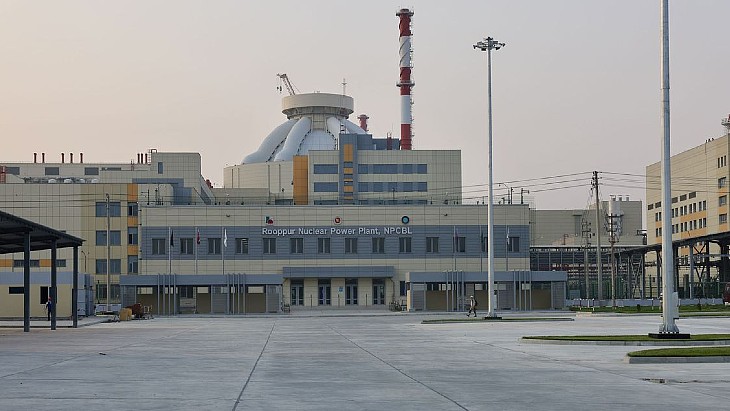
Bangladesh's Rooppur Nuclear Power Plant Unit 1 achieved criticality on 11 October 2026, establishing a self-sustaining nuclear chain reaction. The project, built by Russia's Rosatom under a contract signed in 2011, reached the milestone three days after regulatory approval. The reactor will now undergo a series of tests before power start-up, scheduled for 20 November, followed by staged connection to the Bangladesh grid.
Where this fits
Rooppur is a firm power plant arriving at scale in a region where energy demand is rising and weather-dependent generation alone cannot meet it reliably. Bangladesh's choice to pair a dual-reactor nuclear project with renewable capacity, rather than build a renewables-only grid backed by gas, points to the cost and reliability calculus that renewables-alone policies obscure. The project also exposes the sovereign cost of energy dependence: Bangladesh has chosen to build its firm backbone in partnership with Russia, not China, and the choice carries geopolitical weight that Australia's energy planners should study.
What it means
Australia is pursuing the opposite path. While Bangladesh locks in 2.4 gigawatts of firm, low-emission capacity over a decade, Australia is betting its grid reliability on weather-dependent solar and wind, with gas and imported batteries as the firming layer. That firming and storage will cost more than Rooppur's capital outlay, deliver lower energy return, and bind Australia to Chinese battery and inverter supply chains for decades. The honest comparison is not Rooppur versus renewables, but Rooppur's firm carbon intensity versus the embedded emissions and China dependence baked into Australia's firming strategy.
Go deeper on the numbers
The bigger picture
Energy security is national security. This connects to the wider case at Unprepared: Australia's dependence on a strategic rival, and how ready it is for the world that is coming.
Reported by World Nuclear News. Read the original report ↗
Related coverage
Nuclear Reactor Developers Target Indiana, Kentucky, for Sites and Customers
Australians believe nuclear should be part of nation’s energy future - Mining.com.au
South Korea Builds Reactors Fast; Licensing Slows Them Down
Slovakia connects Mochovce 4 nuclear unit to grid after brief delay - oEnergetice.cz
The numbers, as they move
A short, sourced brief when the figures shift: a transmission blow-out, a supply-chain move, a milestone.