Chinese PV Industry Brief: CEEC launches 15 GW module procurement
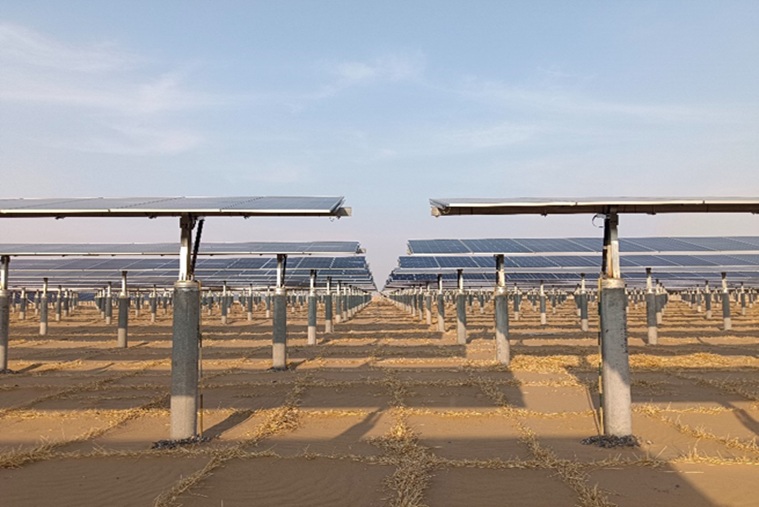
China Energy Engineering Corp has launched a 15 GW solar module tender for 2026, spanning three technology types: tunnel oxide passivated contact (TOPCon), heterojunction (HJT), and back-contact (BC). In a parallel procurement, China South-to-North Water Diversion Group shortlisted bidders for 1.3 GW of modules, with BC technology commanding an 8% price premium over TOPCon. The BC modules met minimum efficiency requirements of 23.8%, versus 22.8% for TOPCon. Tongwei, a major Chinese polysilicon producer, is proceeding with the acquisition of a competing polysilicon asset.
Where this fits
This tender signals China's consolidation of solar manufacturing capacity and technology leadership at the very moment Australia is betting its grid on imported panels. The procurement is a state-directed command to Chinese suppliers, binding major utilities to Chinese module vendors and reinforcing the domestic supply chain. Australia's renewable transition depends entirely on Chinese manufacturing for panels, batteries, and inverters. No alternative supply exists at scale.
What it means
Australia is outsourcing grid decarbonisation to a strategic rival who controls the input chain. If China restricts panel exports, imposes tariffs, or redirects supply to Belt and Road projects, Australia's transition stalls. A nuclear ban that forecloses a firm, domestically-buildable alternative compounds that exposure. The grid is becoming more dependent on weather, more reliant on gas firming, and more vulnerable to supply coercion, all while the one energy source that could break that cycle remains illegal.
By the numbers
at ~A$1100–1600/kW installed. Source: CSIRO GenCost 2024-25. Indicative.
at a ~24% capacity factor, and only when the sun shines, so it still needs firming.
~80% of modules are China-made. Source: IEA solar supply-chain data.
enough for 10–22 TWh a year of firm, always-on power, generating for ~60 years. Source: CSIRO GenCost 2024-25 (A$8.5–13.2bn/GW), IAEA capacity factor.
Figures are indicative conversions from the article's stated quantity using published cost, material and capacity factors (CSIRO GenCost, BNEF, IEA, IAEA). Ranges, not precise forecasts.
at ~A$1100–1600/kW installed. Source: CSIRO GenCost 2024-25. Indicative.
at a ~24% capacity factor, and only when the sun shines, so it still needs firming.
~80% of modules are China-made. Source: IEA solar supply-chain data.
enough for 1–2 TWh a year of firm, always-on power, generating for ~60 years. Source: CSIRO GenCost 2024-25 (A$8.5–13.2bn/GW), IAEA capacity factor.
Figures are indicative conversions from the article's stated quantity using published cost, material and capacity factors (CSIRO GenCost, BNEF, IEA, IAEA). Ranges, not precise forecasts.
Go deeper on the numbers
The bigger picture
Energy security is national security. This connects to the wider case at Unprepared: Australia's dependence on a strategic rival, and how ready it is for the world that is coming.
Reported by PV Magazine (intl). Read the original report ↗
Related coverage
Boost for Woodside’s Browse LNG project as Japan firm inks deal - AFR
ASIO warns telcos and electricity under threat - ABC News & Headlines – Australian Broadcasting Corporation
China targets perovskite solar, advanced batteries in five-year plan
Malaysia and Vietnam Diversify Rare Earths Supply Away From China - energynews.pro
The numbers, as they move
A short, sourced brief when the figures shift: a transmission blow-out, a supply-chain move, a milestone.