Australia’s 2.2 GW Snowy 2.0 pumped hydro cost estimate rises again
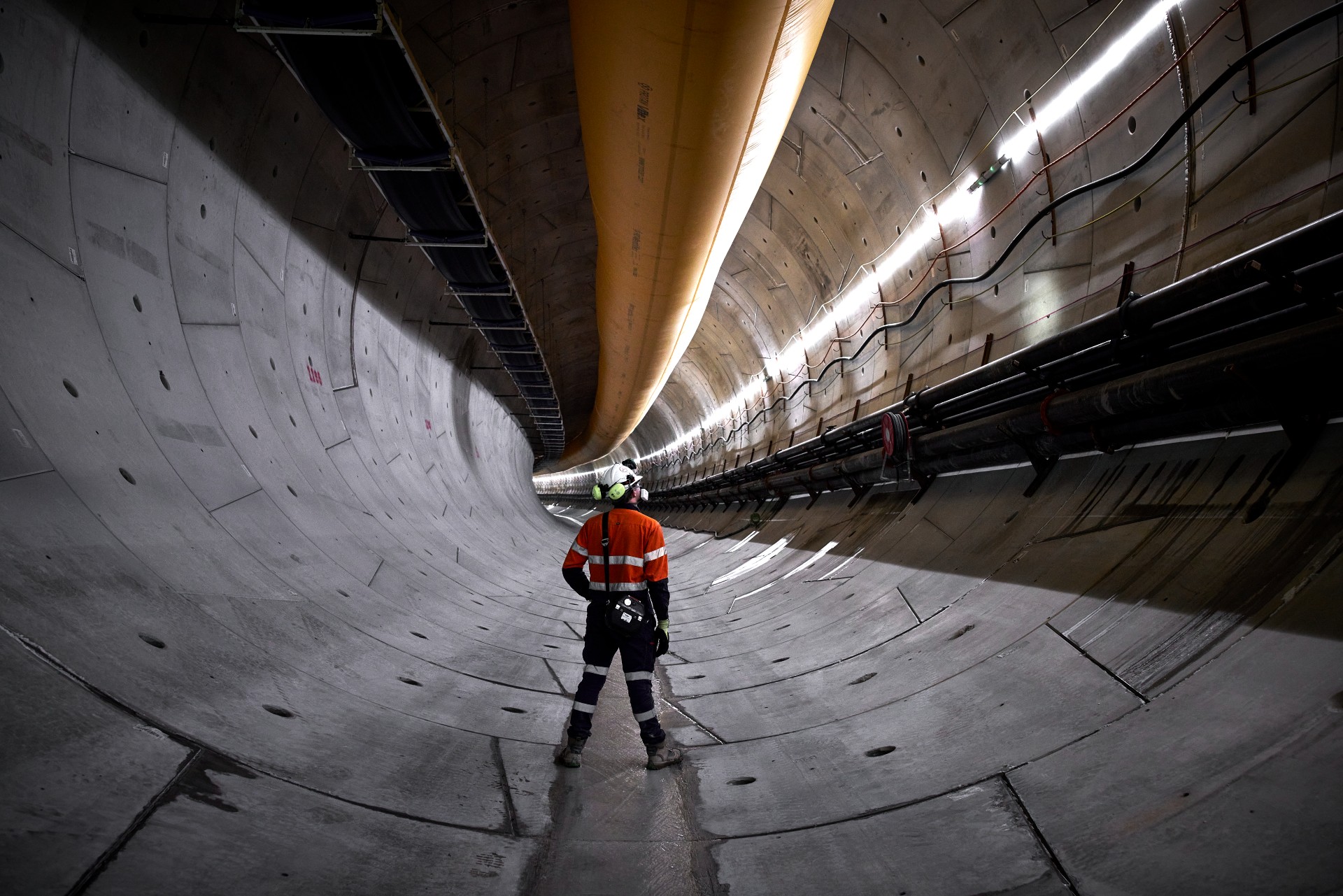
Snowy 2.0, Australia's 2.2 GW pumped-hydro storage project, has had its cost estimate revised upward to AUD 25 billion, with commissioning now scheduled for 2029. The project was initially budgeted at AUD 2 billion in 2017. Successive revisions to AUD 3.8, 4.5 billion, AUD 6.1 billion, and AUD 12 billion followed. The latest increase reflects contractor underestimation of delivery scope, failure to meet productivity targets due to construction complexity, design revamps, and global cost inflation in equipment, services and labour. The principal contractor, Future Generation Joint Venture, now operates on a cost-pass-through model rather than a fixed-price contract.
Where this fits
Snowy 2.0 is now a firming asset for a renewables-heavy grid. It provides long-duration storage to cover multi-day wind and solar droughts. But the project's trajectory, from AUD 2 billion to AUD 25 billion in nine years, illustrates the hidden cost of grid transformation. Pumped hydro is one of the few firm storage options available in Australia and one of the cheapest once built. Yet even the cheapest firming infrastructure blows out under real-world delivery. A grid built on renewables plus storage and transmission carries whole-system costs that early estimates consistently understate. This is the cost of firming weather-dependent generation at scale.
What it means
Australia is betting grid reliability on assets that take a decade to build and whose true cost proves multiples of the headline. Snowy 2.0 will provide real value once operational, but the delay and cost escalation narrow the margin for Australia to secure its electricity system before supply shocks or geopolitical pressure reach the grid. The project underscores why firm, dispatchable power, whether from pumped hydro, gas, or other sources, remains essential infrastructure. It also exposes the risk of relying on single-technology solutions to manage climate and reliability simultaneously.
By the numbers
at ~A$600–1000/kWh installed. Source: BNEF, CSIRO GenCost 2024-25. Indicative.
of average national (NEM) demand if fully dischargeable, then it needs recharging. Storage shifts power, it does not generate it.
lithium, graphite, nickel, copper and cobalt (~35000 t lithium content). Replaced roughly every 12 years. Source: IEA, Argonne GREET. Indicative.
~75% of cells are China-made. Source: IEA cell-manufacturing share.
enough for 125–325 TWh a year of firm, always-on power, generating for ~60 years. Source: CSIRO GenCost 2024-25 (A$8.5–13.2bn/GW), IAEA capacity factor.
Figures are indicative conversions from the article's stated quantity using published cost, material and capacity factors (CSIRO GenCost, BNEF, IEA, IAEA). Ranges, not precise forecasts.
enough for 15–23 TWh a year of firm, always-on power, generating for ~60 years. Source: CSIRO GenCost 2024-25 (A$8.5–13.2bn/GW), IAEA capacity factor.
Figures are indicative conversions from the article's stated quantity using published cost, material and capacity factors (CSIRO GenCost, BNEF, IEA, IAEA). Ranges, not precise forecasts.
Go deeper on the numbers
The bigger picture
Energy security is national security. This connects to the wider case at Unprepared: Australia's dependence on a strategic rival, and how ready it is for the world that is coming.
Reported by PV Magazine (intl). Read the original report ↗
Related coverage
Snowy 2.0: A monument to this nation’s energy policy hubris - The Australian
Gas reserve ‘could blow away $330bn’ - The Australian
It might not feel like it, but our power is among the world’s cheapest - AFR
First new steel mill in Australia in 35 years to be the first to be powered by 100 per cent renewables - Renew Economy
The numbers, as they move
A short, sourced brief when the figures shift: a transmission blow-out, a supply-chain move, a milestone.