China launches Global Network for SMR Innovation
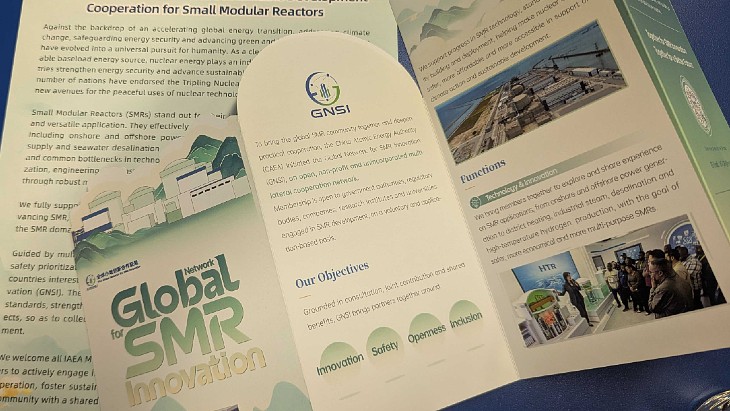
China's state atomic authority has launched a Global Network for SMR Innovation, a cooperative mechanism for sharing small modular reactor technology, standards and supply chain development. The announcement at the IAEA General Conference in Vienna emphasised SMRs as critical to global nuclear expansion, with applications across electricity, hydrogen production, heating and desalination. China showcased its own deployed and near-deployment units: the ACP100 (Linglong One), rated at 125 MWe with a 58-month build timeline, and the Guohe series reactors. The network is structured as a non-profit open membership body with governing board, secretariat and working groups, with a first general assembly scheduled by year's end.
Where this fits
This initiative consolidates China's position as the centre of gravity for next-generation nuclear development and supply chains. While SMRs address real engineering challenges, modularity, factory construction, lower capital risk per unit, China's coordination of standards, intellectual property frameworks and industrial collaboration means the terms of global SMR deployment will be set by Beijing. For Australia, which has no domestic SMR programme and remains legally prohibited from building nuclear, this is a reminder that the firm-power technology best suited to grid decarbonisation is being developed, standardised and commercialised by a strategic rival.
What it means
Australia's energy transition is being built on renewable imports (panels, inverters, batteries) whose supply chains are already China-dependent. SMRs offered a domestic alternative to that dependence: firm, energy-dense, low-material-intensity power that could support baseload demand without gas firming or a transmission overbuild. Instead, China is consolidating SMR supply-chain and standard-setting authority while Australian law bans the technology outright. The result is that grid decarbonisation remains tethered to Chinese manufacturing and weather-dependent generation that demands gas as a backup.
Go deeper on the numbers
The bigger picture
Energy security is national security. This connects to the wider case at Unprepared: Australia's dependence on a strategic rival, and how ready it is for the world that is coming.
Reported by World Nuclear News. Read the original report ↗
Related coverage
Centrus and Antares Sign Multi-Year HALEU Supply Contract
Rethink on nuclear leads to fresh uranium opportunities - Australian Resources & Investment
Foundations laid for major expansion of the Royal Navy nuclear submarine fleet - Navy Lookout
‘We’re going to miss the boat’: Labor pressed to reverse nuclear ban as AI booms - The Australian
The numbers, as they move
A short, sourced brief when the figures shift: a transmission blow-out, a supply-chain move, a milestone.