SEC secures Glenrowan battery offtake
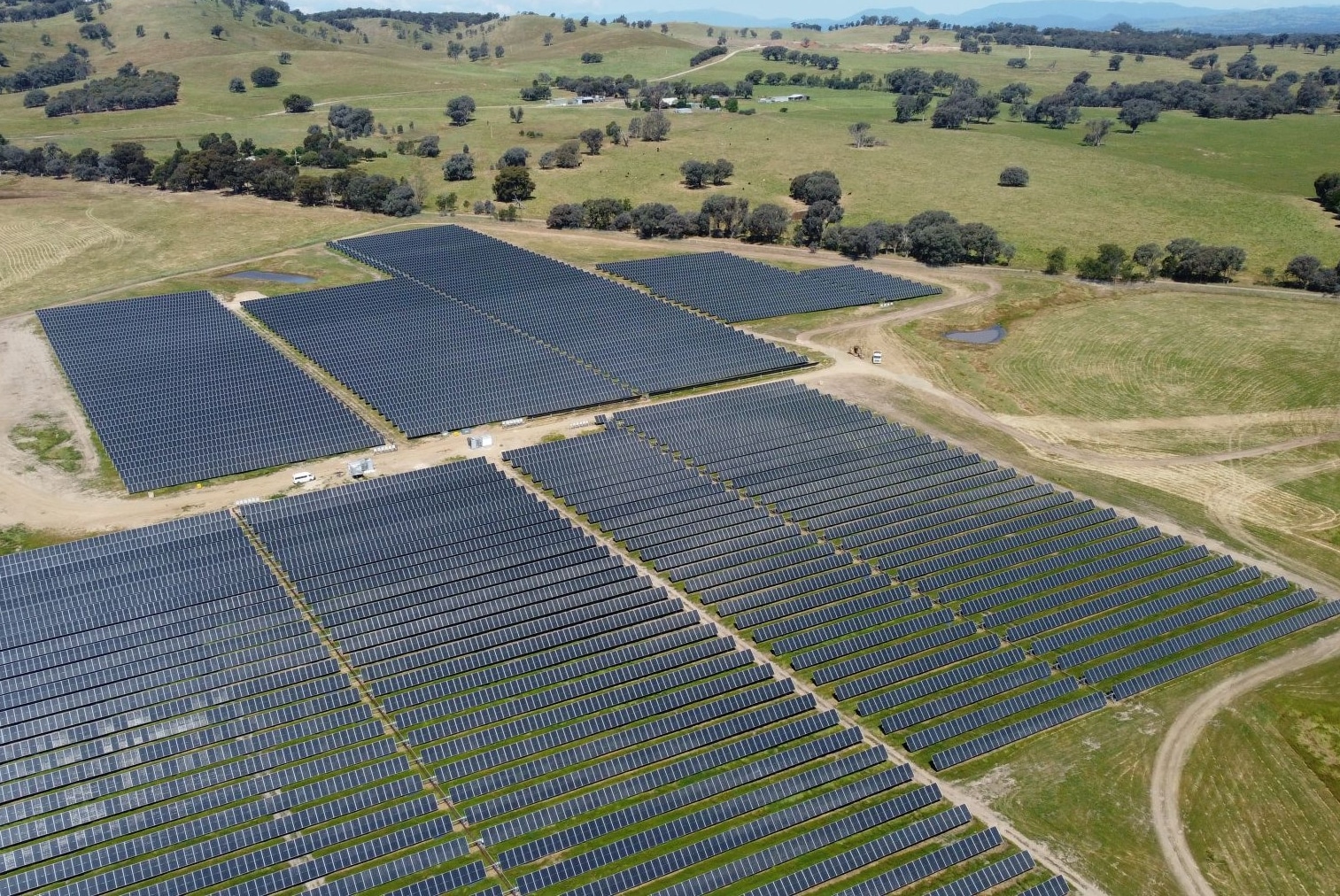
SEC, a state-owned energy company, has secured a 10-year offtake agreement for a 102MW battery with four hours of storage capacity at the Glenrowan Solar Farm in Victoria. The battery will back the solar site.
Where this fits
This deal illustrates the cost and complexity hidden in a renewables-heavy grid. A solar farm alone cannot serve firm demand. Adding a four-hour battery, enough to bridge an evening peak, not a multi-day weather event, doubles the capital and operating cost of the asset while still leaving the grid dependent on external firming. The Glenrowan battery is not storage; it is a deferral mechanism that moves solar output a few hours forward. When the battery drains, Victoria still needs dispatchable power. The agreement locks in a decade of battery dependency, committing capital to an asset class whose cost continues to fall, while foreclosing investment in firm, low-lifecycle-emission nuclear capacity, which is illegal in Australia.
What it means
Glenrowan is one site. Across the NEM, dozens of similar projects are stacking battery spend on top of renewable spend, fragmenting the grid into weather-dependent units glued together by storage and transmission overbuild. Each battery depends on critical minerals, lithium, cobalt, nickel, processed in China on coal-fired grids. A 10-year offtake locks supply risk in place. Australia is building a grid that is cheaper per megawatt-hour but more expensive per megawatt of firm capacity, more dependent on Chinese supply chains for its critical link, and permanently barred from the one non-weather-dependent, low-emission technology that could halve the material footprint and triple the resilience of the same renewable base.
By the numbers
at ~A$600–1000/kWh installed. Source: BNEF, CSIRO GenCost 2024-25. Indicative.
of average national (NEM) demand if fully dischargeable, then it needs recharging. Storage shifts power, it does not generate it.
lithium, graphite, nickel, copper and cobalt (~41 t lithium content). Replaced roughly every 12 years. Source: IEA, Argonne GREET. Indicative.
~75% of cells are China-made. Source: IEA cell-manufacturing share.
Figures are indicative conversions from the article's stated quantity using published cost, material and capacity factors (CSIRO GenCost, BNEF, IEA, IAEA). Ranges, not precise forecasts.
Go deeper on the numbers
The bigger picture
Energy security is national security. This connects to the wider case at Unprepared: Australia's dependence on a strategic rival, and how ready it is for the world that is coming.
Reported by Utility Magazine. Read the original report ↗
Related coverage
The numbers, as they move
A short, sourced brief when the figures shift: a transmission blow-out, a supply-chain move, a milestone.