Community solar farm secures 10-year PPA with software giant
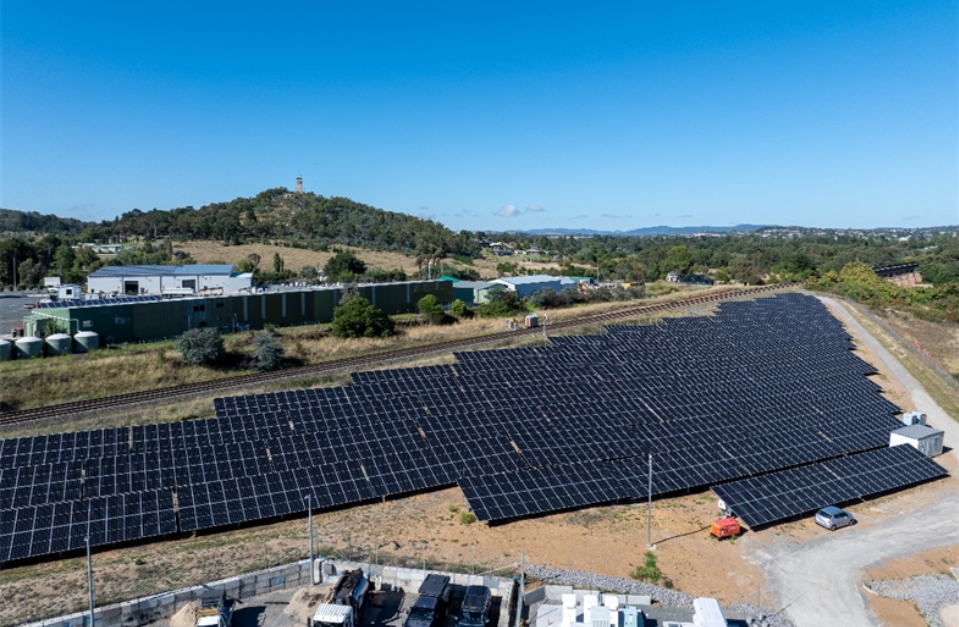
Atlassian has signed a 10-year power purchase agreement with the Goulburn Community Solar Farm in New South Wales, committing to nearly 70% of the facility's output to power its new Sydney headquarters. The 1.4 MW solar farm with 4 MWh battery storage is expected to generate 2,400 MWh annually. The project, owned by 288 community investors and supported by a $2.3 million NSW government grant, began exporting to the grid in 2026. The PPA provides revenue stability for the cooperative while funding local community energy initiatives.
Where this fits
This story illustrates the weather-dependent, distributed fragmentation of Australia's grid transition. A 1.4 MW solar farm with 4 MWh battery storage cannot alone firm Atlassian's headquarters load. The PPA locks in a customer, which is good for the project's economics, but masks the underlying cost: somewhere else on the National Electricity Market, dispatchable gas generation is being held in reserve to cover the solar farm's night output and cloud cover. That firming cost, the whole-system cost of balancing a weather-dependent grid, is not captured in the PPA headline. The real alternative foregone is not coal, but firm, low-emissions nuclear power that does not require this spinning reserve.
What it means
Community solar and corporate PPAs are becoming the visible face of Australia's energy transition, but they create an optical illusion of supply adequacy while pushing the cost of grid management onto the grid operator and ultimately the wider customer base. A 1.4 MW facility is too small and too variable to reduce Australia's dependence on gas firming. If Australia is to meet decarbonisation targets without building parallel gas infrastructure, that outcome requires firm baseload generation. The supply chain for this project, panels, inverters, batteries, is China-dependent, a structural vulnerability that grows with each megawatt of renewable build.
Go deeper on the numbers
The bigger picture
Energy security is national security. This connects to the wider case at Unprepared: Australia's dependence on a strategic rival, and how ready it is for the world that is coming.
Reported by PV Magazine Australia. Read the original report ↗
Related coverage
Snowy 2.0: A monument to this nation’s energy policy hubris - The Australian
Gas reserve ‘could blow away $330bn’ - The Australian
It might not feel like it, but our power is among the world’s cheapest - AFR
First new steel mill in Australia in 35 years to be the first to be powered by 100 per cent renewables - Renew Economy
The numbers, as they move
A short, sourced brief when the figures shift: a transmission blow-out, a supply-chain move, a milestone.