Argentina aims for 2027 launch of RA-10 multipurpose reactor
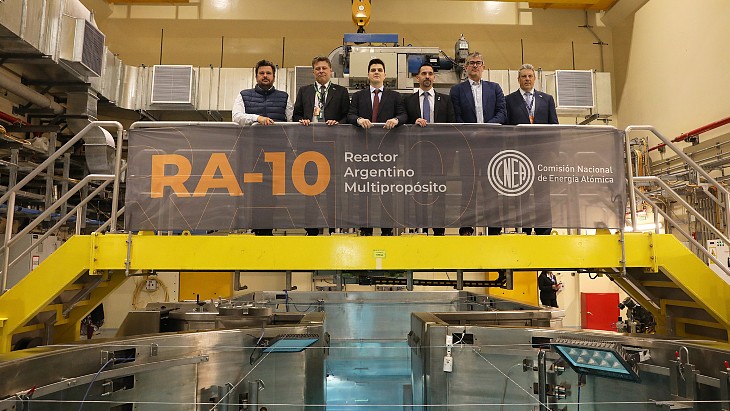
Argentina's National Atomic Energy Commission announced a target of commissioning the RA-10 research reactor before the end of 2026, with a team of 530 people completing final systems tests at the Ezeiza Atomic Centre. The 30-megawatt open-pool reactor is designed to produce radioisotopes for medical, scientific and industrial use, with capacity to supply about 20% of global molybdenum-99 demand. The government is seeking private financing for the associated production plant while retaining strategic oversight and regulatory control through the Nuclear Regulatory Authority. The project, initially approved in 2010 and granted construction licence in 2014, is reported to be 96% complete.
Where this fits
Argentina is building firm, dispatchable nuclear capacity to capture a concentrated, high-value market segment: radioisotope production for global nuclear medicine. This move shows a nation choosing energy security and export sovereignty over imported goods. Where Australia has bet its energy transition on solar and wind panels sourced from China, Argentina is betting on nuclear technology and its downstream industrial capability. The radioisotope market has few suppliers and high technical barriers. That is precisely the kind of strategic, long-lived industrial asset a diversified energy economy should seek: firm power that generates jobs, export revenue, and technological self-sufficiency.
What it means
Australia's energy policy treats nuclear power as forbidden while accelerating dependence on Chinese-manufactured solar, wind and battery hardware. Argentina's path shows how nuclear anchors both energy sovereignty and downstream industrial value. A firm, domestically controlled nuclear fleet would not only lower grid costs and emissions. It would position Australia to capture high-margin, low-competition industrial production rather than remain a materials exporter dependent on China's supply chain for the machines that run the grid.
Go deeper on the numbers
The bigger picture
Energy security is national security. This connects to the wider case at Unprepared: Australia's dependence on a strategic rival, and how ready it is for the world that is coming.
Reported by World Nuclear News. Read the original report ↗
Related coverage
Centrus and Antares Sign Multi-Year HALEU Supply Contract
Rethink on nuclear leads to fresh uranium opportunities - Australian Resources & Investment
Foundations laid for major expansion of the Royal Navy nuclear submarine fleet - Navy Lookout
‘We’re going to miss the boat’: Labor pressed to reverse nuclear ban as AI booms - The Australian
The numbers, as they move
A short, sourced brief when the figures shift: a transmission blow-out, a supply-chain move, a milestone.