Second reactor manufactured for floating nuclear plant
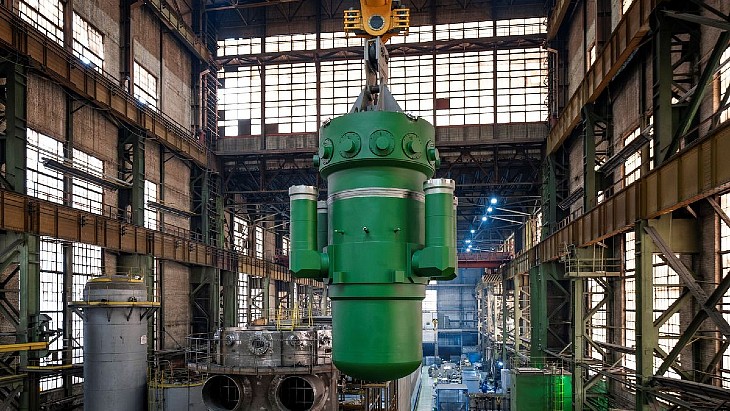
Russia has completed manufacturing the second reactor unit for a floating nuclear power plant destined for a copper mine development in Chukotka. The FPU-106 will carry two RITM-200C reactors of 58 MWe each, adapted from Russia's nuclear icebreaker fleet. The first unit was completed in May; the second has now left the ZiO-Podolsk factory. Three such plants plus a backup unit will supply around 300 MWe to the Baimskaya industrial cluster. Russia already operates the Akademik Lomonosov, a floating plant with two smaller reactors supplying power and heat to the Arctic city of Pevek since 2020. Rosatom reports 16 RITM units in total have been produced, with eight operational on icebreakers and a further 12 in various stages of manufacture. The company is targeting export markets for the floating plant design.
Where this fits
This is a live demonstration of firm, dispatchable, modular nuclear power solving a remote, industrial baseload problem without weather dependence or transmission overbuild. It shows Russia gaining first-mover advantage and export capability in floating SMR technology while Australia, a comparable cold-climate nation with remote mining and industrial loads, has banned nuclear generation outright. The supply chain and manufacturing expertise are now consolidated in Russia's hands.
What it means
Australia's copper and rare-earth mines in remote regions face identical power-supply problems. Floating nuclear plants could provide firm, scalable baseload without the gas-firming or transmission costs a renewable grid would demand. Instead, Australia remains locked out of the technology by law, while Russia monetises industrial decarbonisation and builds strategic supply-chain control in the Arctic. This is a preparedness failure as much as an energy one.
By the numbers
at ~A$1100–1600/kW installed. Source: CSIRO GenCost 2024-25. Indicative.
at a ~24% capacity factor, and only when the sun shines, so it still needs firming.
~80% of modules are China-made. Source: IEA solar supply-chain data.
Figures are indicative conversions from the article's stated quantity using published cost, material and capacity factors (CSIRO GenCost, BNEF, IEA, IAEA). Ranges, not precise forecasts.
Go deeper on the numbers
The bigger picture
Energy security is national security. This connects to the wider case at Unprepared: Australia's dependence on a strategic rival, and how ready it is for the world that is coming.
Reported by World Nuclear News. Read the original report ↗
Related coverage
Nuclear Reactor Developers Target Indiana, Kentucky, for Sites and Customers
Australians believe nuclear should be part of nation’s energy future - Mining.com.au
South Korea Builds Reactors Fast; Licensing Slows Them Down
Slovakia connects Mochovce 4 nuclear unit to grid after brief delay - oEnergetice.cz
The numbers, as they move
A short, sourced brief when the figures shift: a transmission blow-out, a supply-chain move, a milestone.