360MWh heat battery to electrify one of Australia’s thirstiest industries
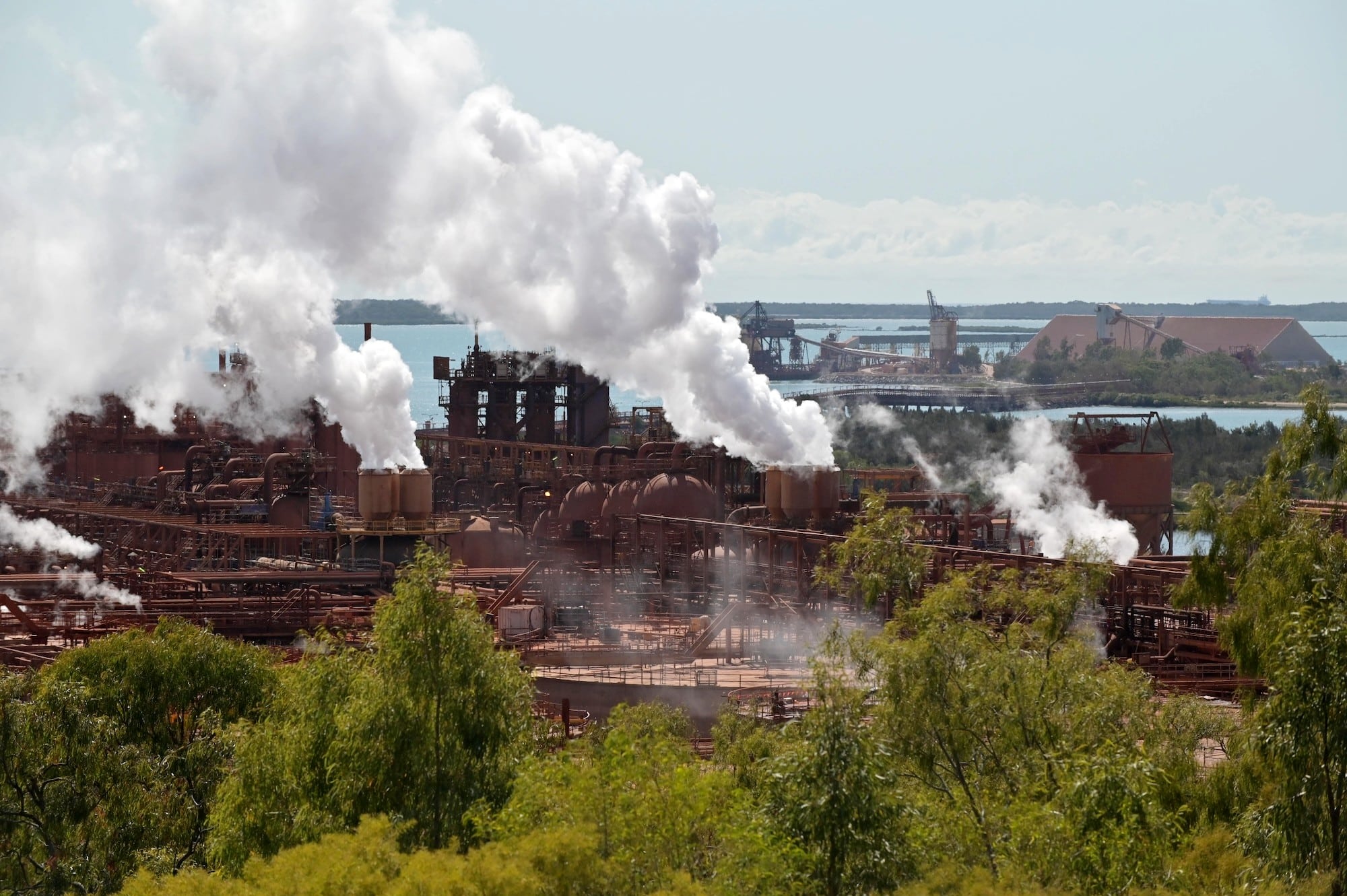
Rio Tinto is planning a 360MWh heat battery at its Yarwun alumina refinery in Gladstone, Queensland. The article provides no detail on technology, timeline, cost, or how the battery would be charged.
Where this fits
Heat batteries are a firming tool: they store energy during periods of low grid demand or high renewable supply, then release it when needed. This is a concrete acknowledgment that alumina refining, an energy-intensive industrial process, cannot run reliably on weather-dependent power alone. The project sits at the intersection of two Energy Realism pressures. First, it is a cost signal. A 360MWh heat battery large enough to smooth a major refinery's load is a material capital expense that would not exist if firm baseload power were available. Second, it flags the materials and sovereignty problem: heat-battery systems depend on advanced components and chemistry with supply chains concentrated in China and allied economies. Australia is adding complexity and foreign dependence to solve a problem that firm domestic power could address directly.
What it means
This is infrastructure built to work around the absence of reliable, dispatchable generation. The refinery will now carry the full capex and operational cost of storing and retrieving heat, and Australia will have added another link in a supply chain it does not control. A nuclear-powered refinery, or one backed by reliable gas peaking, would need no such system. The honest reading is not that heat batteries are bad, but that they are expensive insurance against grid unreliability, and the cost of that insurance is part of the true bill for a renewables-only transition.
By the numbers
at ~A$600–1000/kWh installed. Source: BNEF, CSIRO GenCost 2024-25. Indicative.
of average national (NEM) demand if fully dischargeable, then it needs recharging. Storage shifts power, it does not generate it.
lithium, graphite, nickel, copper and cobalt (~36 t lithium content). Replaced roughly every 12 years. Source: IEA, Argonne GREET. Indicative.
~75% of cells are China-made. Source: IEA cell-manufacturing share.
Figures are indicative conversions from the article's stated quantity using published cost, material and capacity factors (CSIRO GenCost, BNEF, IEA, IAEA). Ranges, not precise forecasts.
Go deeper on the numbers
The bigger picture
Energy security is national security. This connects to the wider case at Unprepared: Australia's dependence on a strategic rival, and how ready it is for the world that is coming.
Reported by Energy Magazine. Read the original report ↗
Related coverage
Australia’s most powerful turbines – up to 9.5 MW – mooted for giant wind project outside... - Renew Economy
“Tipping point”: Australia’s appeal to global offshore wind farm investors hangs in the balance, conference hears
Australia’s most successful renewables and storage developer seals huge debt deal to pave way for nex... - Renew Economy
Neoen Australia 1.8 billion debt finance raise backs a 1.2 GW portfolio
The numbers, as they move
A short, sourced brief when the figures shift: a transmission blow-out, a supply-chain move, a milestone.