SGE confident of UK SMR fleet prospects
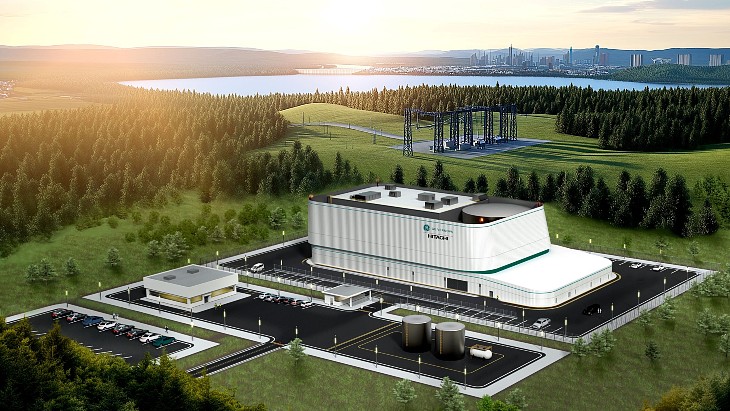
SGE, a Poland-based developer, has submitted plans to the UK's Advanced Nuclear Framework for a fleet of 14 BWRX-300 small modular reactors across three sites, totalling 4.2 GW of capacity. The company, backed by Samsung C&T, Laing O'Rourke, Aecon Group and Google Cloud, says it will privately finance the deployment without asking the UK government to cover development and construction costs. SGE is seeking a Contract for Difference arrangement, where the government guarantees a floor price for electricity; repayment flows only once reactors deliver power to the grid. The project is currently in the "deep dive" stage of the UK's approval process and expects to move into execution phase by November.
Where this fits
This deal demonstrates that private capital can fund firm, dispatchable nuclear power at scale without the upfront government subsidy that renewables-heavy grids demand for their complementary infrastructure: transmission, storage, gas backup. A fleet model, multiple units at multiple sites, addresses the financing risk that has stalled single-reactor projects. The BWRX-300's small, factory-built design cuts construction risk and on-site complexity. This is the business case for firm power that Australia's regulatory regime and grid planners have foreclosed: instead, Australia is locked into a renewables-plus-gas path that requires public funding for firming, transmission overbuild, and battery storage, all of which depend on supply chains controlled by China.
What it means
Australia's ban on nuclear generation means this private capital, this manufacturing capability, and this operational model are unavailable to build a low-emission, domestically controlled, reliable power system. The UK's willingness to integrate SMRs into its grid accelerates the international market for modular reactors while Australia remains dependent on fossil gas to cover weather-dependent renewable output and on China for the panels, batteries and processed minerals that make the renewable fleet work. The firm-power alternative to the renewables-plus-gas settlement is being built elsewhere.
By the numbers
at ~A$2000–3200/kW installed. Source: CSIRO GenCost 2024-25. Indicative.
at a ~38% capacity factor, and only when the wind blows, so it still needs firming.
enough for 5–12 TWh a year of firm, always-on power, generating for ~60 years. Source: CSIRO GenCost 2024-25 (A$8.5–13.2bn/GW), IAEA capacity factor.
Figures are indicative conversions from the article's stated quantity using published cost, material and capacity factors (CSIRO GenCost, BNEF, IEA, IAEA). Ranges, not precise forecasts.
Go deeper on the numbers
The bigger picture
Energy security is national security. This connects to the wider case at Unprepared: Australia's dependence on a strategic rival, and how ready it is for the world that is coming.
Reported by World Nuclear News. Read the original report ↗
Related coverage
Nuclear Reactor Developers Target Indiana, Kentucky, for Sites and Customers
Australians believe nuclear should be part of nation’s energy future - Mining.com.au
South Korea Builds Reactors Fast; Licensing Slows Them Down
Slovakia connects Mochovce 4 nuclear unit to grid after brief delay - oEnergetice.cz
The numbers, as they move
A short, sourced brief when the figures shift: a transmission blow-out, a supply-chain move, a milestone.