“Bowen test:” Giant data centre plan will challenge federal resolve on renewables
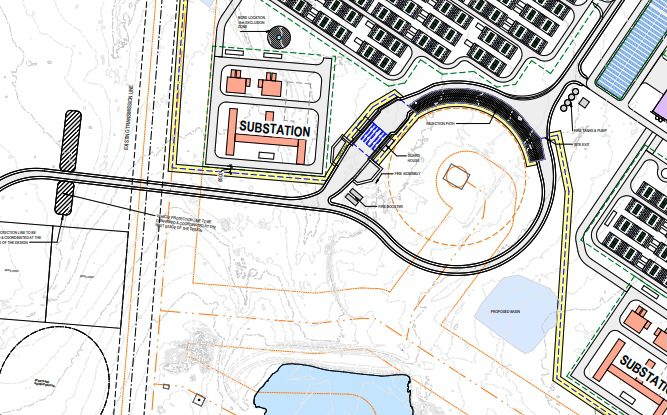
Anthropic and Zerra DC have proposed a 2.16 gigawatt data centre on Queensland's Darling Downs, designed around an operating coal-seam gas well. The facility would consume up to one-fifth of the state's peak electricity demand. Nearby gas-fired plants (Braemar 1 and 2, Daandine) and a 110 MW solar farm are the only current sources at scale. The developer's location choice, within Queensland's established energy precinct, reflects the hard constraint: 2.16 GW of continuous, firm power cannot run on weather-dependent renewables alone. First-stage operation is planned for 2027, before approved solar and wind farms in the pipeline are likely to deliver.
Where this fits
This is a test of whether Australia can provision industrial-scale load without gas firming. The project exposes the reliability problem baked into a renewables-only grid: a developer building a critical-infrastructure data centre anchors itself to gas wells and existing gas plants, not solar farms. It is also a sovereignty problem. Anthropic's choice to locate in Queensland, rather than elsewhere, depends on access to firm power now. If Australia cannot supply that without gas, it cedes control of Australia's AI infrastructure location and expansion to the availability of fossil fuel.
What it means
A 2.16 GW load cannot be met by solar and wind on the timescale required. The developer has chosen location based on gas capacity, not renewables potential. This signals that industrial users will either locate abroad, demand gas as a condition of investment, or both. Australia is trading long-term energy sovereignty and emissions reduction for the short-term economics of renewables-only deployment, while the alternative, firm, low-emission nuclear, remains barred by law.
By the numbers
enough for 18–28 TWh a year of firm, always-on power, generating for ~60 years. Source: CSIRO GenCost 2024-25 (A$8.5–13.2bn/GW), IAEA capacity factor.
Figures are indicative conversions from the article's stated quantity using published cost, material and capacity factors (CSIRO GenCost, BNEF, IEA, IAEA). Ranges, not precise forecasts.
at ~A$1100–1600/kW installed. Source: CSIRO GenCost 2024-25. Indicative.
at a ~24% capacity factor, and only when the sun shines, so it still needs firming.
~80% of modules are China-made. Source: IEA solar supply-chain data.
Figures are indicative conversions from the article's stated quantity using published cost, material and capacity factors (CSIRO GenCost, BNEF, IEA, IAEA). Ranges, not precise forecasts.
Go deeper on the numbers
The bigger picture
Energy security is national security. This connects to the wider case at Unprepared: Australia's dependence on a strategic rival, and how ready it is for the world that is coming.
Reported by RenewEconomy. Read the original report ↗
Related coverage
Big battery durations are headed to double figures, and their chemistries are changing – again
Does Snowy 2.0 still have a place in a world of batteries? - ABC News & Headlines – Australian Broadcasting Corporation
Queensland energy plan assumes zero data centre demand - AFR
The power cable that could make or break Victoria - AFR
The numbers, as they move
A short, sourced brief when the figures shift: a transmission blow-out, a supply-chain move, a milestone.