Rooftop installs rise on back of battery rebate scheme
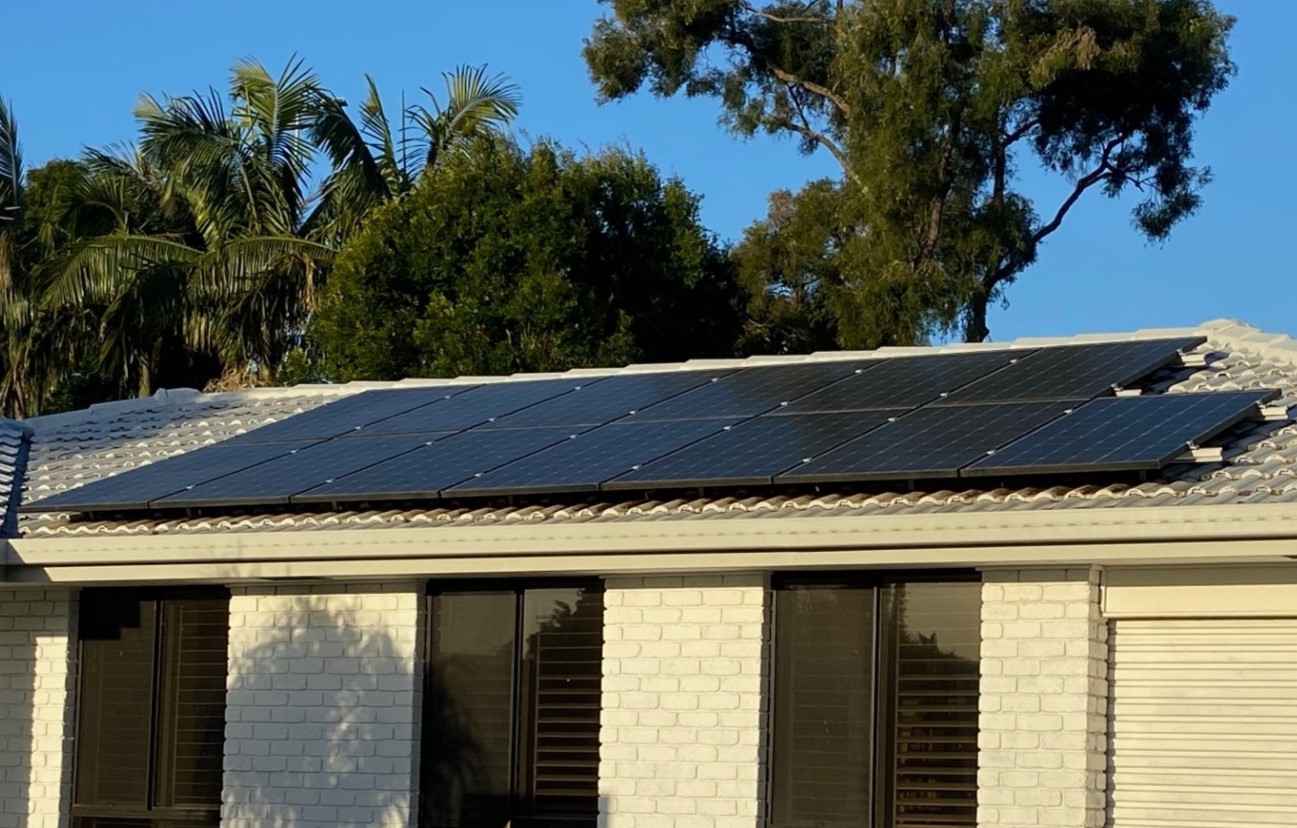
Australia registered 311.8 MW of small-scale rooftop solar in September 2026, a 7% increase on the previous month. The surge is driven by the federal Cheaper Home Batteries Scheme, which bundles battery storage with solar installations to qualify for rebates. Year-to-date deployments to September are 43% ahead of the same period in 2025. Battery installations reached an estimated 966.5 MWh in September, up 12.5% on August, with the market now stabilising near 1 GW per month. The typical system size remains around 10 kW.
Where this fits
This story bears on cost and materials sovereignty. The rebate scheme is accelerating rooftop deployment, which on its face appears cheap per megawatt-hour, but the programme masks two whole-system pressures. First, distributed rooftop solar with household batteries requires massive complementary spending on transmission and firming capacity (gas plants and interconnects) to handle weather variability across the fleet. Second, Australia is now importing batteries and the minerals they contain, lithium, cobalt, nickel, from supply chains dominated by China. A rebate that drives volume without addressing the embedded cost and geopolitical exposure of that supply chain is a subsidy to Chinese manufacturing.
What it means
The scheme locks Australia into reliance on Chinese battery supply at exactly the moment when energy security should demand sovereign control over critical grid assets. Every household battery installed is a bet that China will continue to sell, and that the yuan will not become a weapon. Meanwhile, firm dispatchable power, the alternative, nuclear, remains banned by law, is foregone in favour of a grid that will require years of gas-plant construction and network overhaul to remain reliable. The rebate works. The real question is what Australia is paying for it.
By the numbers
at ~A$1100–1600/kW installed. Source: CSIRO GenCost 2024-25. Indicative.
at a ~24% capacity factor, and only when the sun shines, so it still needs firming.
~80% of modules are China-made. Source: IEA solar supply-chain data.
enough for 0–0 TWh a year of firm, always-on power, generating for ~60 years. Source: CSIRO GenCost 2024-25 (A$8.5–13.2bn/GW), IAEA capacity factor.
Figures are indicative conversions from the article's stated quantity using published cost, material and capacity factors (CSIRO GenCost, BNEF, IEA, IAEA). Ranges, not precise forecasts.
Go deeper on the numbers
The bigger picture
Energy security is national security. This connects to the wider case at Unprepared: Australia's dependence on a strategic rival, and how ready it is for the world that is coming.
Reported by PV Magazine Australia. Read the original report ↗
Related coverage
Snowy 2.0: A monument to this nation’s energy policy hubris - The Australian
Gas reserve ‘could blow away $330bn’ - The Australian
It might not feel like it, but our power is among the world’s cheapest - AFR
First new steel mill in Australia in 35 years to be the first to be powered by 100 per cent renewables - Renew Economy
The numbers, as they move
A short, sourced brief when the figures shift: a transmission blow-out, a supply-chain move, a milestone.