Key equipment installed in BREST-OD-300 turbine hall
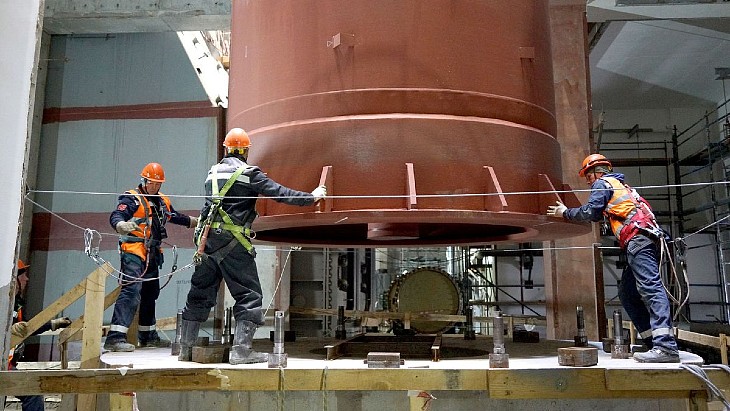
Rosatom has installed two large steam separator-superheaters in the turbine hall of the BREST-OD-300 fast reactor at Seversk in Russia's Tomsk region. Each unit stands 16 metres tall and weighs 95 tonnes. The installation is part of ongoing construction toward commercial operation of this 300 megawatt-electric demonstrator, which began in 2021. The BREST-OD-300 is designed to operate a closed nuclear fuel cycle, reprocessing used fuel on-site into mixed uranium-plutonium nitride fuel. The initial operational target was 2026; the article does not state a revised timeline, though concrete pouring for the turbine foundation foundation began in May this year, with completion expected by year-end. If the 300 megawatt-electric unit proves viable, Rosatom plans a larger 1,200 megawatt-electric version.
Where this fits
This is a live example of the firm power alternative Australia has legally foreclosed. Fast reactors with closed fuel cycles reduce waste and extend fuel resources; they produce dispatchable, weather-independent electricity with the lowest lifecycle emissions of any generation source. Russia is moving fast-reactor technology toward commercial demonstration at a time when Australia's nuclear ban prevents engagement with the technology, its supply chains, or the industrial competence to build it domestically.
What it means
Australia is locked out of a generation technology that solves the core problem of a renewables-only grid: how to deliver firm power without gas, and how to do it on a supply chain not owned by China. Rosatom's progress underlines that the technical path is clear and advancing. Australia's absence from that path is a strategic choice with long-term consequences for grid sovereignty and the cost of the transition.
By the numbers
at ~A$2000–3200/kW installed. Source: CSIRO GenCost 2024-25. Indicative.
at a ~38% capacity factor, and only when the wind blows, so it still needs firming.
enough for 0–1 TWh a year of firm, always-on power, generating for ~60 years. Source: CSIRO GenCost 2024-25 (A$8.5–13.2bn/GW), IAEA capacity factor.
Figures are indicative conversions from the article's stated quantity using published cost, material and capacity factors (CSIRO GenCost, BNEF, IEA, IAEA). Ranges, not precise forecasts.
Go deeper on the numbers
The bigger picture
Energy security is national security. This connects to the wider case at Unprepared: Australia's dependence on a strategic rival, and how ready it is for the world that is coming.
Reported by World Nuclear News. Read the original report ↗
Related coverage
Nuclear Reactor Developers Target Indiana, Kentucky, for Sites and Customers
Australians believe nuclear should be part of nation’s energy future - Mining.com.au
South Korea Builds Reactors Fast; Licensing Slows Them Down
Slovakia connects Mochovce 4 nuclear unit to grid after brief delay - oEnergetice.cz
The numbers, as they move
A short, sourced brief when the figures shift: a transmission blow-out, a supply-chain move, a milestone.