Data centre demand to reach 34TWh by 2036, AEMO reports
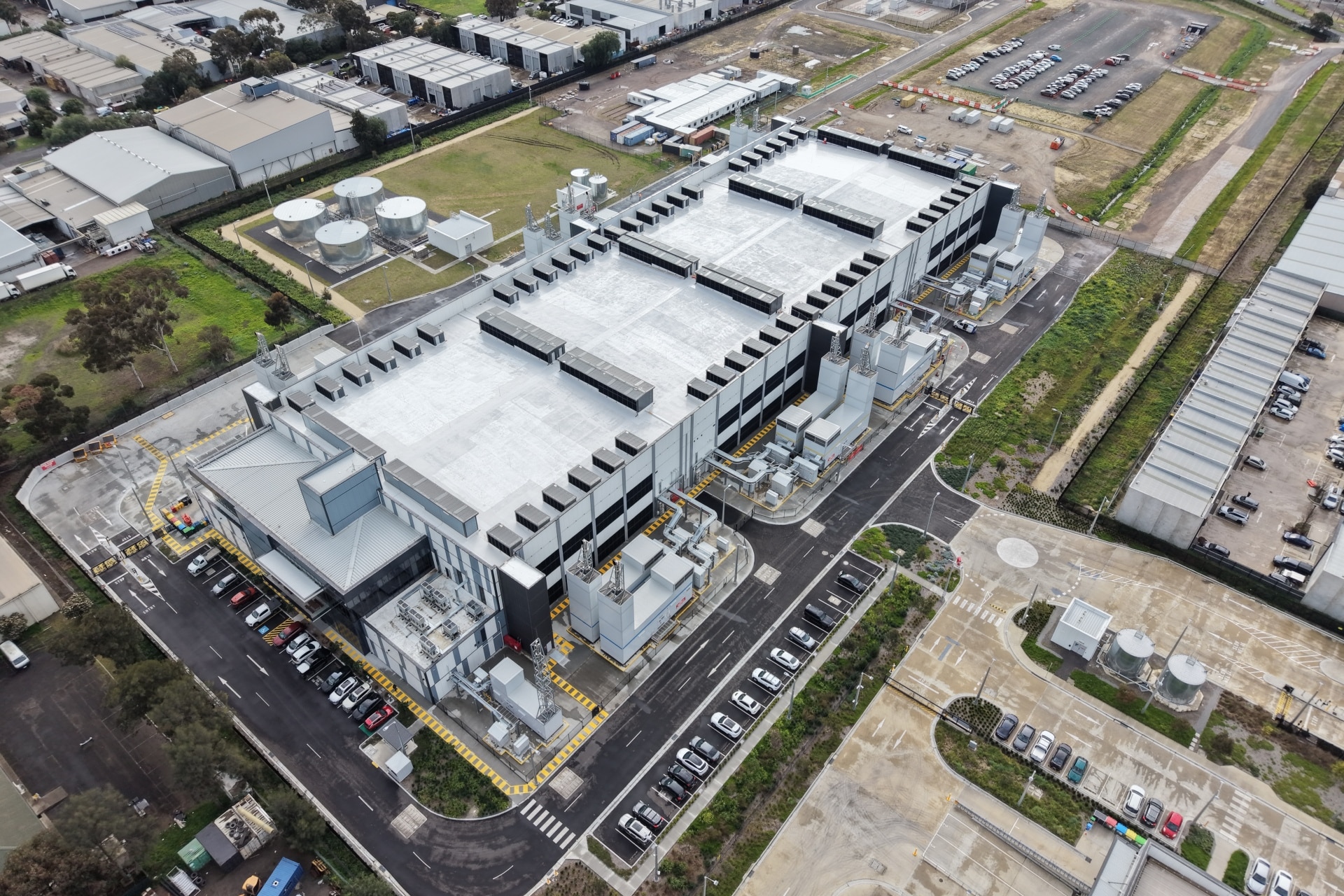
AEMO forecasts data centre electricity demand will rise from 5TWh to 34TWh by 2035, 36. The jump reflects Australia's emergence as a regional hub for computing, driven partly by AI workloads and global demand for data services.
Where this fits
Data centre load is firm, continuous, and growing fast. It sits at the core of the reliability problem: Australia is building a renewables-heavy grid while demand from computing, electrified transport, and industry is becoming less predictable and more baseload-intensive. A solar and wind fleet cannot meet this load profile without either massive overbuild and storage (a materials and cost problem) or continuous gas firming (an emissions and cost problem). Nuclear plants, running at 90% capacity factors with no weather dependency, are what the grid needs for this load shape. They are banned by law.
What it means
Australia is committing to a seven-fold increase in data centre power at the exact moment the grid is most exposed to firming cost and supply-chain risk. Meeting 34TWh of new data centre demand with renewables means building far more solar and wind capacity than the energy numbers suggest, plus batteries or gas on standby. Both paths are expensive and both depend on supply chains dominated by China. A firm, domestically operable nuclear fleet would reduce that dependence, lower whole-system cost, and deliver the kind of power data centres and other firm loads actually need. Instead, Australia is locking in weather-dependent supply and the gas plants required to back it up.
By the numbers
at ~A$600–1000/kWh installed. Source: BNEF, CSIRO GenCost 2024-25. Indicative.
of average national (NEM) demand if fully dischargeable, then it needs recharging. Storage shifts power, it does not generate it.
lithium, graphite, nickel, copper and cobalt (~3400000 t lithium content). Replaced roughly every 12 years. Source: IEA, Argonne GREET. Indicative.
~75% of cells are China-made. Source: IEA cell-manufacturing share.
enough for 12184–31536 TWh a year of firm, always-on power, generating for ~60 years. Source: CSIRO GenCost 2024-25 (A$8.5–13.2bn/GW), IAEA capacity factor.
Figures are indicative conversions from the article's stated quantity using published cost, material and capacity factors (CSIRO GenCost, BNEF, IEA, IAEA). Ranges, not precise forecasts.
Go deeper on the numbers
The bigger picture
Energy security is national security. This connects to the wider case at Unprepared: Australia's dependence on a strategic rival, and how ready it is for the world that is coming.
Reported by Utility Magazine. Read the original report ↗
Related coverage
Big battery durations are headed to double figures, and their chemistries are changing – again
Does Snowy 2.0 still have a place in a world of batteries? - ABC News & Headlines – Australian Broadcasting Corporation
Queensland energy plan assumes zero data centre demand - AFR
The power cable that could make or break Victoria - AFR
The numbers, as they move
A short, sourced brief when the figures shift: a transmission blow-out, a supply-chain move, a milestone.