Rosatom signs floating nuclear power deal for Indonesia
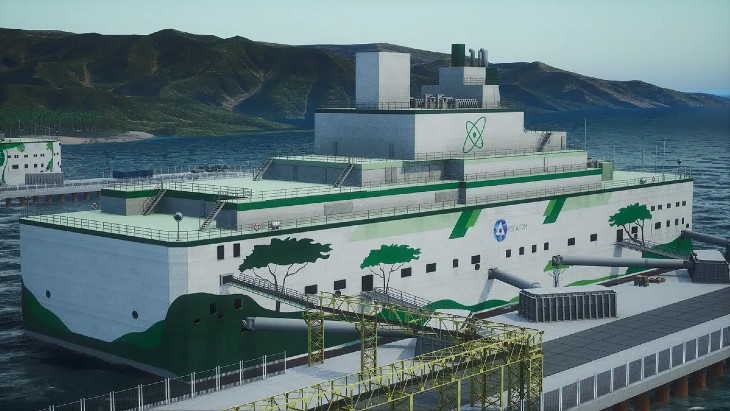
Rosatom has signed an agreement to deploy two floating nuclear power units (FPU-100) off Halmahera Island in eastern Indonesia, delivering 200 MW of combined capacity within five years. The deal, signed at Russian Energy Week in Moscow, is structured as private-sector investment with no state budget funding. Rosatom's Director General framed it as the world's first export agreement for electricity from a floating unit and a signal to global markets that nuclear infrastructure can transform national economies.
Where this fits
This deal exposes a critical gap in Australia's energy strategy. While Indonesia secures firm, low-carbon baseload power through partnership with Russia, Australia is locked into a renewables-only path by law, unable to deploy the same technology at comparable speed or cost. The floating unit model is purpose-built for island grids and remote regions, precisely Australia's geography, yet the ban on nuclear means Australia must instead overbuild wind, solar and transmission, then firm the gaps with gas or unproven long-duration storage. Indonesia is moving to strengthen energy sovereignty; Australia is entrenching dependence on China for panels, batteries and inverters.
What it means
Australia is watching a peer economy solve the exact problem our energy policy refuses to address: how to deliver reliable, emissions-low power without years of transmission rebuild and weather-dependent volatility. The floating reactor model works in monsoon regions with dispersed load, which describes much of Australia's island and remote coastline. While the deal reflects no shift in Australia's own nuclear prohibition, it is a live demonstration of the firm-power alternative being foregone, and a reminder that energy security is now a strategic asset others are actively acquiring.
By the numbers
at ~A$2000–3200/kW installed. Source: CSIRO GenCost 2024-25. Indicative.
at a ~38% capacity factor, and only when the wind blows, so it still needs firming.
enough for 0–1 TWh a year of firm, always-on power, generating for ~60 years. Source: CSIRO GenCost 2024-25 (A$8.5–13.2bn/GW), IAEA capacity factor.
Figures are indicative conversions from the article's stated quantity using published cost, material and capacity factors (CSIRO GenCost, BNEF, IEA, IAEA). Ranges, not precise forecasts.
Go deeper on the numbers
The bigger picture
Energy security is national security. This connects to the wider case at Unprepared: Australia's dependence on a strategic rival, and how ready it is for the world that is coming.
Reported by World Nuclear News. Read the original report ↗
Related coverage
Nuclear Reactor Developers Target Indiana, Kentucky, for Sites and Customers
Australians believe nuclear should be part of nation’s energy future - Mining.com.au
South Korea Builds Reactors Fast; Licensing Slows Them Down
Slovakia connects Mochovce 4 nuclear unit to grid after brief delay - oEnergetice.cz
The numbers, as they move
A short, sourced brief when the figures shift: a transmission blow-out, a supply-chain move, a milestone.