Solar myths and misconceptions busted
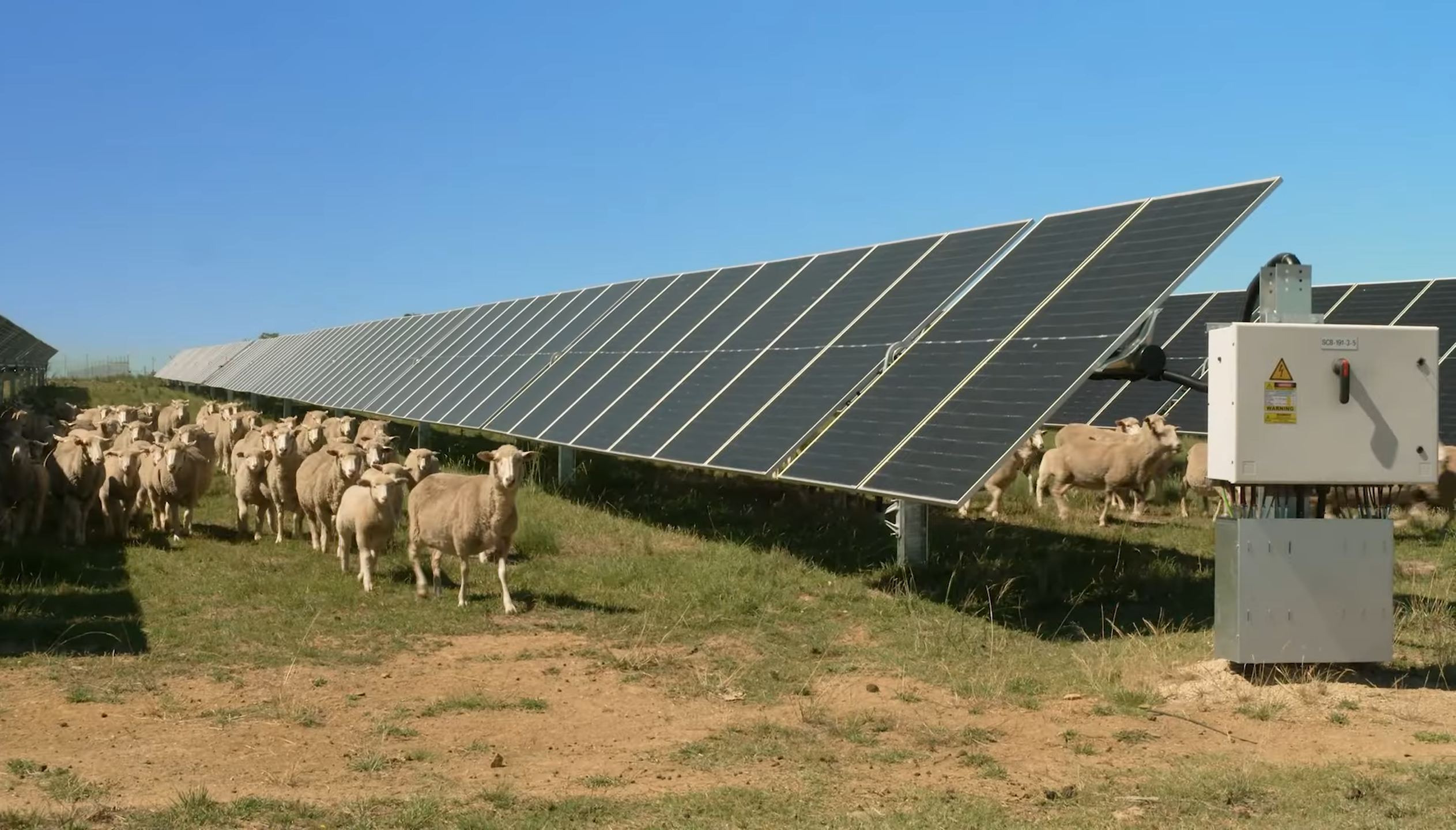
A Sydney recycling facility can process 200,000 solar panels annually and recover 90% of material by weight. Government at federal and state levels is exploring local panel recycling infrastructure and a national system. The article addresses three common claims: that panels cannot be recycled, that heavy metals leach from intact modules, and that solar deployment competes with farmland for productive use. On recycling, the piece concedes the real constraint is not technical feasibility but building collection and processing at scale. On heavy metals, it notes that sealed panels do not passively leach; end-of-life management is the material concern. The article does not complete the third myth.
Where this fits
Recycling is one of the whole-system costs solar deployment has deferred. A million panels installed means, thirty years later, a recycling industry that did not exist before. That industry now exists in pilot form; scaling it to handle Australia's installed base in the 2050s will require capital, logistics, and input standards that do not yet exist. The article implicitly concedes that the materials loop was not closed when panels were deployed, and that closure is now a burden on governments and operators. This is a materials sovereignty issue: Australia has no domestic supply chain for panel components and now faces domestic waste streams that depend on processes licensed or influenced from abroad.
What it means
Australia locked itself into a solar-first transition without designing the back end. A 90% recovery rate leaves 10% destined for landfill per panel recycled. That fraction compounds across millions of units. The honest point: panels are recyclable in principle but the national system to do it is years behind the installed base. That lag itself is a cost, and a sign that the true bill for decarbonisation at speed was never fully counted upfront.
By the numbers
at ~A$1100–1600/kW installed. Source: CSIRO GenCost 2024-25. Indicative.
at a ~24% capacity factor, and only when the sun shines, so it still needs firming.
~80% of modules are China-made. Source: IEA solar supply-chain data.
enough for 1–1 TWh a year of firm, always-on power, generating for ~60 years. Source: CSIRO GenCost 2024-25 (A$8.5–13.2bn/GW), IAEA capacity factor.
Figures are indicative conversions from the article's stated quantity using published cost, material and capacity factors (CSIRO GenCost, BNEF, IEA, IAEA). Ranges, not precise forecasts.
Go deeper on the numbers
The bigger picture
Energy security is national security. This connects to the wider case at Unprepared: Australia's dependence on a strategic rival, and how ready it is for the world that is coming.
Reported by PV Magazine Australia. Read the original report ↗
Related coverage
Lithium demand from storage expected to slow to 5% annual growth
Helcro Solar on What Happens to Old Panels as Australia Moves Toward Mandatory Solar Recycling - Medianet News Hub
Australia's First Facility to Boost Critical Minerals Sector - Mirage News
New Platform Examines Australia's Critical Minerals Future - Mirage News
The numbers, as they move
A short, sourced brief when the figures shift: a transmission blow-out, a supply-chain move, a milestone.