Joint venture formed for six-unit SMR plant in Poland
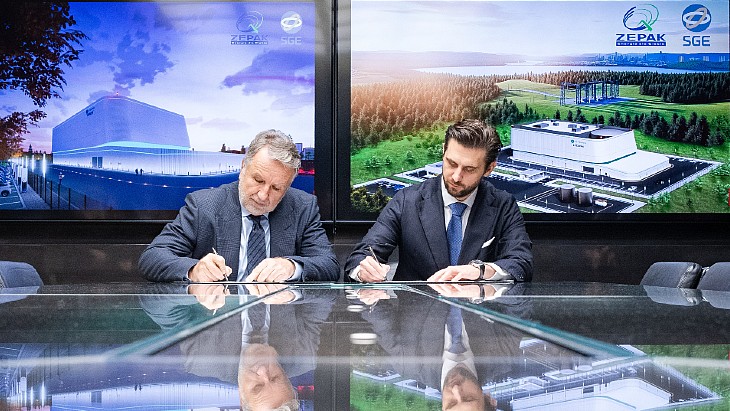
Poland's SGE and ZE PAK have formed a joint venture to build a six-unit BWRX-300 small modular reactor plant at Pątnów, replacing a retiring coal station. The plant would have 1,800 MWe capacity. SGE is co-investor in the BWRX-300 design and has approval in principle for 26 SMRs across Poland, with a further 14 proposed across UK sites. ZE PAK will contribute land from its existing coal plant; the company retains an option to stay as minority shareholder or exit. This is one of multiple SMR projects moving toward construction in Europe.
Where this fits
This demonstrates the firm-power case working at speed in a major NATO economy. Poland is replacing coal with nuclear SMRs rather than weather-dependent renewables, securing a 1,800 MW firm baseload on a single site without the transmission overbuild, battery storage, or gas-firming costs that a renewable-led transition demands. The project also threads the sovereignty point: Poland is building domestic energy independence using private capital and a non-Chinese supply chain, whereas a solar-and-battery path binds the country to Chinese manufacturing and supply-chain risk during a period of geopolitical strain.
What it means
Australia faces the inverse choice. A renewables grid requires firm power (gas, batteries, or hydrogen from electrolysis) and a tripled transmission network to move variable generation thousands of kilometres; the bill lands on the consumer and the state. Poland's decision to replace one coal plant with firm, dense, low-material nuclear power on the same site shows the path not taken here. Nuclear is banned by law in Australia. Meanwhile, the country is committing $90+ billion to build a renewables fleet that will need constant firming, all while depending on Chinese factories for panels, batteries, and inverters, the very supply-chain trap Poland is avoiding.
By the numbers
at ~A$1100–1600/kW installed. Source: CSIRO GenCost 2024-25. Indicative.
at a ~24% capacity factor, and only when the sun shines, so it still needs firming.
~80% of modules are China-made. Source: IEA solar supply-chain data.
enough for 1–3 TWh a year of firm, always-on power, generating for ~60 years. Source: CSIRO GenCost 2024-25 (A$8.5–13.2bn/GW), IAEA capacity factor.
Figures are indicative conversions from the article's stated quantity using published cost, material and capacity factors (CSIRO GenCost, BNEF, IEA, IAEA). Ranges, not precise forecasts.
Go deeper on the numbers
The bigger picture
Energy security is national security. This connects to the wider case at Unprepared: Australia's dependence on a strategic rival, and how ready it is for the world that is coming.
Reported by World Nuclear News. Read the original report ↗
Related coverage
Nuclear Reactor Developers Target Indiana, Kentucky, for Sites and Customers
Australians believe nuclear should be part of nation’s energy future - Mining.com.au
South Korea Builds Reactors Fast; Licensing Slows Them Down
Slovakia connects Mochovce 4 nuclear unit to grid after brief delay - oEnergetice.cz
The numbers, as they move
A short, sourced brief when the figures shift: a transmission blow-out, a supply-chain move, a milestone.