Big savings, big barriers – getting Australian business off gas | SwitchedOn Australia
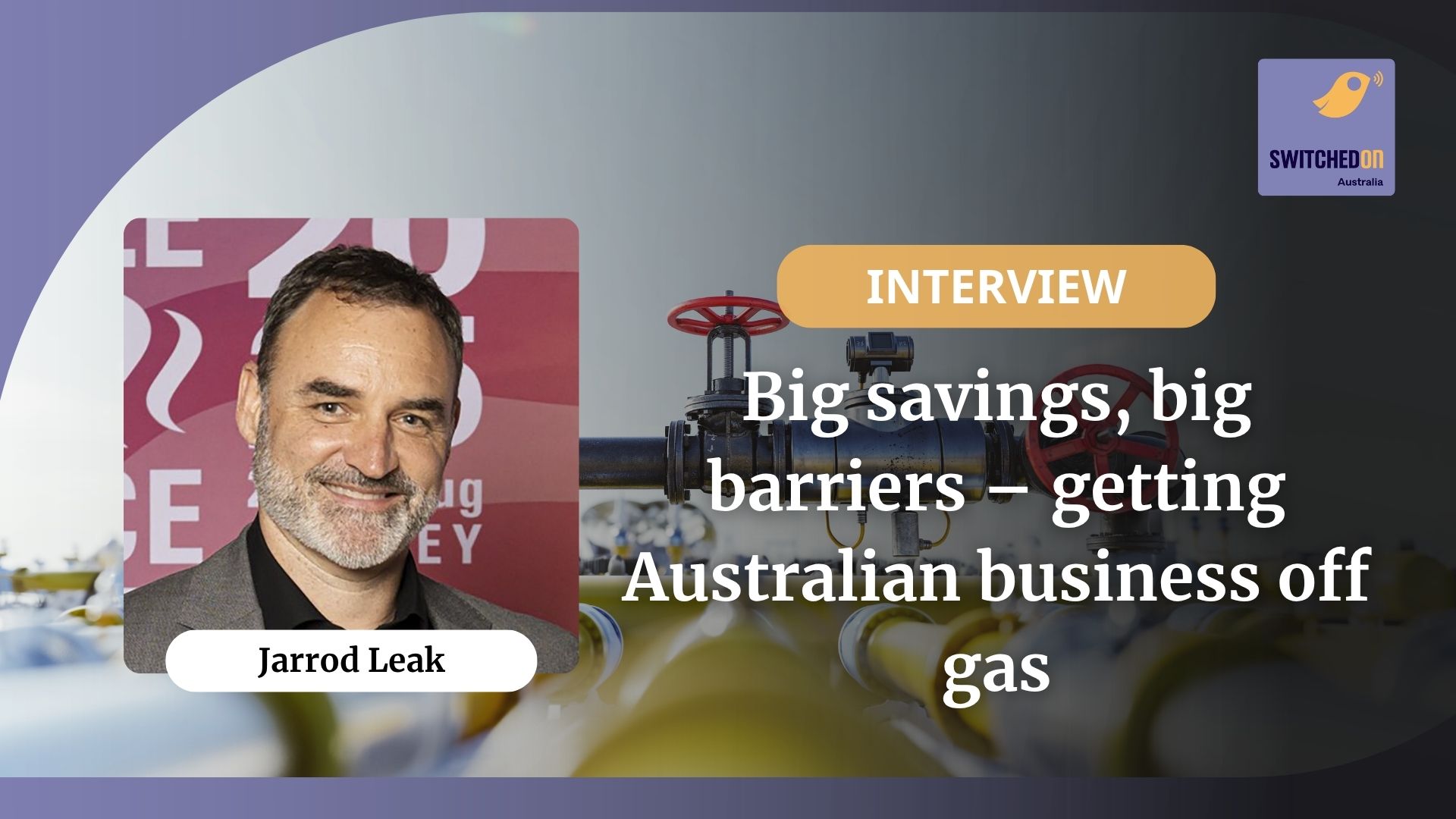
Australian businesses can cut heating costs and emissions by switching gas boilers to electric heat pumps, but adoption remains slow. Swimming pools, laundries and food processors are making the shift. Hospitals and aged care represent large untapped opportunities. Barriers are real: high upfront capital costs, expensive electricity connection charges, and a shortage of skilled refrigeration mechanics. The article notes that thermal storage, heat recovery and time-of-use tariffs could improve economics and grid use. Government targets and sustained support would help businesses hire and train the tradespeople needed to scale the transition.
Where this fits
This story illustrates the cost problem buried in Australia's electrification path. Heat pump switching is technically sound and can cut energy bills, but stalls at the economics: upfront cost, connection charges, and skilled-labour scarcity. These are the hidden whole-system costs of a renewables-plus-electrification strategy. As industrial and commercial demand shifts from gas to electricity, grid connection infrastructure must expand, expensive, slow, and often a project killer. The piece does not address what happens to grid reliability when peak heating demand (winter mornings, wet-bulb events) coincides with low wind and solar output; gas was partly attractive because it was dispatchable and did not require transmission overbuild.
What it means
Electrification of heating is not a matter of swapping one fuel for another. It requires concurrent investment in connection capacity, grid firming (which the article does not mention), and workforce development. Australia is betting on this path while keeping firm, low-carbon generation off the table. A business switching to heat pumps still depends on gas plants cycling up to meet demand on cold, calm days. The barrier here is not technology but cost and coordination, the real price of a firm-power-free grid.
Go deeper on the numbers
The bigger picture
Energy security is national security. This connects to the wider case at Unprepared: Australia's dependence on a strategic rival, and how ready it is for the world that is coming.
Reported by RenewEconomy. Read the original report ↗
Related coverage
Australia’s most powerful turbines – up to 9.5 MW – mooted for giant wind project outside... - Renew Economy
“Tipping point”: Australia’s appeal to global offshore wind farm investors hangs in the balance, conference hears
Australia’s most successful renewables and storage developer seals huge debt deal to pave way for nex... - Renew Economy
Neoen Australia 1.8 billion debt finance raise backs a 1.2 GW portfolio
The numbers, as they move
A short, sourced brief when the figures shift: a transmission blow-out, a supply-chain move, a milestone.