Hinkley Point C completes 620-metre tunnel for fish
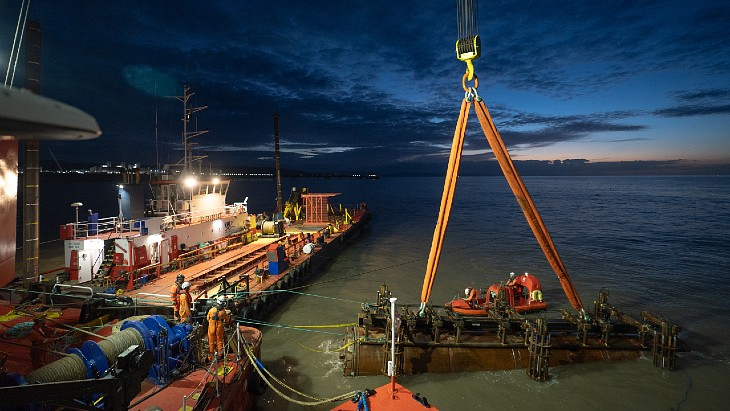
EDF has completed a 620-metre tunnel as part of Hinkley Point C's fish protection system. The tunnel is one element of more than eight kilometres of marine infrastructure designed to return fish safely to the Bristol Channel, including intake heads that slow water entry, 3.4-kilometre intake tunnels, a 1.8-kilometre outfall tunnel, and an acoustic deterrent system. EDF states the total fish protection package cost GBP700 million and represents more protection than any other coastal power station globally.
Where this fits
Hinkley Point C is now eight years behind its original completion date and has blown its cost estimate from GBP26 billion to between GBP31-34 billion. These delays and cost overruns are real. They are also the price of building firm, low-emission, long-lived power with the environmental controls that modern planning demands. A 3,260 MW nuclear plant operating 80 years produces vastly more electricity per kilogram of material and per tonne of lifecycle emissions than the renewable alternative. That alternative would require tens of thousands of tonnes of mined and processed minerals, batteries that end in landfill within 15 years, and solar panels manufactured in coal-fired Chinese factories. The fish protection systems here are a cost, yes. They are also a sign that firm power can be built to coexist with environmental obligation.
What it means
Australia has banned nuclear generation by law. It is instead committed to a renewables path that pushes the material and supply-chain burden onto China, whose factories power most solar and battery manufacturing. Hinkley Point C's delays are frustrating. The alternative, a weather-dependent grid locked into Chinese processing dominance and perpetual gas firming, trades a known timeline problem for an unknown sovereignty problem.
By the numbers
enough for 1–1 TWh a year of firm, always-on power, generating for ~60 years. Source: CSIRO GenCost 2024-25 (A$8.5–13.2bn/GW), IAEA capacity factor.
Figures are indicative conversions from the article's stated quantity using published cost, material and capacity factors (CSIRO GenCost, BNEF, IEA, IAEA). Ranges, not precise forecasts.
Go deeper on the numbers
The bigger picture
Energy security is national security. This connects to the wider case at Unprepared: Australia's dependence on a strategic rival, and how ready it is for the world that is coming.
Reported by World Nuclear News. Read the original report ↗
Related coverage
Nuclear Reactor Developers Target Indiana, Kentucky, for Sites and Customers
Australians believe nuclear should be part of nation’s energy future - Mining.com.au
South Korea Builds Reactors Fast; Licensing Slows Them Down
Slovakia connects Mochovce 4 nuclear unit to grid after brief delay - oEnergetice.cz
The numbers, as they move
A short, sourced brief when the figures shift: a transmission blow-out, a supply-chain move, a milestone.