Low electricity prices could impact EPR2 programme funding, auditor warns
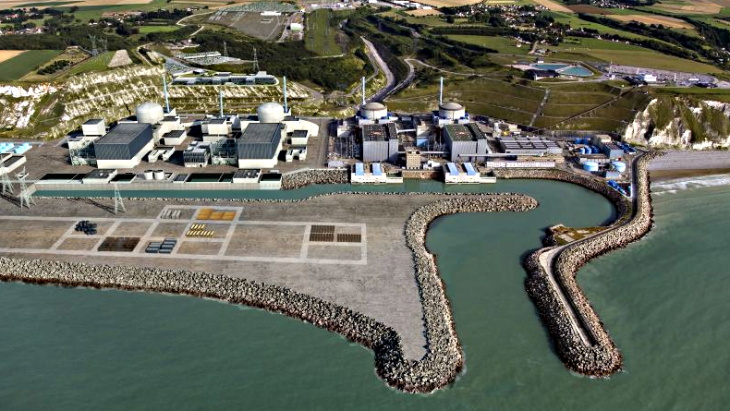
France's state audit office has warned that low wholesale electricity prices could jeopardise EDF's ability to fund construction of six planned EPR2 reactors. The project, announced by President Macron in 2022, was originally budgeted at EUR51.7 billion but revised to EUR67.4 billion. Construction was to start in 2027 at three sites: Penly, Gravelines and Bugey, each receiving a pair of reactors. The Cour des Comptes flagged the funding risk as a material constraint on the programme's delivery.
Where this fits
This reveals a core tension in the renewables-heavy grid transition: low wholesale prices during high wind and solar output make it harder to fund the firm, dispatchable power that keeps the grid stable when weather is poor. France's nuclear programme is capital-intensive and long-lived; it needs confidence in revenue over decades, not spot-price volatility driven by renewable oversupply. The funding pressure is a cost problem, but it is also a reliability problem: if new firm capacity cannot be funded, grids must either overbuild renewables further, deepening the material and transmission cost, or rely more heavily on gas for firming. Neither path is cheaper or more sovereign.
What it means
Australia faces the same structural hazard. A grid built on renewables and storage must be overbuilt to cover poor-weather periods; that overcapacity pushes wholesale prices down during good conditions, making it harder to fund the dispatchable plant, whether gas or the alternative, nuclear, needed to firm the system. Australia has no indigenous uranium enrichment or reactor design capacity and depends on imported gas. A firm, low-material alternative to both is legislated out of reach. The result is a grid that grows more expensive to build and more exposed to supply-chain risk while remaining weather-dependent.
By the numbers
enough for 65–101 TWh a year of firm, always-on power, generating for ~60 years. Source: CSIRO GenCost 2024-25 (A$8.5–13.2bn/GW), IAEA capacity factor.
Figures are indicative conversions from the article's stated quantity using published cost, material and capacity factors (CSIRO GenCost, BNEF, IEA, IAEA). Ranges, not precise forecasts.
Go deeper on the numbers
The bigger picture
Energy security is national security. This connects to the wider case at Unprepared: Australia's dependence on a strategic rival, and how ready it is for the world that is coming.

A Lie Told in the Rose Garden
On September 25, 2015, Xi Jinping promised in the White House Rose Garden that China would not militarise its artificial islands. Part VI of the Unprepared series.
Reported by World Nuclear News. Read the original report ↗
Related coverage
Nuclear microreactor sparks energy debate - ABC News & Headlines – Australian Broadcasting Corporation
The line that Australia’s nuclear power ban was never properly debated is, frankly, bullshit
Queensland MP renews push to lift Australia nuclear moratorium after microreactor milestone - Traders Union
Ute-sized nuclear reactor reignites energy debate - ABC News & Headlines – Australian Broadcasting Corporation
The numbers, as they move
A short, sourced brief when the figures shift: a transmission blow-out, a supply-chain move, a milestone.