First batteries arrive at Reeves Plains Battery project
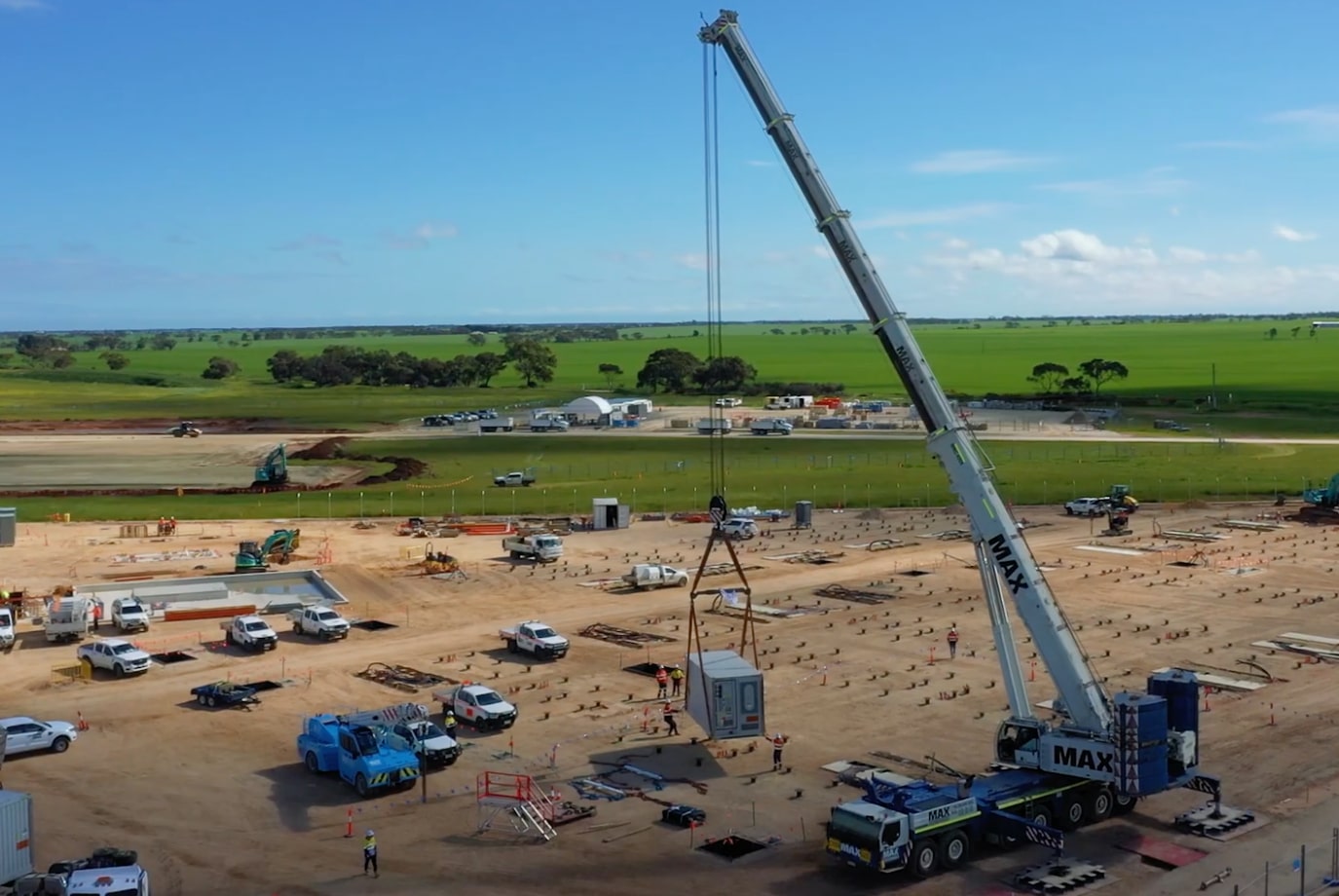
Alinta Energy has received the first 48 of 194 battery units for the Reeves Plains Battery project in South Australia. The facility is designed to store 250 megawatts of capacity for four hours. The arrival marks a construction milestone for a project expected to support the grid as renewables penetration increases.
Where this fits
Reeves Plains is a symptom of the whole-system cost Australia is now paying to run a grid built on weather-dependent generation. A four-hour battery at 250 megawatts costs hundreds of millions of dollars and can only firm the grid through short gaps between wind and solar output. The project bears on two pressures at once: first, the reliability bill is rising because renewables need intensive, capital-heavy firming infrastructure that coal and gas plants did not require. Second, Australia is locking in dependence on China for battery manufacture, supply-chain processing, and raw-material conversion. The 194 units will be shipped, installed, and managed within a supply ecosystem where Beijing holds decisive leverage over cost, delivery and end-of-life recycling.
What it means
Australia's grid is being firmed by batteries that cost billions to deploy at scale, require replacement every ten to fifteen years, and are made overseas on terms Australia cannot control. A firm, energy-dense alternative, nuclear generation, remains banned by law, foreclosing the option that would eliminate the need for this infrastructure entirely and return control of the electricity supply chain to Australian sovereign hands. The Reeves Plains project is necessary under current law, but it is also the cost of choosing weather-dependent generation over firm power.
By the numbers
at ~A$600–1000/kWh installed. Source: BNEF, CSIRO GenCost 2024-25. Indicative.
of average national (NEM) demand if fully dischargeable, then it needs recharging. Storage shifts power, it does not generate it.
lithium, graphite, nickel, copper and cobalt (~100 t lithium content). Replaced roughly every 12 years. Source: IEA, Argonne GREET. Indicative.
~75% of cells are China-made. Source: IEA cell-manufacturing share.
enough for 0–1 TWh a year of firm, always-on power, generating for ~60 years. Source: CSIRO GenCost 2024-25 (A$8.5–13.2bn/GW), IAEA capacity factor.
Figures are indicative conversions from the article's stated quantity using published cost, material and capacity factors (CSIRO GenCost, BNEF, IEA, IAEA). Ranges, not precise forecasts.
Go deeper on the numbers
The bigger picture
Energy security is national security. This connects to the wider case at Unprepared: Australia's dependence on a strategic rival, and how ready it is for the world that is coming.
Reported by Utility Magazine. Read the original report ↗
Related coverage
AGL commissions 500-MW Liddell battery in New South Wales - Renewables Now
Templers BESS underway again, in a post-Zen world
Businesses “do the math” and want to go electric – right up until they try to connect to the grid
Renewables hit a new all-time high on Australia’s main grid, nearly half of it from rooftop solar - Renew Economy
The numbers, as they move
A short, sourced brief when the figures shift: a transmission blow-out, a supply-chain move, a milestone.