“We don’t simply see turbines:” Grazier says hosting wind farms eases pressure on land and helps prepare for drought
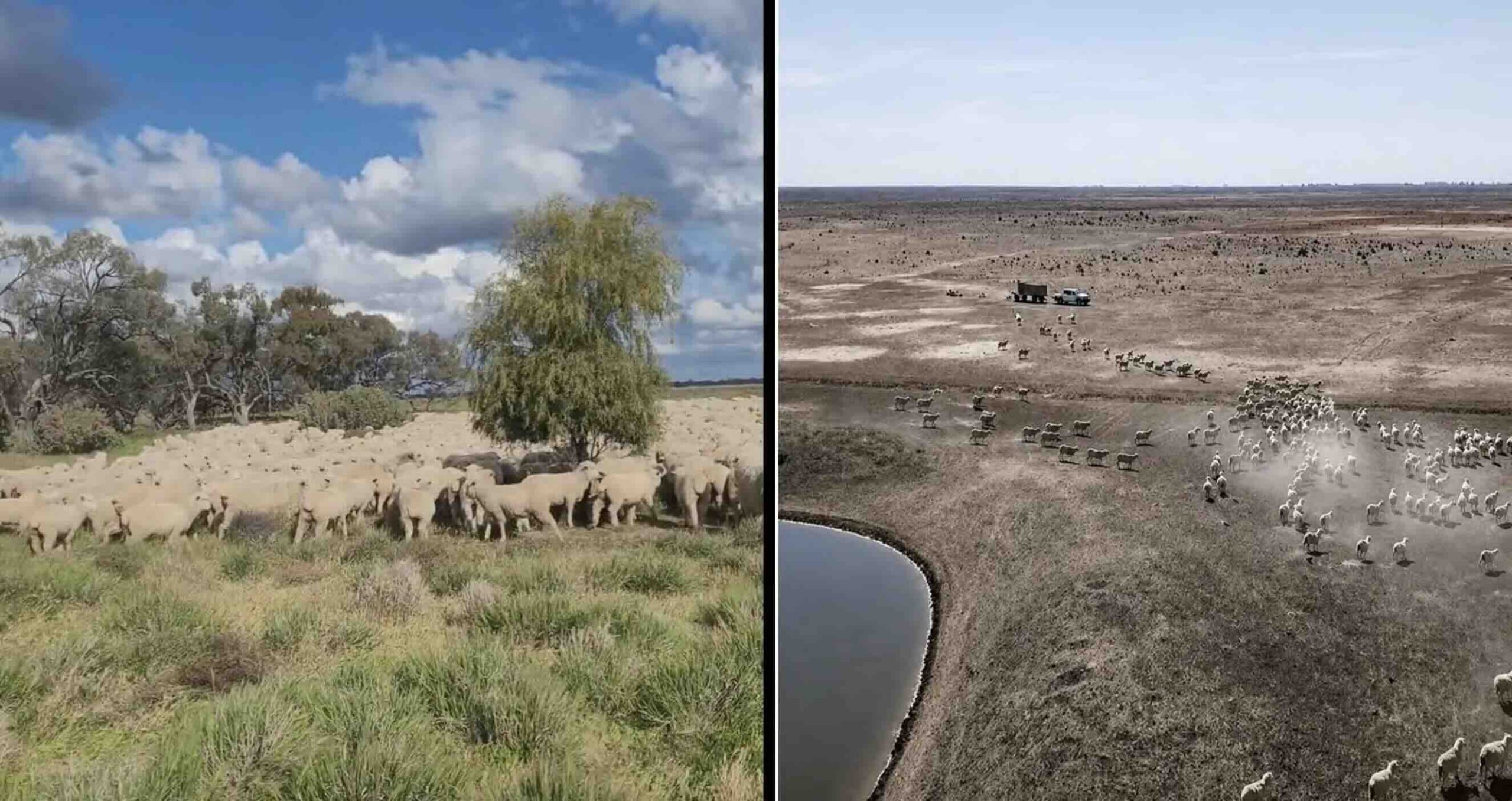
A farming family hosting turbines at the proposed 800 MW Bullawah wind farm in south-west New South Wales has argued that wind revenue improves their financial resilience, allowing them to reduce stock pressure during drought, rest paddocks, and protect native habitat. The grazier said reliable income from hosting turbines gives farmers "choice" in marginal country, where drought is inevitable. The project faced 65 objections before the Independent Planning Commission, though none from properties within 15 kilometres.
Where this fits
This story illustrates the dual-use pitch for renewable infrastructure: land productivity and climate adaptation. It is a legitimate point about marginal agricultural economics. But it also reveals an unstated cost in the renewables transition: land use intensity. Wind and solar require vast area to replace firm generation. That land must be productive, zoned, networked to transmission, and managed through decades of weather variability. A single nuclear plant would deliver 800 MW from a few hectares, with zero land-use conflict, no stock-pressure trade-offs, and unaffected pasture at fence line. The article does not address whole-system land demand: how many Bullawah-scale projects Australia needs, and whether marginal grazing country can bear that footprint.
What it means
Renewable projects will succeed where they align local economics with energy build. That alignment is real, and it matters for social licence. What it does not resolve is that weather-dependent capacity at scale requires either vast land holdings or high transmission cost to reach load centres. Australia is betting renewables can replace firm baseload with lower total cost and faster deployment than nuclear. This story is a reminder that the bet rests not only on turbine cost, but on solving land use, transmission overbuild, and the reliability gap that currently requires gas firming.
By the numbers
at ~A$2000–3200/kW installed. Source: CSIRO GenCost 2024-25. Indicative.
at a ~38% capacity factor, and only when the wind blows, so it still needs firming.
enough for 1–2 TWh a year of firm, always-on power, generating for ~60 years. Source: CSIRO GenCost 2024-25 (A$8.5–13.2bn/GW), IAEA capacity factor.
Figures are indicative conversions from the article's stated quantity using published cost, material and capacity factors (CSIRO GenCost, BNEF, IEA, IAEA). Ranges, not precise forecasts.
Go deeper on the numbers
The bigger picture
Energy security is national security. This connects to the wider case at Unprepared: Australia's dependence on a strategic rival, and how ready it is for the world that is coming.
Reported by RenewEconomy. Read the original report ↗
Related coverage
Domestic Gas Reservation Scheme – big changes for Australia’s gas exporters - Johnson Winter Slattery
Policy and planning uncertainty ranked as biggest potholes for wind and solar transition
SwitchedOn podcast: Can a new alliance fast-charge Australia’s electrification push?
Time running out on trial to protect vulnerable electricity consumers from from El Niño heatwave
The numbers, as they move
A short, sourced brief when the figures shift: a transmission blow-out, a supply-chain move, a milestone.