Valo to deliver 1.6 GWh battery storage system using Wärtsilä GridSolve technology
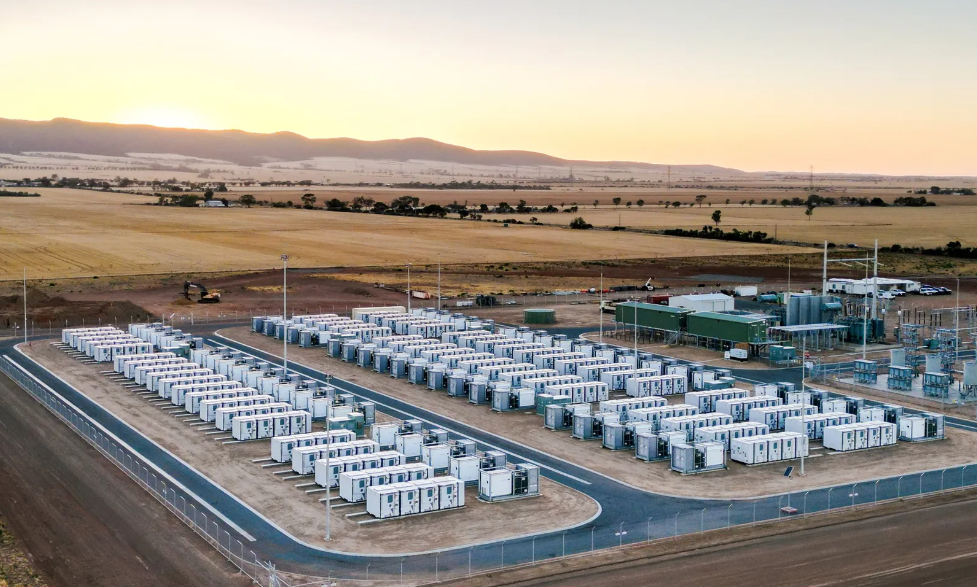
Valo, a joint venture between Finnish energy technology firm Wärtsilä and German engineering company RCT Solutions, has been contracted to deliver a 400 MW / 1,600 MWh battery energy storage system at Teebar in Queensland. The project will deploy over 440 containerised lithium iron phosphate (LFP) battery units using Wärtsilä's GridSolve Quantum2 technology, configured as grid-forming storage capable of fast frequency response. Valo will also install GEMS proprietary software for system control and optimisation. The Teebar project is among Queensland's largest committed battery storage installations.
Where this fits
This project illustrates the firming infrastructure now mandatory for a renewables-heavy grid. Battery storage does not generate electricity; it shifts it in time. The 1,600 MWh capacity sounds large until set against daily solar and wind variability: a single low-wind, low-sun day across a state can drain that reserve entirely. The real pressure here is sovereignty and supply-chain risk. Teebar's LFP cells, containerised electronics, inverters, and the software stack that optimises them are sourced from or depend on supply chains dominated by China or China-aligned manufacturers. Australia is building grid resilience on a technology stack it cannot produce domestically.
What it means
Battery storage is necessary; the problem is scale and source. A 1,600 MWh project addresses hours of storage, not days. As renewables penetration deepens, Australia will need weeks or months of firming: multiple such projects, plus gas reserves, plus interconnection overbuild. Each battery installation locks in material dependency and supply-chain exposure. A firm, dispatchable alternative, nuclear, remains banned by law. Australia is solving a physics problem (weather-dependent generation needs backing) with a geopolitics problem (Chinese-supplied batteries) when a sovereign, firm, low-emission option exists.
By the numbers
at ~A$600–1000/kWh installed. Source: BNEF, CSIRO GenCost 2024-25. Indicative.
of average national (NEM) demand if fully dischargeable, then it needs recharging. Storage shifts power, it does not generate it.
lithium, graphite, nickel, copper and cobalt (~160 t lithium content). Replaced roughly every 12 years. Source: IEA, Argonne GREET. Indicative.
~75% of cells are China-made. Source: IEA cell-manufacturing share.
enough for 1–1 TWh a year of firm, always-on power, generating for ~60 years. Source: CSIRO GenCost 2024-25 (A$8.5–13.2bn/GW), IAEA capacity factor.
Figures are indicative conversions from the article's stated quantity using published cost, material and capacity factors (CSIRO GenCost, BNEF, IEA, IAEA). Ranges, not precise forecasts.
Go deeper on the numbers
The bigger picture
Energy security is national security. This connects to the wider case at Unprepared: Australia's dependence on a strategic rival, and how ready it is for the world that is coming.
Reported by PV Magazine Australia. Read the original report ↗
Related coverage
More batteries, both big and small, mean solar farms don’t have to shut down so often - Renew Economy
Concrete foundations completed for all 18 turbines at first and smallest wind farm to begin construction this year
Australia’s gas generation falls to lowest level since 2000 — OilPrice - UA.NEWS
Renewables Boom Pushes Australia's Gas Power to Quarter-Century Low - Crude Oil Prices Today | OilPrice.com
The numbers, as they move
A short, sourced brief when the figures shift: a transmission blow-out, a supply-chain move, a milestone.