Global residential storage market to hit 46.1 GWh in 2026
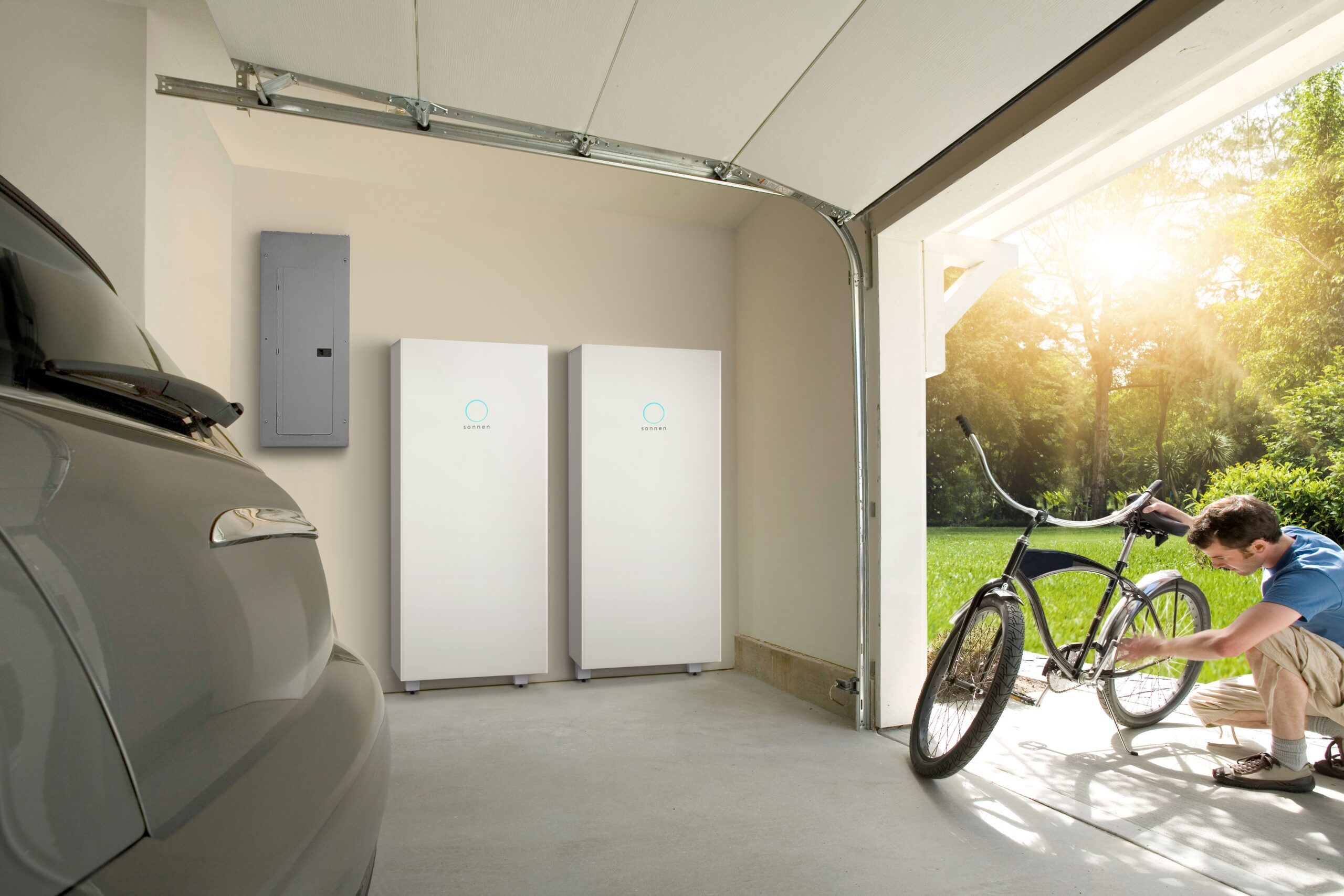
Global residential battery storage additions are forecast to reach 46.1 GWh in 2026, with Europe accounting for 15.4 GWh and Australia emerging as the world's largest single-country market, driven by the Cheaper Home Batteries Program launched in July 2025. Asia and Oceania are closing the gap on Europe. Top suppliers in the first half of 2026 were Fox ESS, Sigenergy, and Deye. Growth in lower-income regions is being driven by frequent blackouts and high electricity prices rather than emissions reduction.
Where this fits
This is a sovereignty and materials story wearing a market-growth headline. Three Chinese manufacturers dominate global residential battery supply. Australia's subsidy-fuelled surge means tens of thousands of homes will install Chinese batteries with Chinese inverters, managed by Chinese software platforms, on a supply chain that runs through Beijing. The Cheaper Home Batteries Program accelerates this dependency at pace. It also highlights the cost side: subsidies work to shift demand, but they transfer the bill to taxpayers and obscure the real, whole-system cost of a grid that leans on weather-dependent storage and requires gas backup when the sun does not shine and the wind does not blow.
What it means
Australia is building energy infrastructure optimised for reliability under frequent outages, not for a wealthy, stable grid. The subsidy programme makes residential batteries artificially attractive compared to firm generation. Meanwhile, the supply chain, manufacturing, software layer, and spare-parts ecosystem are Chinese-owned. A renewables-plus-storage grid with no firm baseload and no domestic control of critical components is a preparedness risk, not a resilience strategy.
By the numbers
at ~A$600–1000/kWh installed. Source: BNEF, CSIRO GenCost 2024-25. Indicative.
of average national (NEM) demand if fully dischargeable, then it needs recharging. Storage shifts power, it does not generate it.
lithium, graphite, nickel, copper and cobalt (~4610 t lithium content). Replaced roughly every 12 years. Source: IEA, Argonne GREET. Indicative.
~75% of cells are China-made. Source: IEA cell-manufacturing share.
enough for 17–43 TWh a year of firm, always-on power, generating for ~60 years. Source: CSIRO GenCost 2024-25 (A$8.5–13.2bn/GW), IAEA capacity factor.
Figures are indicative conversions from the article's stated quantity using published cost, material and capacity factors (CSIRO GenCost, BNEF, IEA, IAEA). Ranges, not precise forecasts.
Go deeper on the numbers
The bigger picture
Energy security is national security. This connects to the wider case at Unprepared: Australia's dependence on a strategic rival, and how ready it is for the world that is coming.
Reported by PV Magazine (intl). Read the original report ↗
Related coverage
Is Snowy 2.0 worth the price tag? - ABC listen - ABC News & Headlines – Australian Broadcasting Corporation
Australia’s most powerful turbines – up to 9.5 MW – mooted for giant wind project outside... - Renew Economy
“Tipping point”: Australia’s appeal to global offshore wind farm investors hangs in the balance, conference hears
Australia’s most successful renewables and storage developer seals huge debt deal to pave way for nex... - Renew Economy
The numbers, as they move
A short, sourced brief when the figures shift: a transmission blow-out, a supply-chain move, a milestone.