Make renewables infrastructure to make them investible
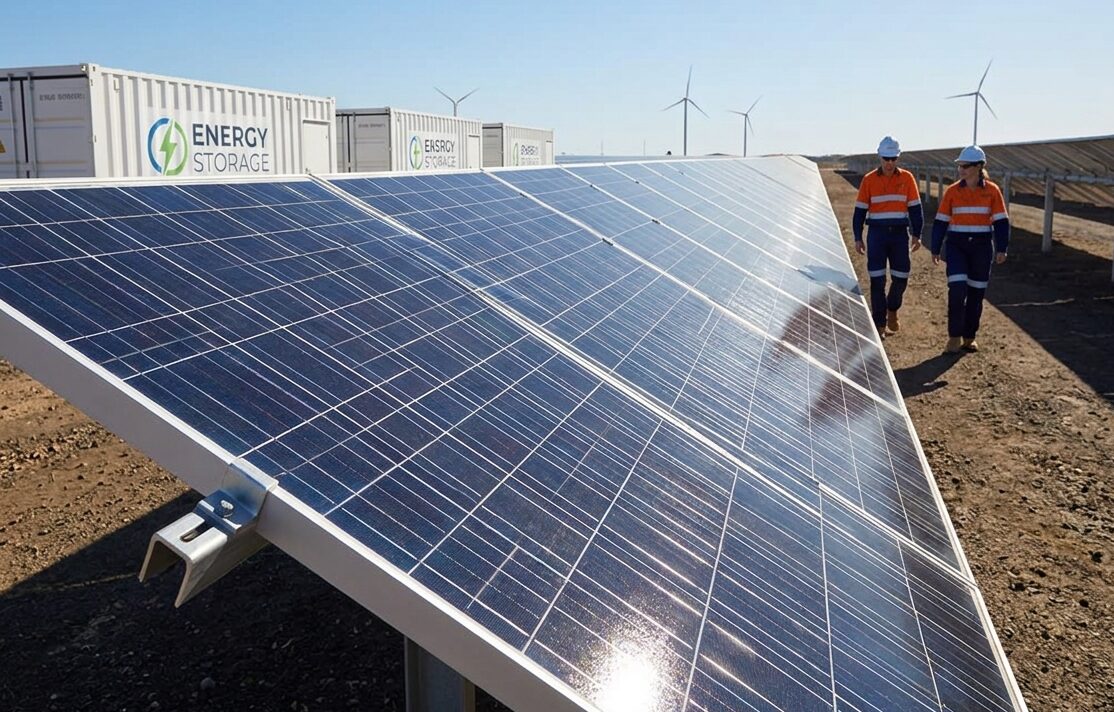
The financing market for wind and solar assets has stalled. Investors face rising bond rates, which lift the cost of energy by roughly $10/MWh for each 1% rate rise. Australian superannuation funds hold at least $5 billion annually for infrastructure investment but avoid renewable equity because wind and solar projects carry exposure to volatile wholesale power prices, making them unsuitable for members' long-term capital. The article argues the solution is government-backed long-dated power purchase agreements (PPAs) to convert project risk into infrastructure-grade certainty, allowing super funds to invest. Traditional PPA writers, it notes, will not pay the prices developers require, so the market has stopped clearing.
Where this fits
This is a cost and sovereignty story. The article reveals the hidden expense of a renewables-only grid: not just the hardware, but the financial engineering needed to make that hardware investible. Bond rate sensitivity exposes the fragility of a system reliant on cheap debt. Government intervention through subsidised PPAs is being proposed as a fix, which is an admission that market prices do not clear at the capital intensity required.
What it means
Australia is locking itself into dependence on state-backed financing to build out a weather-dependent grid, while the alternative, firm, dispatchable nuclear power, remains banned by law. Every percentage point of bond rate rise pushes the LCOE math further against renewables, yet the solution being designed is not to seek faster, lower-capital-intensity generation, but to use government balance sheets to paper over the investors' reluctance. The result: higher whole-system cost, lower energy sovereignty, and continued reliance on China's supply chain for panels, batteries and inverters.
By the numbers
enough for 3–5 TWh a year of firm, always-on power, generating for ~60 years. Source: CSIRO GenCost 2024-25 (A$8.5–13.2bn/GW), IAEA capacity factor.
Figures are indicative conversions from the article's stated quantity using published cost, material and capacity factors (CSIRO GenCost, BNEF, IEA, IAEA). Ranges, not precise forecasts.
Go deeper on the numbers
The bigger picture
Energy security is national security. This connects to the wider case at Unprepared: Australia's dependence on a strategic rival, and how ready it is for the world that is coming.
Reported by PV Magazine Australia. Read the original report ↗
Related coverage
Is Snowy 2.0 worth the price tag? - ABC listen - ABC News & Headlines – Australian Broadcasting Corporation
Australia’s most powerful turbines – up to 9.5 MW – mooted for giant wind project outside... - Renew Economy
“Tipping point”: Australia’s appeal to global offshore wind farm investors hangs in the balance, conference hears
Australia’s most successful renewables and storage developer seals huge debt deal to pave way for nex... - Renew Economy
The numbers, as they move
A short, sourced brief when the figures shift: a transmission blow-out, a supply-chain move, a milestone.