Final turbine goes up at huge Queensland wind farm, but two projects remain stuck in state planning purgatory
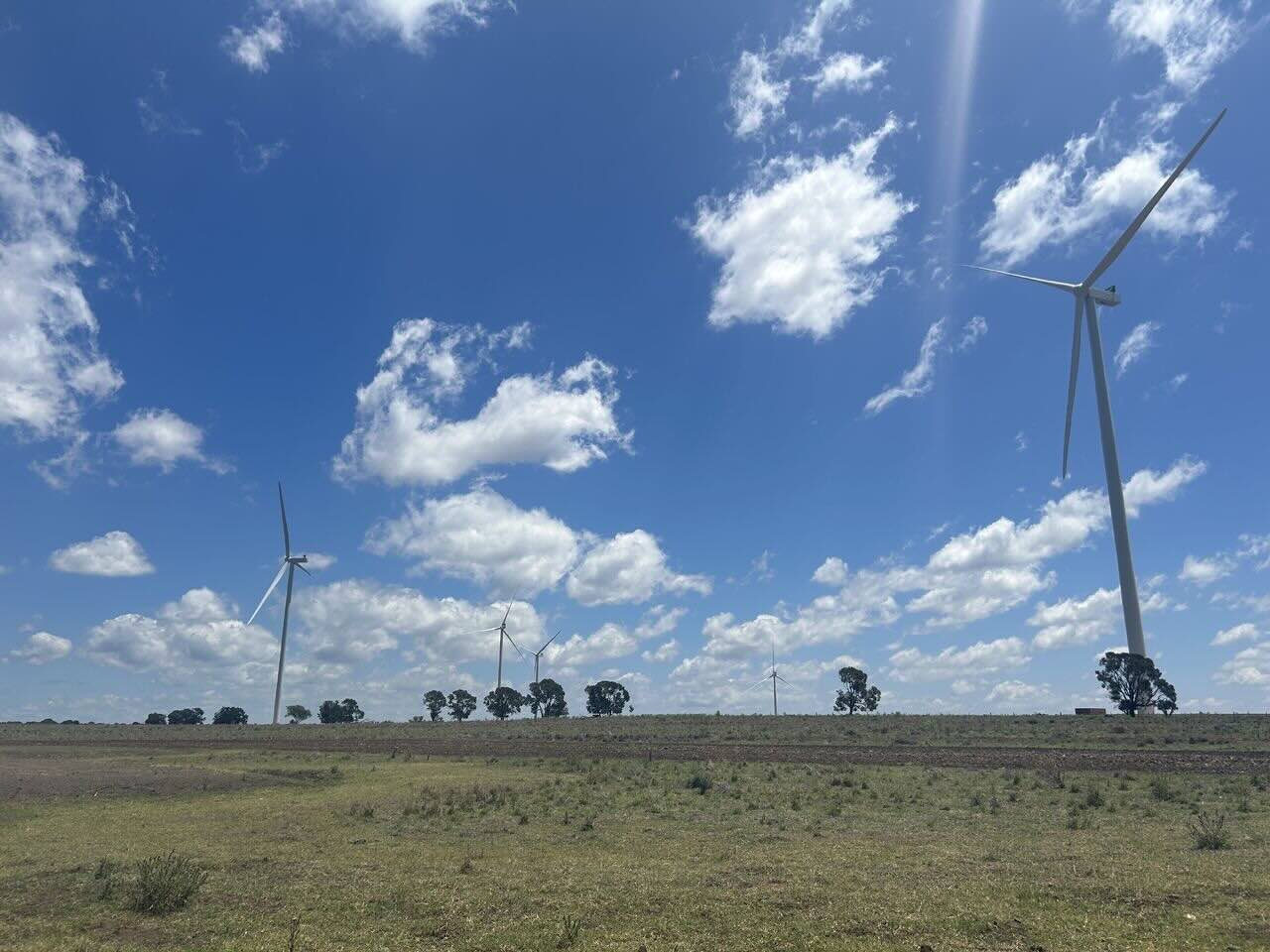
The final turbine has been installed at Wambo Wind Farm in Queensland's Western Downs, completing a 506 megawatt project developed by Stanwell Corporation and Cubico Sustainable Investments. The farm's first stage (252 MW) began operations in late 2025 and reached full capacity in March 2026. The second stage (254 MW) is now fully installed following delivery of its final turbine in April. The project uses 83 Vestas turbines with a tip height of 247 metres and is designed to supply around 312,000 homes.
Where this fits
Wambo illustrates the materials and supply-chain dependence embedded in the renewables transition. The turbines come from Danish supplier Vestas, but Australia's wind and solar supply chains remain heavily dependent on Chinese-processed minerals, inverters and components. The broader pattern is instructive: while Wambo progresses, Cubico's two other Queensland wind projects, Marmadua and Middle Creek, have been stalled by government "call-ins" for over a year. This regulatory uncertainty compounds the cost and timeline risk that investors face when building weather-dependent generation that will require gas firming and extensive transmission upgrades to integrate into the grid.
What it means
A 506 MW wind farm takes years to build and will operate at capacity only when wind conditions allow. Australia is banking on such projects to replace retiring coal plants, yet planning delays, transmission bottlenecks and the need for synchronous firming (gas or stored energy) add invisible costs to the headline megawatt figure. The sovereignty risk is real: Australia builds the sites, but does not manufacture the core components. A firm alternative, nuclear, remains legally barred, leaving the grid dependent on commodity weather and on supply chains controlled by strategic competitors.
By the numbers
at ~A$2000–3200/kW installed. Source: CSIRO GenCost 2024-25. Indicative.
at a ~38% capacity factor, and only when the wind blows, so it still needs firming.
enough for 1–2 TWh a year of firm, always-on power, generating for ~60 years. Source: CSIRO GenCost 2024-25 (A$8.5–13.2bn/GW), IAEA capacity factor.
Figures are indicative conversions from the article's stated quantity using published cost, material and capacity factors (CSIRO GenCost, BNEF, IEA, IAEA). Ranges, not precise forecasts.
Go deeper on the numbers
The bigger picture
Energy security is national security. This connects to the wider case at Unprepared: Australia's dependence on a strategic rival, and how ready it is for the world that is coming.
Reported by RenewEconomy. Read the original report ↗
Related coverage
More batteries, both big and small, mean solar farms don’t have to shut down so often - Renew Economy
Concrete foundations completed for all 18 turbines at first and smallest wind farm to begin construction this year
Australia’s gas generation falls to lowest level since 2000 — OilPrice - UA.NEWS
Renewables Boom Pushes Australia's Gas Power to Quarter-Century Low - Crude Oil Prices Today | OilPrice.com
The numbers, as they move
A short, sourced brief when the figures shift: a transmission blow-out, a supply-chain move, a milestone.