Australia’s biggest coal generator set to be replaced by the world’s biggest battery
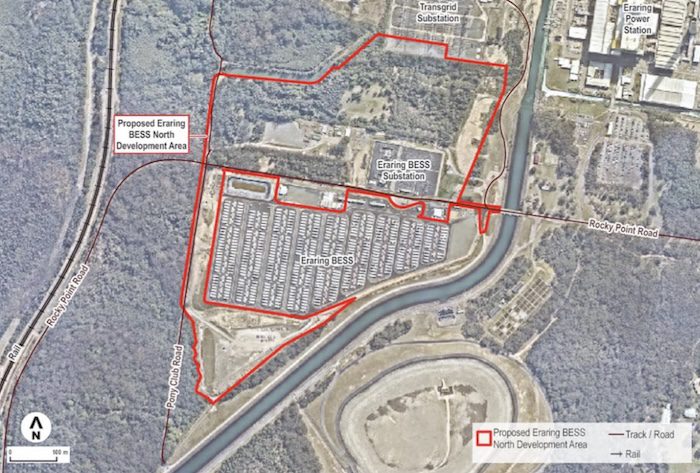
Origin Energy plans to expand the Eraring battery precinct from 700 MW to 1,200 MW and from 4,300 MWh to 8,600 MWh. The additional 500 MW, 4,942 MWh stage, called Eraring North, will begin construction in 2028 and reach full operation in early to mid 2031. Once complete, it will be the largest battery installation in Australia, surpassing the 7,800 MWh system completed in Saudi Arabia last year. The expansion comes as Eraring coal power station, rated at 2.88 GW, faces closure in 2029, with Origin citing the shift from coal toward variable renewable energy as the driver for the battery investment.
Where this fits
This exemplifies the whole-system cost of a renewables-led transition. A single coal plant of 2.88 GW is being replaced by 1.2 GW of batteries rated to discharge for just seven hours at nameplate capacity. That mismatch, batteries cannot replace the annual firming that coal provided, means the NEM still depends on gas, imports from other states, and demand destruction when the sun sets and wind drops. The battery's 8,600 MWh of stored energy cannot be generated without wind and solar upstream, and Origin has not built new generation to charge it. The battery also locks Australia into the China supply chain for lithium-ion cells, where manufacturing is coal-fired and embedded emissions far exceed the per-megawatt-hour headline.
What it means
A 2.88 GW firm generator is being replaced by a 1.2 GW storage buffer that depends on other sources to fill it. The NEM's reliability will rest on gas, interconnects, and demand management, the high-cost, high-carbon backstop of a renewables-only architecture. Australia forgoes a low-emission, firm alternative: new nuclear would retire the same coal plant and leave no generation gap to fill.
By the numbers
at ~A$600–1000/kWh installed. Source: BNEF, CSIRO GenCost 2024-25. Indicative.
of average national (NEM) demand if fully dischargeable, then it needs recharging. Storage shifts power, it does not generate it.
lithium, graphite, nickel, copper and cobalt (~860 t lithium content). Replaced roughly every 12 years. Source: IEA, Argonne GREET. Indicative.
~75% of cells are China-made. Source: IEA cell-manufacturing share.
enough for 3–8 TWh a year of firm, always-on power, generating for ~60 years. Source: CSIRO GenCost 2024-25 (A$8.5–13.2bn/GW), IAEA capacity factor.
Figures are indicative conversions from the article's stated quantity using published cost, material and capacity factors (CSIRO GenCost, BNEF, IEA, IAEA). Ranges, not precise forecasts.
Go deeper on the numbers
The bigger picture
Energy security is national security. This connects to the wider case at Unprepared: Australia's dependence on a strategic rival, and how ready it is for the world that is coming.
Reported by RenewEconomy. Read the original report ↗
Related coverage
More batteries, both big and small, mean solar farms don’t have to shut down so often - Renew Economy
Concrete foundations completed for all 18 turbines at first and smallest wind farm to begin construction this year
Australia’s gas generation falls to lowest level since 2000 — OilPrice - UA.NEWS
Renewables Boom Pushes Australia's Gas Power to Quarter-Century Low - Crude Oil Prices Today | OilPrice.com
The numbers, as they move
A short, sourced brief when the figures shift: a transmission blow-out, a supply-chain move, a milestone.