1GWh battery energy storage system gets green tick to start construction in NSW
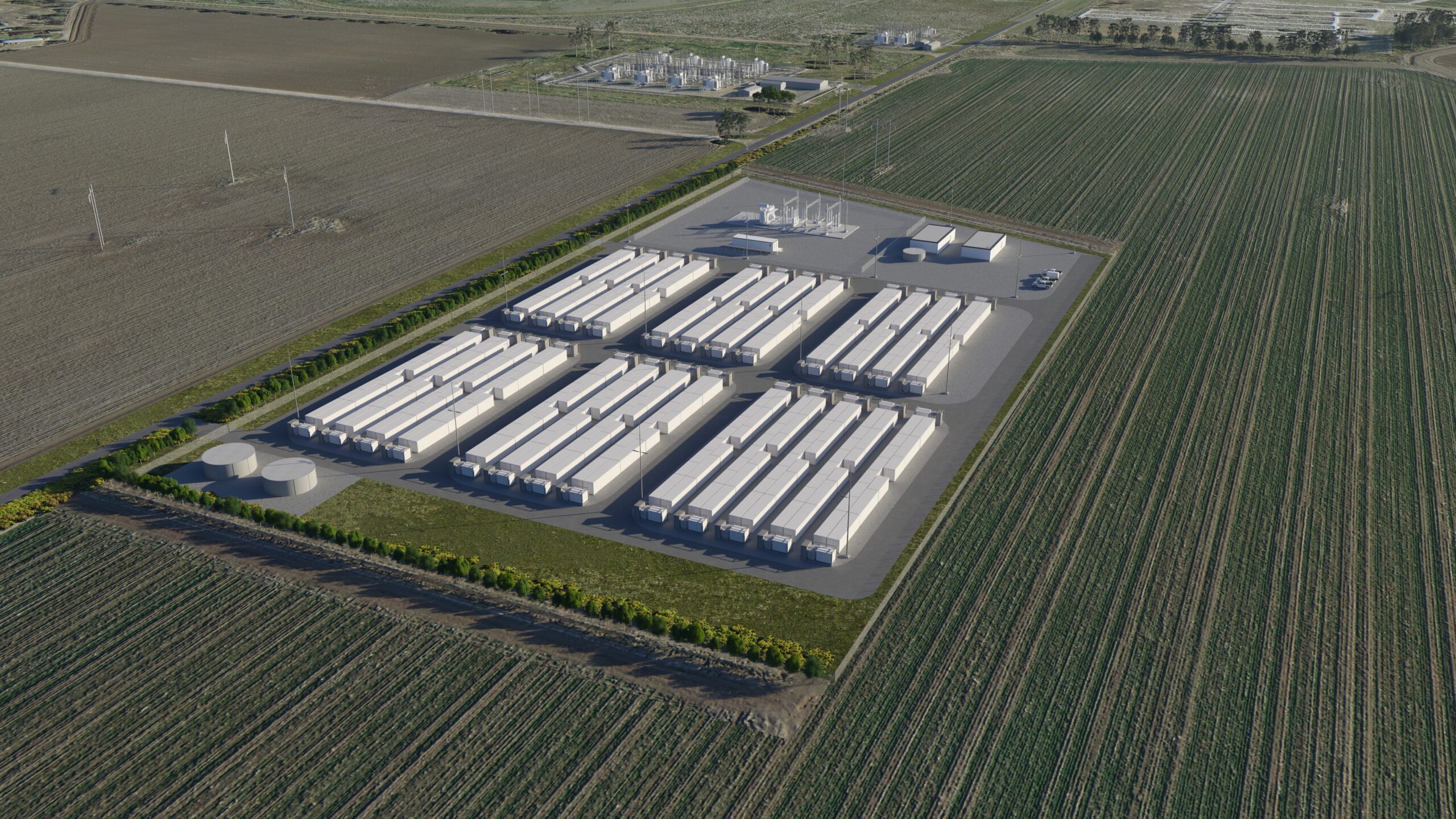
A 125 MW lithium-ion battery system with eight hours of storage capacity has received planning approval near Narrabri in northern NSW. The project, backed by a 14-year Long-Term Energy Service Agreement through AEMO, is expected to cost USD $25-$30 million and begin construction in Q4 2026, reaching commercial operation in H1 2028. It will comprise 191 containerised battery units and 64 inverters, connecting to the nearby Narrabri substation.
Where this fits
This is a firm-power story masquerading as storage. Eight hours of dispatchable capacity sounds useful until the grid encounters a multi-day low-wind, low-solar period. When that happens, the battery will be empty, and the grid will need gas or another firm source. The cost signal here matters: AEMO has awarded a 14-year subsidy contract to make the economics work, which means the project cannot stand on merchant revenue alone. That subsidy, the true cost of filling gaps that renewables create, is offloaded to the grid bill. Meanwhile, 191 containerised battery units represent 1,000 MWh of lithium cells, cobalt, nickel and processed minerals sourced through a supply chain dominated by China, adding another layer of strategic dependence.
What it means
Australia is building storage to buy time for renewables, not to solve the intermittency problem. Each eight-hour battery, each gas plant held in reserve, each transmission line looped around wind farms, is a cost item that a firm, dispatchable power source like nuclear would eliminate. The Narrabri BESS will help, but it will not enable a renewables-only grid, and its materials footprint and subsidy commitment are both anchored to Chinese supply chains and Australian taxpayers.
By the numbers
at ~A$600–1000/kWh installed. Source: BNEF, CSIRO GenCost 2024-25. Indicative.
of average national (NEM) demand if fully dischargeable, then it needs recharging. Storage shifts power, it does not generate it.
lithium, graphite, nickel, copper and cobalt (~100 t lithium content). Replaced roughly every 12 years. Source: IEA, Argonne GREET. Indicative.
~75% of cells are China-made. Source: IEA cell-manufacturing share.
enough for 0–1 TWh a year of firm, always-on power, generating for ~60 years. Source: CSIRO GenCost 2024-25 (A$8.5–13.2bn/GW), IAEA capacity factor.
Figures are indicative conversions from the article's stated quantity using published cost, material and capacity factors (CSIRO GenCost, BNEF, IEA, IAEA). Ranges, not precise forecasts.
Go deeper on the numbers
The bigger picture
Energy security is national security. This connects to the wider case at Unprepared: Australia's dependence on a strategic rival, and how ready it is for the world that is coming.
Reported by PV Magazine Australia. Read the original report ↗
Related coverage
More batteries, both big and small, mean solar farms don’t have to shut down so often - Renew Economy
Concrete foundations completed for all 18 turbines at first and smallest wind farm to begin construction this year
Australia’s gas generation falls to lowest level since 2000 — OilPrice - UA.NEWS
Renewables Boom Pushes Australia's Gas Power to Quarter-Century Low - Crude Oil Prices Today | OilPrice.com
The numbers, as they move
A short, sourced brief when the figures shift: a transmission blow-out, a supply-chain move, a milestone.