Squadron lands federal tick for Queensland solar and battery project
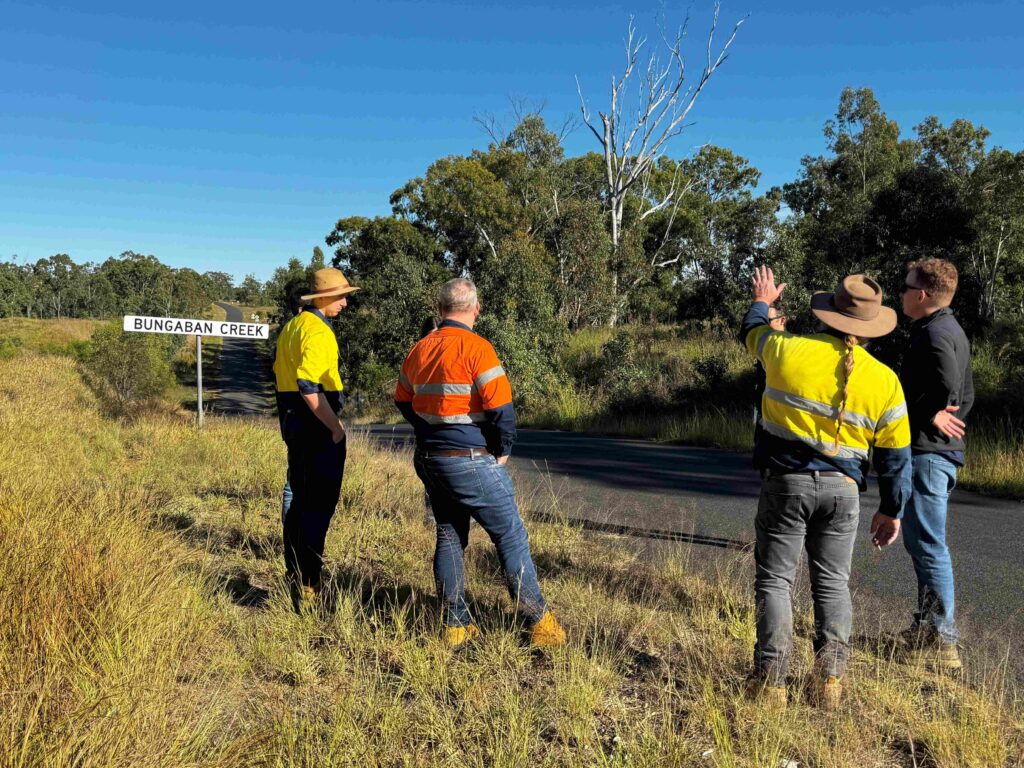
Squadron Energy and Windlab have cleared environmental approval for a 500 MW solar farm and 100 MW / 400 MWh battery storage facility at Bungaban in Queensland's Western Downs, alongside a separate 1.4 GW wind project on the same 1,500-hectare site. The Department of Climate Change, Energy, the Environment and Water determined the projects are not controlled actions under the EPBC Act. Solar construction is planned for mid-2028, wind for 2027. The developers argue the co-location of wind, solar and battery will deliver "renewable electricity across more hours of the day" and support grid reliability.
Where this fits
This is a textbook Australian renewables-build story: a large, geographically concentrated portfolio of weather-dependent assets (2.9 GW of wind and solar) backed by a four-hour battery (400 MWh at 100 MW discharge = 4 hours of full output at rated power). The battery framing as a reliability solution masks the core problem: it covers only a fraction of the weather-dependent variability these plants will face. The real cost of grid reliability, the transmission overbuild, the fossil-fuel firming required when wind and solar output collapse, and the whole-system engineering to knit them together, remains invisible in the approval process and in the developer's claims. Firm dispatchable capacity is still the backbone of a reliable grid; this project does not provide it.
What it means
Australia continues building renewable capacity while underpricing the cost of intermittency. Bungaban will draw on China's supply chains for panels, inverters and battery cells; the grid will draw on gas peaking plants for the hours when output is zero. A 2.9 GW nuclear plant would occupy far less land, generate firm power 24/7, and break Australia's dependence on Chinese energy manufacturing. Instead, we approve another weather-dependent asset and call it resilience.
By the numbers
at ~A$1100–1600/kW installed. Source: CSIRO GenCost 2024-25. Indicative.
at a ~24% capacity factor, and only when the sun shines, so it still needs firming.
~80% of modules are China-made. Source: IEA solar supply-chain data.
enough for 0–1 TWh a year of firm, always-on power, generating for ~60 years. Source: CSIRO GenCost 2024-25 (A$8.5–13.2bn/GW), IAEA capacity factor.
Figures are indicative conversions from the article's stated quantity using published cost, material and capacity factors (CSIRO GenCost, BNEF, IEA, IAEA). Ranges, not precise forecasts.
at ~A$600–1000/kWh installed. Source: BNEF, CSIRO GenCost 2024-25. Indicative.
of average national (NEM) demand if fully dischargeable, then it needs recharging. Storage shifts power, it does not generate it.
lithium, graphite, nickel, copper and cobalt (~40 t lithium content). Replaced roughly every 12 years. Source: IEA, Argonne GREET. Indicative.
~75% of cells are China-made. Source: IEA cell-manufacturing share.
Figures are indicative conversions from the article's stated quantity using published cost, material and capacity factors (CSIRO GenCost, BNEF, IEA, IAEA). Ranges, not precise forecasts.
Go deeper on the numbers
The bigger picture
Energy security is national security. This connects to the wider case at Unprepared: Australia's dependence on a strategic rival, and how ready it is for the world that is coming.
Reported by PV Magazine Australia. Read the original report ↗
Related coverage
More batteries, both big and small, mean solar farms don’t have to shut down so often - Renew Economy
Concrete foundations completed for all 18 turbines at first and smallest wind farm to begin construction this year
Australia’s gas generation falls to lowest level since 2000 — OilPrice - UA.NEWS
Renewables Boom Pushes Australia's Gas Power to Quarter-Century Low - Crude Oil Prices Today | OilPrice.com
The numbers, as they move
A short, sourced brief when the figures shift: a transmission blow-out, a supply-chain move, a milestone.