Benefits of rooftop solar shared across remote WA community
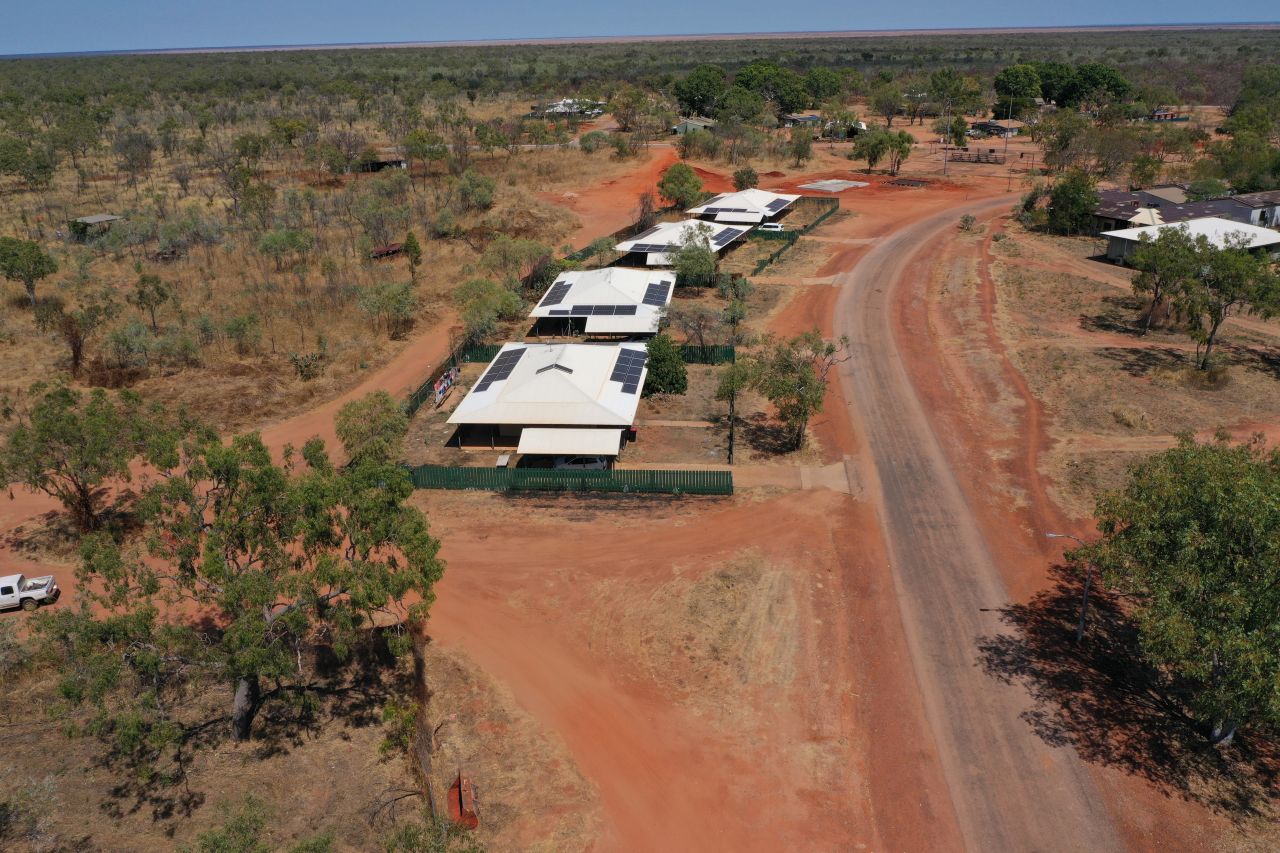
Horizon Power has switched on 270 kW of rooftop solar across 27 buildings in Mowanjum, a remote community in Western Australia's Kimberley region. The panels, supplied by Chinese manufacturer Sunman Energy, are part of the Kimberley Communities Solar Saver program, a government-backed scheme that pools energy credits across households regardless of which roofs host the panels. The program aims to reduce reliance on diesel generation and lower electricity costs. Mowanjum is the sixth Kimberley community to receive the rollout; the combined Kimberley program totals 1.38 MW across 125 systems.
Where this fits
This story exemplifies Australia's approach to remote energy security: a renewables-first model that outsources supply-chain risk to China and leaves grid resilience dependent on weather. Sunman Energy panels, along with the inverters and balance-of-system components typical in these projects, embed Australia's remote communities deeper into China's manufacturing ecosystem. The scheme trades diesel generation for solar, but solar's output varies with cloud cover and season. When Mowanjum's panels underperform (winter, wet season, overcast days), the community still needs either stored energy, synchronous backup, or a grid connection, costs the headline does not surface.
What it means
Remote communities are legitimate testbeds for renewables, and diesel is expensive and carbon-intensive. But this rollout illustrates a broader pattern: Australia is building a grid that depends on Chinese hardware for generation and storage, while banning the one dispatchable, low-carbon alternative, nuclear, that could deliver firm power with no import exposure. Mowanjum's energy security is now hostage to Sunman's supply chain and to weather. That is defensible for a pilot program, but not as the model for national energy sovereignty.
By the numbers
at ~A$1100–1600/kW installed. Source: CSIRO GenCost 2024-25. Indicative.
at a ~24% capacity factor, and only when the sun shines, so it still needs firming.
~80% of modules are China-made. Source: IEA solar supply-chain data.
enough for 0–0 TWh a year of firm, always-on power, generating for ~60 years. Source: CSIRO GenCost 2024-25 (A$8.5–13.2bn/GW), IAEA capacity factor.
Figures are indicative conversions from the article's stated quantity using published cost, material and capacity factors (CSIRO GenCost, BNEF, IEA, IAEA). Ranges, not precise forecasts.
Go deeper on the numbers
The bigger picture
Energy security is national security. This connects to the wider case at Unprepared: Australia's dependence on a strategic rival, and how ready it is for the world that is coming.
Reported by PV Magazine Australia. Read the original report ↗
Related coverage
More batteries, both big and small, mean solar farms don’t have to shut down so often - Renew Economy
Concrete foundations completed for all 18 turbines at first and smallest wind farm to begin construction this year
Australia’s gas generation falls to lowest level since 2000 — OilPrice - UA.NEWS
Renewables Boom Pushes Australia's Gas Power to Quarter-Century Low - Crude Oil Prices Today | OilPrice.com
The numbers, as they move
A short, sourced brief when the figures shift: a transmission blow-out, a supply-chain move, a milestone.