The Nuclear Company proposes 6.6 GW Kentucky project
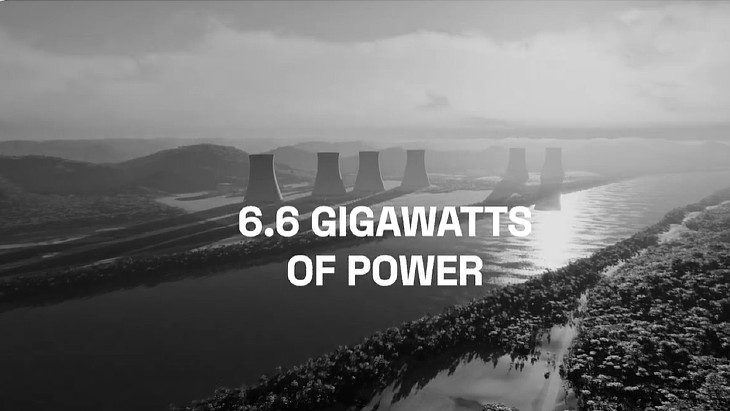
The Nuclear Company has announced plans for Prosperity One, a 6.6 GW nuclear campus in Lewis County, Kentucky, featuring up to six Westinghouse AP1000 reactors. The phased development would begin with two reactors, with construction targeted to start in 2028. The proposal includes detailed site characterisation, environmental assessment, and federal licensing preparation. The landowner and The Nuclear Company's Chief Nuclear Officer both framed the project around local economic opportunity: jobs, tax base, and reliable power for a county with historically high unemployment.
Where this fits
This proposal demonstrates that firm, dispatchable nuclear power remains technically and commercially viable in the US, despite being banned for new build in Australia by law. The AP1000 is proven generation technology; Prosperity One's phased approach and partnership model show how nuclear can integrate into community planning and investment. The headline absent from Australian energy policy is that while Kentucky attracts multi-gigawatt nuclear campuses, Australia's transition relies on weather-dependent renewables plus gas firming plus a transmission overbuild, all fed by a supply chain controlled by Beijing.
What it means
Australia is pursuing a renewable-only pathway at high whole-system cost while the US moves to add firm capacity through proven nuclear technology. The sovereignty risk is sharper than the cost: solar panels, batteries, inverters and processed minerals for the grid are manufactured in China's coal-fired industrial base, locking Australia into strategic dependence on a rival. A parallel Australian Prosperity One, a multi-reactor nuclear campus, remains illegal. The real choice facing energy policy is not between nuclear and renewables; it is between firm, domestically-controlled power and weather-dependent capacity built on foreign supply chains.
By the numbers
at ~A$2000–3200/kW installed. Source: CSIRO GenCost 2024-25. Indicative.
at a ~38% capacity factor, and only when the wind blows, so it still needs firming.
enough for 8–20 TWh a year of firm, always-on power, generating for ~60 years. Source: CSIRO GenCost 2024-25 (A$8.5–13.2bn/GW), IAEA capacity factor.
Figures are indicative conversions from the article's stated quantity using published cost, material and capacity factors (CSIRO GenCost, BNEF, IEA, IAEA). Ranges, not precise forecasts.
Go deeper on the numbers
The bigger picture
Energy security is national security. This connects to the wider case at Unprepared: Australia's dependence on a strategic rival, and how ready it is for the world that is coming.
Reported by World Nuclear News. Read the original report ↗
Related coverage
Floating nuclear power plant 'has boosted air quality'
Doosan Enerbility Signs First Commercial SMR Reactor Manufacturing Deal with NuScale Power - BigGo Finance
Doosan Enerbility wins SMR supply deal from U.S. firm NuScale Power - Yonhap News Agency
Doosan Enerbility wins US SMR build with NuScale Power approval milestone - Chosunbiz
The numbers, as they move
A short, sourced brief when the figures shift: a transmission blow-out, a supply-chain move, a milestone.