13 Wärtsilä gas engines bound for Australia to support clean energy integration
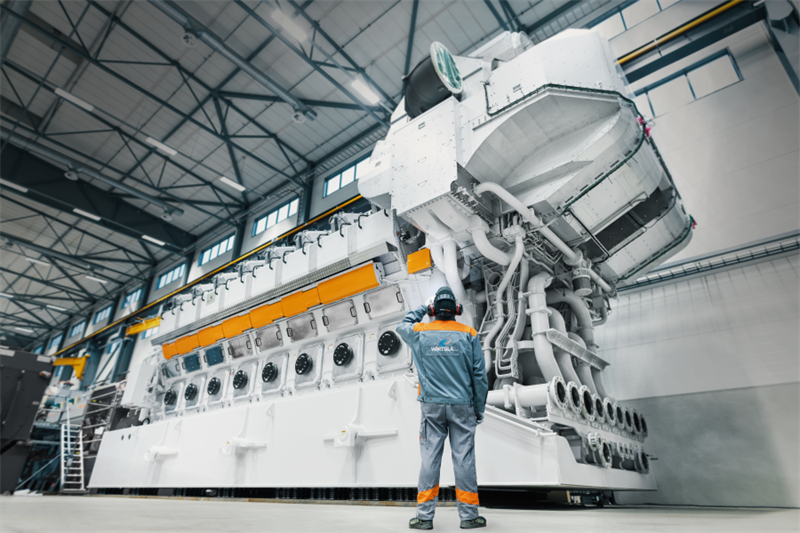
Wärtsilä, a Finnish engineering company, has announced it will supply 13 gas engines (46TS-SG model, 23.4 MW each) for a 300 MW reciprocating engine power plant at an undisclosed Australian location. The plant is designed to provide grid balancing and fast-start capacity to support renewable energy integration, with engines capable of ramping to full load in two minutes and operating on methane, biogas, or hydrogen blends up to 25 percent. Delivery is scheduled for early 2029, with full operation expected in 2030. The project is believed to be linked to Western Australia's proposed $700 million state-run gas power station near Perth, which is under environmental assessment.
Where this fits
This order exemplifies the hidden cost of Australia's renewables-first grid: firm dispatchable power built in haste as a workaround, not a plan. The 300 MW reciprocating engine plant is purpose-built to absorb the output volatility of wind and solar, doing the firming job that a baseload fleet (nuclear) would handle more efficiently and at lower whole-system cost. Australia is now committing capital to gas peaking units that will operate at part load for decades, burning fuel to balance weather-dependent generation, rather than deploying firm, energy-dense alternatives that require no fossil fuel backup.
What it means
Australia's grid is locking in gas dependency at the moment when energy security demands independence from fossil fuels and global supply chains. A 300 MW reciprocating plant, once built, will need to run whenever wind and solar underdeliver, cementing the role of gas in the electricity system through the 2040s. The honest trade-off being made here is plain: Australia is accepting higher operating cost, emissions from gas burning, and fuel price exposure in exchange for avoiding the upfront capital and political effort of nuclear baseload. That choice reflects the true cost of the renewables-only pathway: not the panels and batteries themselves, but the redundant, carbon-burning infrastructure needed to make weather-dependent supply reliable.
By the numbers
at ~A$2000–3200/kW installed. Source: CSIRO GenCost 2024-25. Indicative.
at a ~38% capacity factor, and only when the wind blows, so it still needs firming.
enough for 0–1 TWh a year of firm, always-on power, generating for ~60 years. Source: CSIRO GenCost 2024-25 (A$8.5–13.2bn/GW), IAEA capacity factor.
Figures are indicative conversions from the article's stated quantity using published cost, material and capacity factors (CSIRO GenCost, BNEF, IEA, IAEA). Ranges, not precise forecasts.
Go deeper on the numbers
The bigger picture
Energy security is national security. This connects to the wider case at Unprepared: Australia's dependence on a strategic rival, and how ready it is for the world that is coming.
Reported by PV Magazine Australia. Read the original report ↗
Related coverage
More batteries, both big and small, mean solar farms don’t have to shut down so often - Renew Economy
Concrete foundations completed for all 18 turbines at first and smallest wind farm to begin construction this year
Australia’s gas generation falls to lowest level since 2000 — OilPrice - UA.NEWS
Renewables Boom Pushes Australia's Gas Power to Quarter-Century Low - Crude Oil Prices Today | OilPrice.com
The numbers, as they move
A short, sourced brief when the figures shift: a transmission blow-out, a supply-chain move, a milestone.