Rio teams with US manufacturer on ‘world first’ thermal energy storage project
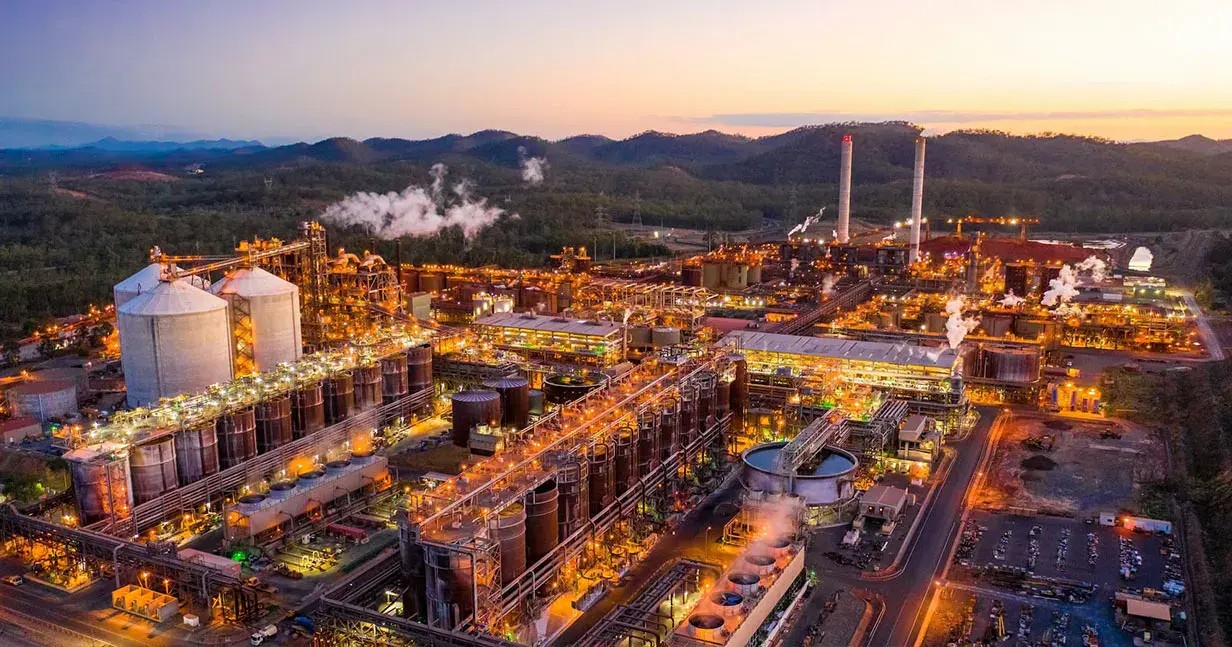
Rio Tinto and Rondo Energy have commenced engineering design on a 30 MW / 360 MWh thermal battery for the Yarwun alumina refinery in Queensland, supported by ARENA funding. The system stores electricity as high-temperature heat in refractory brick, delivering steam up to 1,000°C with claimed round-trip efficiency above 98%. If built, it would be among the first large-scale demonstrations of thermal storage for industrial process heat.
Where this fits
This project illustrates the cost and complexity of firming a renewable grid. Thermal batteries are a real tool for time-shifting cheap off-peak solar and wind into process heat on demand, which cuts fossil fuel use at the margin. But the economics depend entirely on a grid with abundant low-cost renewable surplus during sunny and windy hours, meaning it requires the massive transmission overbuild and battery fleet that a renewables-only system demands. The project validates the engineering; it does not solve the system-cost problem. It also depends on affordable grid electricity, which in turn depends on energy-dense baseload power to anchor prices and supply certainty.
What it means
Australia is doubling down on electrification of industry via time-shifted renewable surplus rather than investing in firm, low-emission generation that could deliver constant cheap heat without the need for storage infrastructure. A nuclear thermal plant would deliver the same industrial process heat on demand, with lower lifecycle emissions and no dependence on weather-synchronized grid dispatch. This project represents Australia's chosen path: storing renewable surplus to firm industry, rather than building the low-material, long-lived, firm generation that would require no storage at all.
By the numbers
at ~A$600–1000/kWh installed. Source: BNEF, CSIRO GenCost 2024-25. Indicative.
of average national (NEM) demand if fully dischargeable, then it needs recharging. Storage shifts power, it does not generate it.
lithium, graphite, nickel, copper and cobalt (~36 t lithium content). Replaced roughly every 12 years. Source: IEA, Argonne GREET. Indicative.
~75% of cells are China-made. Source: IEA cell-manufacturing share.
Figures are indicative conversions from the article's stated quantity using published cost, material and capacity factors (CSIRO GenCost, BNEF, IEA, IAEA). Ranges, not precise forecasts.
Go deeper on the numbers
The bigger picture
Energy security is national security. This connects to the wider case at Unprepared: Australia's dependence on a strategic rival, and how ready it is for the world that is coming.
Reported by PV Magazine Australia. Read the original report ↗
Related coverage
More batteries, both big and small, mean solar farms don’t have to shut down so often - Renew Economy
Concrete foundations completed for all 18 turbines at first and smallest wind farm to begin construction this year
Australia’s gas generation falls to lowest level since 2000 — OilPrice - UA.NEWS
Renewables Boom Pushes Australia's Gas Power to Quarter-Century Low - Crude Oil Prices Today | OilPrice.com
The numbers, as they move
A short, sourced brief when the figures shift: a transmission blow-out, a supply-chain move, a milestone.