Biggest wind farm in two years reaches financial close, the ninth in last 12 months, and a new big battery
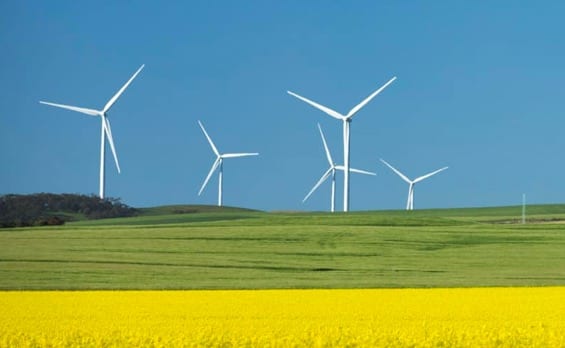
A 470 megawatt wind farm in Western Australia's wheatbelt has reached financial close, the ninth large wind project to do so in twelve months. Atmos Renewables will own and operate the Parron Maam Marang project, which has secured a power purchase agreement with state-owned retailer Synergy. The project follows turbine contracts awarded to Vestas and substation work to GenusPlus Group. Western Australia is fast-tracking multiple wind farms to retire coal generators by 2030.
Where this fits
This project exemplifies the renewables build-out that Australia is funding at whole-system cost. Nine wind farms in a year shows momentum in private capital, but that capital is being deployed to weather-dependent assets that will require firming, gas plants or batteries, to meet demand when the wind does not blow. The state government's reliance on private power purchase agreements signals that the renewable transition is being driven by merchant contracts, not by integrated grid planning that would account for the full cost of firm capacity, transmission overbuild, and battery cycling. Western Australia's coal closure timeline is firm; the wind farms delivering that outcome are not.
What it means
A grid closing coal while building only renewables commits Australia to higher operating costs (gas for firming), higher capital costs (transmission and storage that would not be needed with firm baseload), and continued dependency on imported batteries and inverters from China. The choice to retire coal without deploying nuclear, which is banned in Australia, means that firm low-emission power is being replaced by weather-dependent power plus gas, not by another firm low-emission source. The speed of wind farm construction masks the slowness and expense of the system required to make intermittent generation reliable.
By the numbers
at ~A$2000–3200/kW installed. Source: CSIRO GenCost 2024-25. Indicative.
at a ~38% capacity factor, and only when the wind blows, so it still needs firming.
enough for 1–1 TWh a year of firm, always-on power, generating for ~60 years. Source: CSIRO GenCost 2024-25 (A$8.5–13.2bn/GW), IAEA capacity factor.
Figures are indicative conversions from the article's stated quantity using published cost, material and capacity factors (CSIRO GenCost, BNEF, IEA, IAEA). Ranges, not precise forecasts.
Go deeper on the numbers
The bigger picture
Energy security is national security. This connects to the wider case at Unprepared: Australia's dependence on a strategic rival, and how ready it is for the world that is coming.
Reported by RenewEconomy. Read the original report ↗
Related coverage
More batteries, both big and small, mean solar farms don’t have to shut down so often - Renew Economy
Concrete foundations completed for all 18 turbines at first and smallest wind farm to begin construction this year
Australia’s gas generation falls to lowest level since 2000 — OilPrice - UA.NEWS
Renewables Boom Pushes Australia's Gas Power to Quarter-Century Low - Crude Oil Prices Today | OilPrice.com
The numbers, as they move
A short, sourced brief when the figures shift: a transmission blow-out, a supply-chain move, a milestone.