Rosatom eyes 2027 for Uzbek large reactor construction
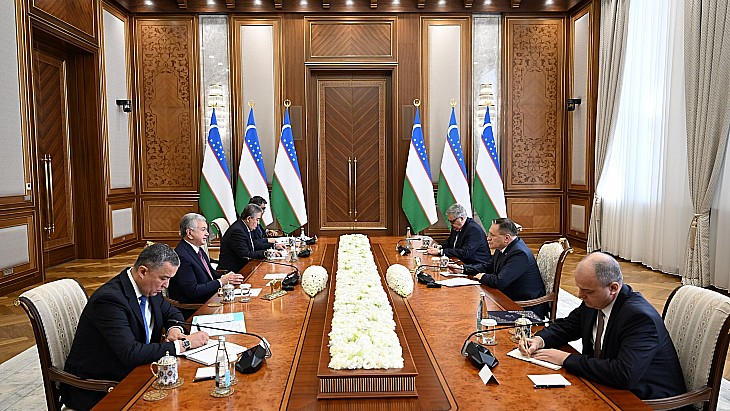
Rosatom plans to begin construction of two 1,000 MW nuclear units in Uzbekistan in 2027, alongside smaller modular reactors already under way at the Jizzakh site. The first SMR foundation slab was poured in May, with completion targeted by year end. Two gigawatt-scale reactors are planned nearby. Long-lead equipment including a reactor vessel is already in manufacture. Rosatom aims to recruit operating staff by end-2027 and will outsource significant construction work to Uzbek companies. A planned "nuclear city" will house 33,000 residents in its first phase.
Where this fits
This project shows nuclear as a deployable, scalable alternative to renewables for firm power in a non-Western context. While Australia has banned nuclear by law, Uzbekistan is proceeding with Russian technology, securing domestic firm supply for decades and building industrial capacity and expertise at the coal-plant site. The contrast is not one of "West versus Russia", it is one of energy choice: Uzbekistan chose the low-emissions firm-power path; Australia chose renewables and gas firming, which leaves the grid weather-dependent and the supply chain in China's hands.
What it means
Australia's nuclear ban means the country will meet rising electricity demand through an overbuild of solar and wind (requiring 2-3 times the capacity for the same annual output), battery storage (supply chains and rare-earth processing owned by China), and gas backup. Uzbekistan will do the opposite: build firm, energy-dense capacity once and run it for sixty years. The materials footprint per megawatt-hour will be lower; the grid will not depend on Beijing; the cost per unit of firm supply will be lower. This is not inevitable; it is a choice Australia has made.
By the numbers
at ~A$1100–1600/kW installed. Source: CSIRO GenCost 2024-25. Indicative.
at a ~24% capacity factor, and only when the sun shines, so it still needs firming.
~80% of modules are China-made. Source: IEA solar supply-chain data.
enough for 1–3 TWh a year of firm, always-on power, generating for ~60 years. Source: CSIRO GenCost 2024-25 (A$8.5–13.2bn/GW), IAEA capacity factor.
Figures are indicative conversions from the article's stated quantity using published cost, material and capacity factors (CSIRO GenCost, BNEF, IEA, IAEA). Ranges, not precise forecasts.
Go deeper on the numbers
The bigger picture
Energy security is national security. This connects to the wider case at Unprepared: Australia's dependence on a strategic rival, and how ready it is for the world that is coming.
Reported by World Nuclear News. Read the original report ↗
Related coverage
Floating nuclear power plant 'has boosted air quality'
Doosan Enerbility Signs First Commercial SMR Reactor Manufacturing Deal with NuScale Power - BigGo Finance
Doosan Enerbility wins SMR supply deal from U.S. firm NuScale Power - Yonhap News Agency
Doosan Enerbility wins US SMR build with NuScale Power approval milestone - Chosunbiz
The numbers, as they move
A short, sourced brief when the figures shift: a transmission blow-out, a supply-chain move, a milestone.