FRV notches Australian first with commissioning of 100 MW battery
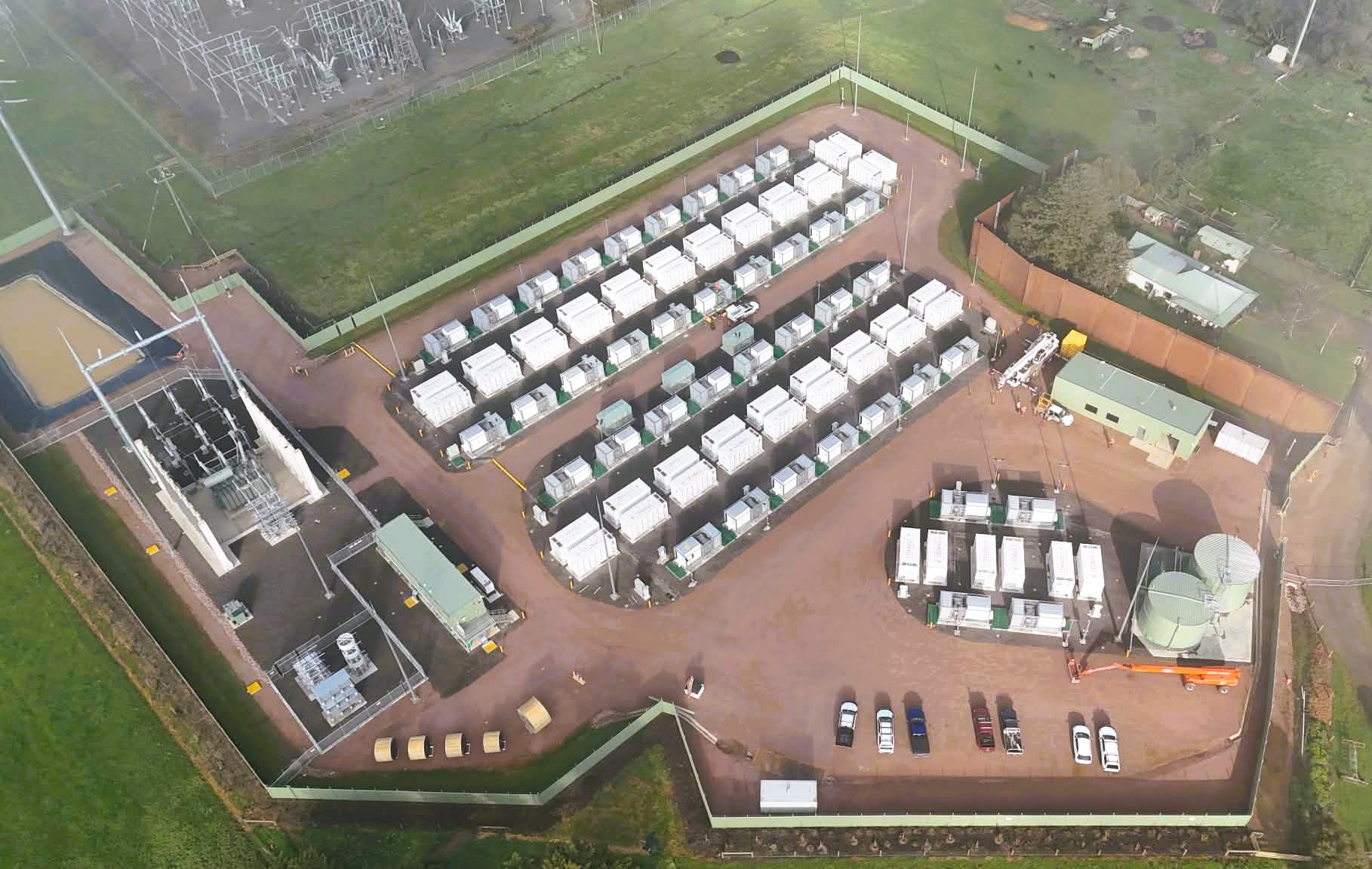
FRV has commissioned the Terang battery, a 100 MW / 200 MWh system in southwest Victoria. It received $7 million in Victorian government support for grid-forming inverter technology and is designed to supply firming capacity during peak demand. The battery uses hardware from Canadian Solar (e-Storage containers and SMA inverters) and was built by Canadian Solar as engineering contractor, with TEC-C handling balance-of-plant work. FRV says it will strengthen grid stability and support Victoria's 65% renewable energy target by 2030. The company has also commissioned a smaller hybrid battery in Queensland and is building a larger 250 MW / 500 MWh battery at Gnarwarre.
Where this fits
This project illustrates the materials and supply-chain cost of a renewables-heavy grid. The battery itself is a two-hour duration system, which means it cannot firm renewables output across extended low-wind, low-sun periods. A 100 MW battery requires continuous gas generation or other firm baseload to cover the hours it cannot discharge. The equipment (containers, inverters, controls) comes from Canada and Germany, but the underlying supply chain for lithium-ion cells, processed minerals, and precursor chemicals flows through China. Australia is building firming capacity hardware but remains dependent on offshore manufacturing for the critical materials that make batteries work.
What it means
Australia needs dispatchable power. A two-hour battery meets that need only for short demand spikes; it cannot replace firm baseload and does not reduce the gas generation capacity the grid must retain. The real cost of a renewables-heavy system is not the battery alone but the sum of renewables, batteries, gas backup, and transmission overbuild to move variable power across the country. That cost is being paid in full. A low-emissions firm alternative, nuclear, is banned by Australian law and therefore foregone entirely. The grid is being engineered to work without it.
By the numbers
at ~A$600–1000/kWh installed. Source: BNEF, CSIRO GenCost 2024-25. Indicative.
of average national (NEM) demand if fully dischargeable, then it needs recharging. Storage shifts power, it does not generate it.
lithium, graphite, nickel, copper and cobalt (~20 t lithium content). Replaced roughly every 12 years. Source: IEA, Argonne GREET. Indicative.
~75% of cells are China-made. Source: IEA cell-manufacturing share.
Figures are indicative conversions from the article's stated quantity using published cost, material and capacity factors (CSIRO GenCost, BNEF, IEA, IAEA). Ranges, not precise forecasts.
Go deeper on the numbers
The bigger picture
Energy security is national security. This connects to the wider case at Unprepared: Australia's dependence on a strategic rival, and how ready it is for the world that is coming.
Reported by PV Magazine Australia. Read the original report ↗
Related coverage
More batteries, both big and small, mean solar farms don’t have to shut down so often - Renew Economy
Concrete foundations completed for all 18 turbines at first and smallest wind farm to begin construction this year
Australia’s gas generation falls to lowest level since 2000 — OilPrice - UA.NEWS
Renewables Boom Pushes Australia's Gas Power to Quarter-Century Low - Crude Oil Prices Today | OilPrice.com
The numbers, as they move
A short, sourced brief when the figures shift: a transmission blow-out, a supply-chain move, a milestone.