Aula Energy plans 1.8 GWh battery to ‘optimise’ 330 MW solar farm
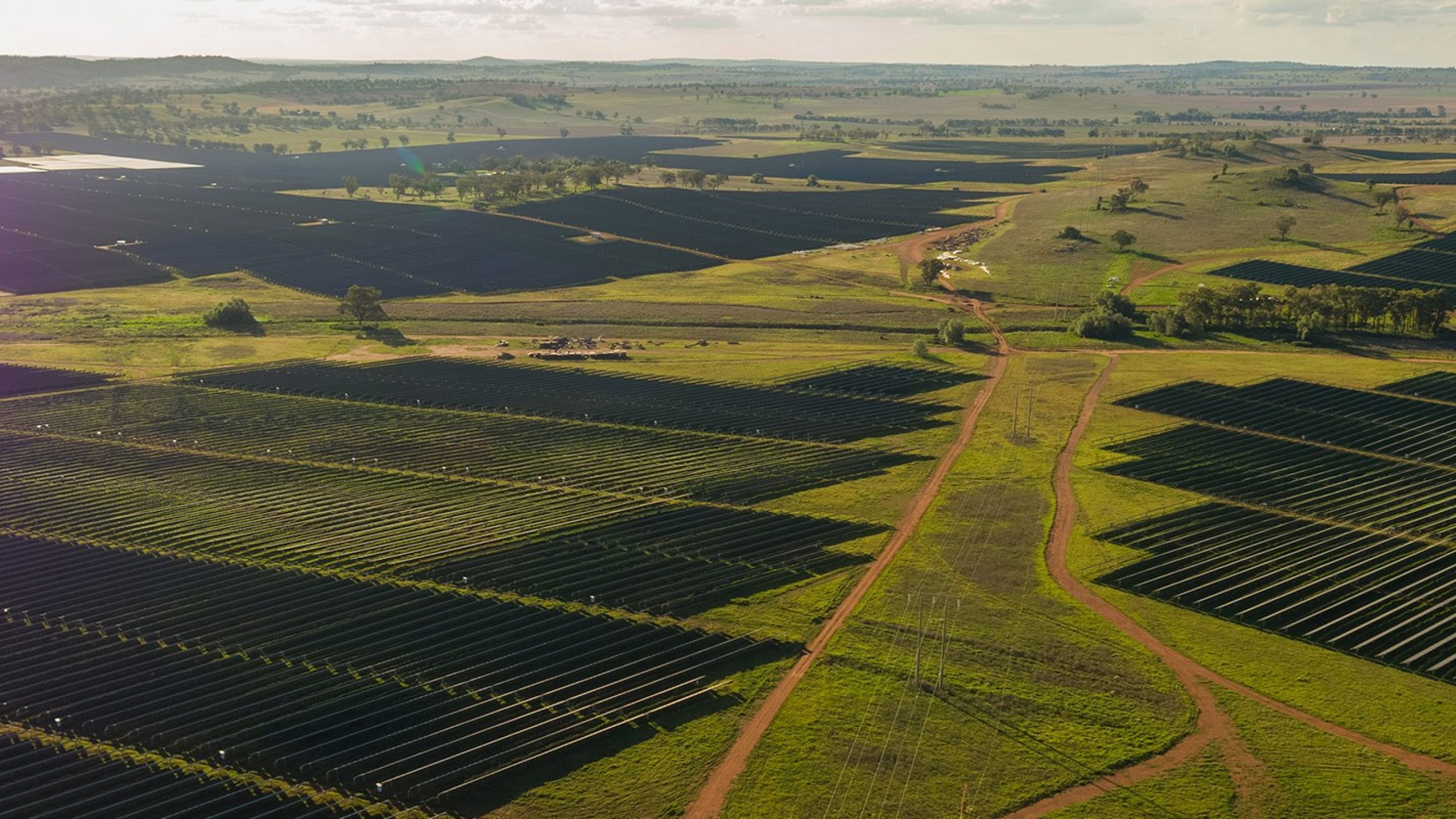
Aula Energy, the renewables arm of Macquarie Asset Management, plans to add a 1.8 GWh battery system to the 330 MW Wellington North Solar Farm in central NSW. The USD 242 million project will pair 365 MW of battery capacity with five hours of storage, sited on cleared land next to the existing solar farm. The company says the system will "overcome the intermittent nature of renewable energy" by storing excess daytime output for release during peak demand, improving what it calls overall efficiency and grid reliability. The solar farm has operated since mid-2024 and generates about 779 GWh annually.
Where this fits
This is battery-as-firming: the cost structure that Energy Realism has been documenting. Aula is spending USD 242 million in capital to add 1.8 GWh of storage. That is the hardware tax on solar's weather dependence. The battery is not optional infrastructure; it is the real price of making a 330 MW solar farm deliver firm power. Once you account for the BESS capex, the supply chain, the cycle losses, and the real grid cost of integrating this much storage, the levelised cost of firm power from solar-plus-battery rises sharply. The alternative, building dispatchable capacity that does not need batteries to firm every megawatt-hour, remains both cheaper and simpler.
What it means
Aula's investment signals that operators of large solar farms now accept battery backing as routine. That normalises a two-technology stack where one technology alone could serve the same role. Storing Australian power in batteries sourced, manufactured, and controlled largely by China, rather than building firm generation at home, narrows our energy sovereignty for the sake of a lower headline cost per MW. A 365 MW nuclear plant would deliver far more annual energy from the same footprint, with no storage, no China supply chain, and lower lifecycle emissions.
By the numbers
at ~A$600–1000/kWh installed. Source: BNEF, CSIRO GenCost 2024-25. Indicative.
of average national (NEM) demand if fully dischargeable, then it needs recharging. Storage shifts power, it does not generate it.
lithium, graphite, nickel, copper and cobalt (~180 t lithium content). Replaced roughly every 12 years. Source: IEA, Argonne GREET. Indicative.
~75% of cells are China-made. Source: IEA cell-manufacturing share.
enough for 1–2 TWh a year of firm, always-on power, generating for ~60 years. Source: CSIRO GenCost 2024-25 (A$8.5–13.2bn/GW), IAEA capacity factor.
Figures are indicative conversions from the article's stated quantity using published cost, material and capacity factors (CSIRO GenCost, BNEF, IEA, IAEA). Ranges, not precise forecasts.
at ~A$1100–1600/kW installed. Source: CSIRO GenCost 2024-25. Indicative.
at a ~24% capacity factor, and only when the sun shines, so it still needs firming.
~80% of modules are China-made. Source: IEA solar supply-chain data.
enough for 0–0 TWh a year of firm, always-on power, generating for ~60 years. Source: CSIRO GenCost 2024-25 (A$8.5–13.2bn/GW), IAEA capacity factor.
Figures are indicative conversions from the article's stated quantity using published cost, material and capacity factors (CSIRO GenCost, BNEF, IEA, IAEA). Ranges, not precise forecasts.
Go deeper on the numbers
The bigger picture
Energy security is national security. This connects to the wider case at Unprepared: Australia's dependence on a strategic rival, and how ready it is for the world that is coming.
Reported by PV Magazine Australia. Read the original report ↗
Related coverage
More batteries, both big and small, mean solar farms don’t have to shut down so often - Renew Economy
Concrete foundations completed for all 18 turbines at first and smallest wind farm to begin construction this year
Australia’s gas generation falls to lowest level since 2000 — OilPrice - UA.NEWS
Renewables Boom Pushes Australia's Gas Power to Quarter-Century Low - Crude Oil Prices Today | OilPrice.com
The numbers, as they move
A short, sourced brief when the figures shift: a transmission blow-out, a supply-chain move, a milestone.