Deniliquin East BESS granted development application
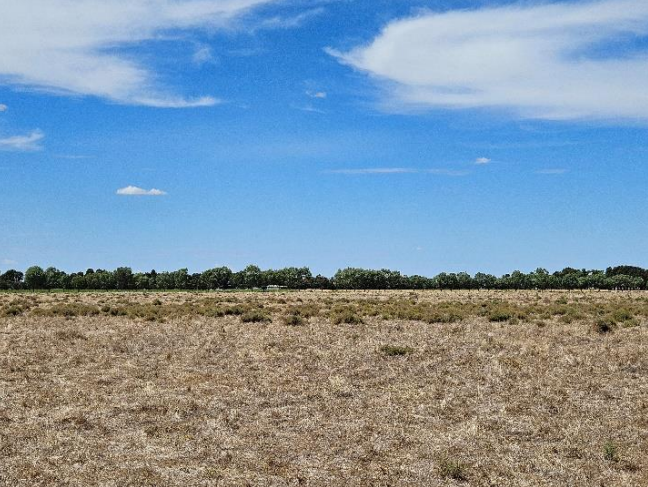
NSW has approved a 100 MW / 200 MWh battery storage project near Deniliquin in the state's south, backed by Spain-headquartered developer Gransolar. The project attracted 71 objections from the local community, chiefly over fire risk and land-use compatibility, but the state found net benefits in construction jobs, operational employment and community funding. The developer committed to Fire Rescue NSW recommendations as part of approval conditions.
Where this fits
Battery storage is essential to a renewable-heavy grid, but it is not firming. A 200 MWh facility stores four hours of output at nameplate. It smooths daily demand swings and captures surplus wind or solar; it cannot replace gas plants when the sun sets for days or wind drops during a cold high-pressure system. This project illustrates the whole-system cost: $118 million for a resource that works only when already charged, sited far from load centres, requiring further transmission build-out. The real firming burden falls to gas. The site footprint is small and the agricultural impact minimal, a genuine point in storage's favour over sprawling solar farms. But the batteries themselves, the control systems, the inverters and the critical minerals inside them flow through China's supply chain, tightening Australia's dependence on a strategic rival for the infrastructure that now underpins grid stability.
What it means
Approving storage projects at scale does not reduce Australia's need for dispatchable capacity; it defers and disguises that need. Every battery built is a reminder that the grid still requires something to charge it. Australia is building a system that is weather-dependent, geographically scattered, vulnerable to supply-chain coercion, and unable to stand alone without either gas or the firm nuclear generation the law forbids. Storage is not the answer to reliability; it is the symptom of the problem.
By the numbers
at ~A$600–1000/kWh installed. Source: BNEF, CSIRO GenCost 2024-25. Indicative.
of average national (NEM) demand if fully dischargeable, then it needs recharging. Storage shifts power, it does not generate it.
lithium, graphite, nickel, copper and cobalt (~20 t lithium content). Replaced roughly every 12 years. Source: IEA, Argonne GREET. Indicative.
~75% of cells are China-made. Source: IEA cell-manufacturing share.
Figures are indicative conversions from the article's stated quantity using published cost, material and capacity factors (CSIRO GenCost, BNEF, IEA, IAEA). Ranges, not precise forecasts.
Go deeper on the numbers
The bigger picture
Energy security is national security. This connects to the wider case at Unprepared: Australia's dependence on a strategic rival, and how ready it is for the world that is coming.
Reported by PV Magazine Australia. Read the original report ↗
Related coverage
More batteries, both big and small, mean solar farms don’t have to shut down so often - Renew Economy
Concrete foundations completed for all 18 turbines at first and smallest wind farm to begin construction this year
Australia’s gas generation falls to lowest level since 2000 — OilPrice - UA.NEWS
Renewables Boom Pushes Australia's Gas Power to Quarter-Century Low - Crude Oil Prices Today | OilPrice.com
The numbers, as they move
A short, sourced brief when the figures shift: a transmission blow-out, a supply-chain move, a milestone.