Indiana considering 6 GW Candu nuclear project
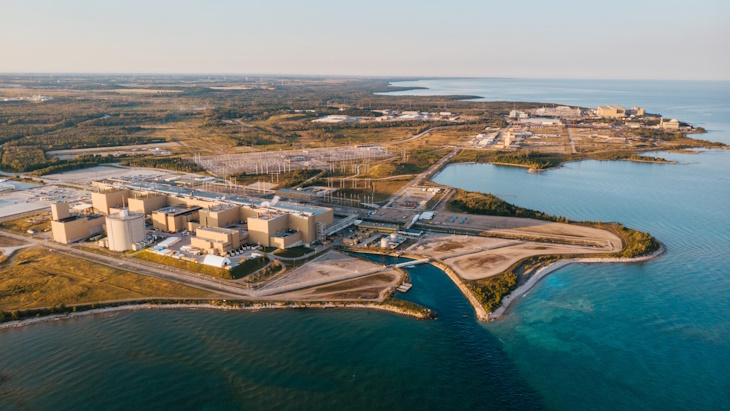
Indiana, Hoosier Energy Rural Electric Cooperative, and AtkinsRéalis Group have signed a memorandum of understanding to explore deployment of up to eight Candu nuclear units totalling 6 GW capacity in the state. The evaluation will consider site selection, financing, regulatory pathways, and potential acceleration through a gas-to-nuclear construction model at retired power stations. The Candu design, a Canadian heavy water reactor using natural uranium fuel, has operated 34 units globally with nearly 1,000 reactor-years of operational history across Canada, Romania, Argentina, South Korea, and China.
Where this fits
This signals a major US state choosing firm, dispatchable nuclear capacity over the renewables-plus-gas path. Indiana is explicitly rejecting the assumption that intermittent solar and wind, plus gas backup, is the only viable decarbonisation route. The decision prioritises long-term cost certainty and grid reliability: Candu reactors run at high capacity factors year-round, eliminating the weather-dependent firming costs and transmission overbuild that a renewables-heavy grid requires. It also preserves domestic manufacturing and engineering jobs rather than outsourcing the supply chain to China.
What it means
Australia faces a strategic contrast. While Indiana explores firm nuclear capacity with proven Canadian technology and domestic engineering depth, Australia remains legally barred from nuclear generation and has committed to a renewables-dominant grid dependent on Chinese-manufactured panels, batteries, and inverters. Indiana's choice underscores that grid reliability and cost control depend on firm power, not on the speed of solar deployment or the headline price per megawatt-hour. Australia's energy security weakens each year the ban holds, as the alternative, gas firming of a weather-dependent system, locks in both fuel exposure and supply-chain dependence on a strategic rival.
By the numbers
at ~A$2000–3200/kW installed. Source: CSIRO GenCost 2024-25. Indicative.
at a ~38% capacity factor, and only when the wind blows, so it still needs firming.
enough for 7–18 TWh a year of firm, always-on power, generating for ~60 years. Source: CSIRO GenCost 2024-25 (A$8.5–13.2bn/GW), IAEA capacity factor.
Figures are indicative conversions from the article's stated quantity using published cost, material and capacity factors (CSIRO GenCost, BNEF, IEA, IAEA). Ranges, not precise forecasts.
Go deeper on the numbers
The bigger picture
Energy security is national security. This connects to the wider case at Unprepared: Australia's dependence on a strategic rival, and how ready it is for the world that is coming.
Reported by World Nuclear News. Read the original report ↗
Related coverage
Floating nuclear power plant 'has boosted air quality'
Doosan Enerbility Signs First Commercial SMR Reactor Manufacturing Deal with NuScale Power - BigGo Finance
Doosan Enerbility wins SMR supply deal from U.S. firm NuScale Power - Yonhap News Agency
Doosan Enerbility wins US SMR build with NuScale Power approval milestone - Chosunbiz
The numbers, as they move
A short, sourced brief when the figures shift: a transmission blow-out, a supply-chain move, a milestone.