Call for greater focus on maintenance as rooftop solar fleet grows
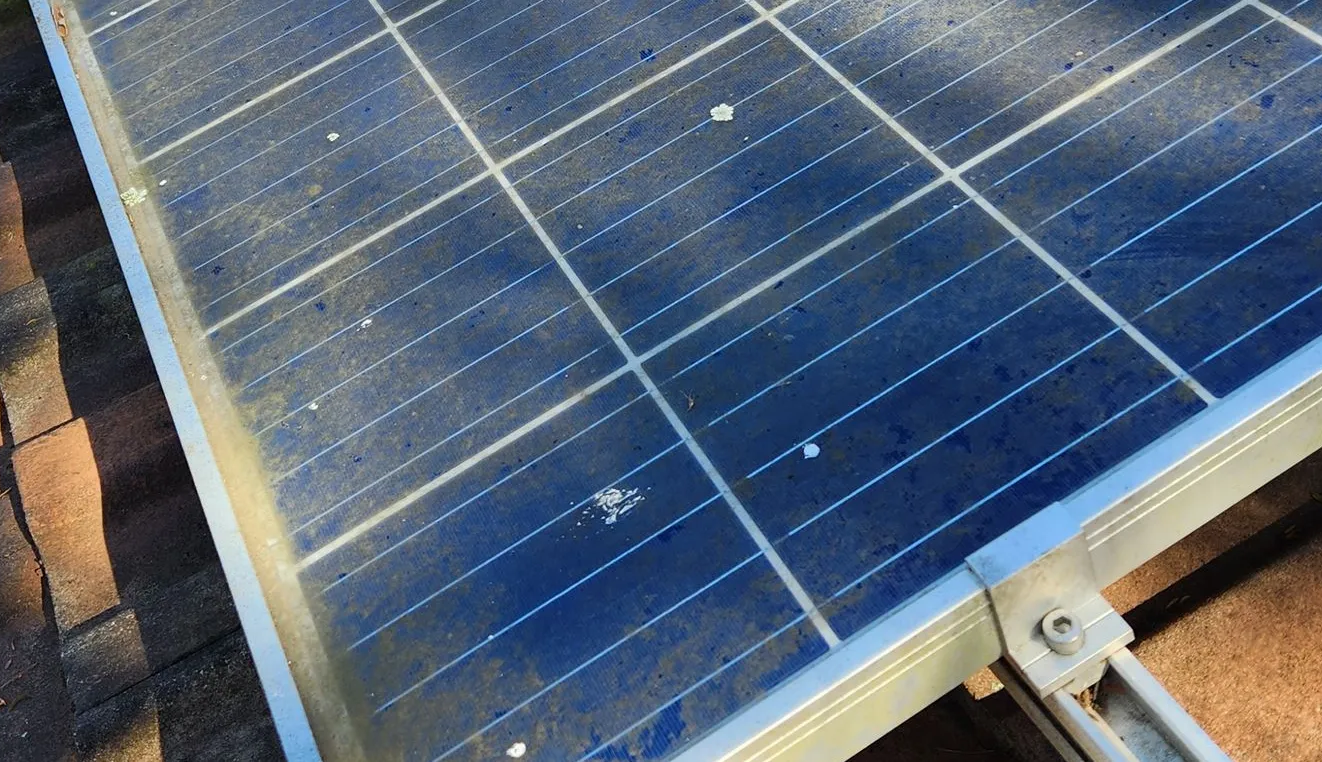
Australia has installed 28 GW of rooftop solar across about 4 million homes and small businesses, or roughly 36% of households. An industry expert warns that inadequate inspection and maintenance are causing premature failure and performance loss in the aging fleet. The first half of 2026 saw 181,000 installations, a 35% increase on the same period in 2025. The concern is that panels designed to operate for 25 years or more are being decommissioned early due to neglected faults, undetected damage, and lack of proactive maintenance.
Where this fits
This is a materials and whole-system cost problem hiding in the installation headline. The rooftop solar rollout counts as capacity deployed, but if a significant share fails or underperforms before design life, the real cost per unit of delivered energy is higher than the per-megawatt-hour price of the panels suggests. More importantly for a weather-dependent grid: failing rooftop solar means less daytime output when it is needed, forcing greater reliance on gas firming. The cost of the transition is not only the hardware and transmission. It includes the operational and maintenance overhead of a distributed, aging fleet that was never designed to be managed as critical infrastructure.
What it means
Australia is building a grid that depends on millions of small, privately owned devices that lack systematic inspection or coordinated upkeep. A large share of the rooftop fleet will soon be a decade old, and the industry has no mature framework for detecting and fixing faults at scale before they cascade into grid stress. This is not a problem unique to solar, but it is a problem solar creates: a firm generator like a nuclear plant has a single operator, scheduled maintenance windows, and spare parts budgeted from the start. A distributed solar fleet does not. Reliability, in a renewables-heavy grid, becomes a data and logistics problem as much as a physics one.
By the numbers
at ~A$1100–1600/kW installed. Source: CSIRO GenCost 2024-25. Indicative.
at a ~24% capacity factor, and only when the sun shines, so it still needs firming.
~80% of modules are China-made. Source: IEA solar supply-chain data.
enough for 18–42 TWh a year of firm, always-on power, generating for ~60 years. Source: CSIRO GenCost 2024-25 (A$8.5–13.2bn/GW), IAEA capacity factor.
Figures are indicative conversions from the article's stated quantity using published cost, material and capacity factors (CSIRO GenCost, BNEF, IEA, IAEA). Ranges, not precise forecasts.
Go deeper on the numbers
The bigger picture
Energy security is national security. This connects to the wider case at Unprepared: Australia's dependence on a strategic rival, and how ready it is for the world that is coming.
Reported by PV Magazine Australia. Read the original report ↗
Related coverage
More batteries, both big and small, mean solar farms don’t have to shut down so often - Renew Economy
Concrete foundations completed for all 18 turbines at first and smallest wind farm to begin construction this year
Australia’s gas generation falls to lowest level since 2000 — OilPrice - UA.NEWS
Renewables Boom Pushes Australia's Gas Power to Quarter-Century Low - Crude Oil Prices Today | OilPrice.com
The numbers, as they move
A short, sourced brief when the figures shift: a transmission blow-out, a supply-chain move, a milestone.