NSW switches on one of world’s most powerful batteries
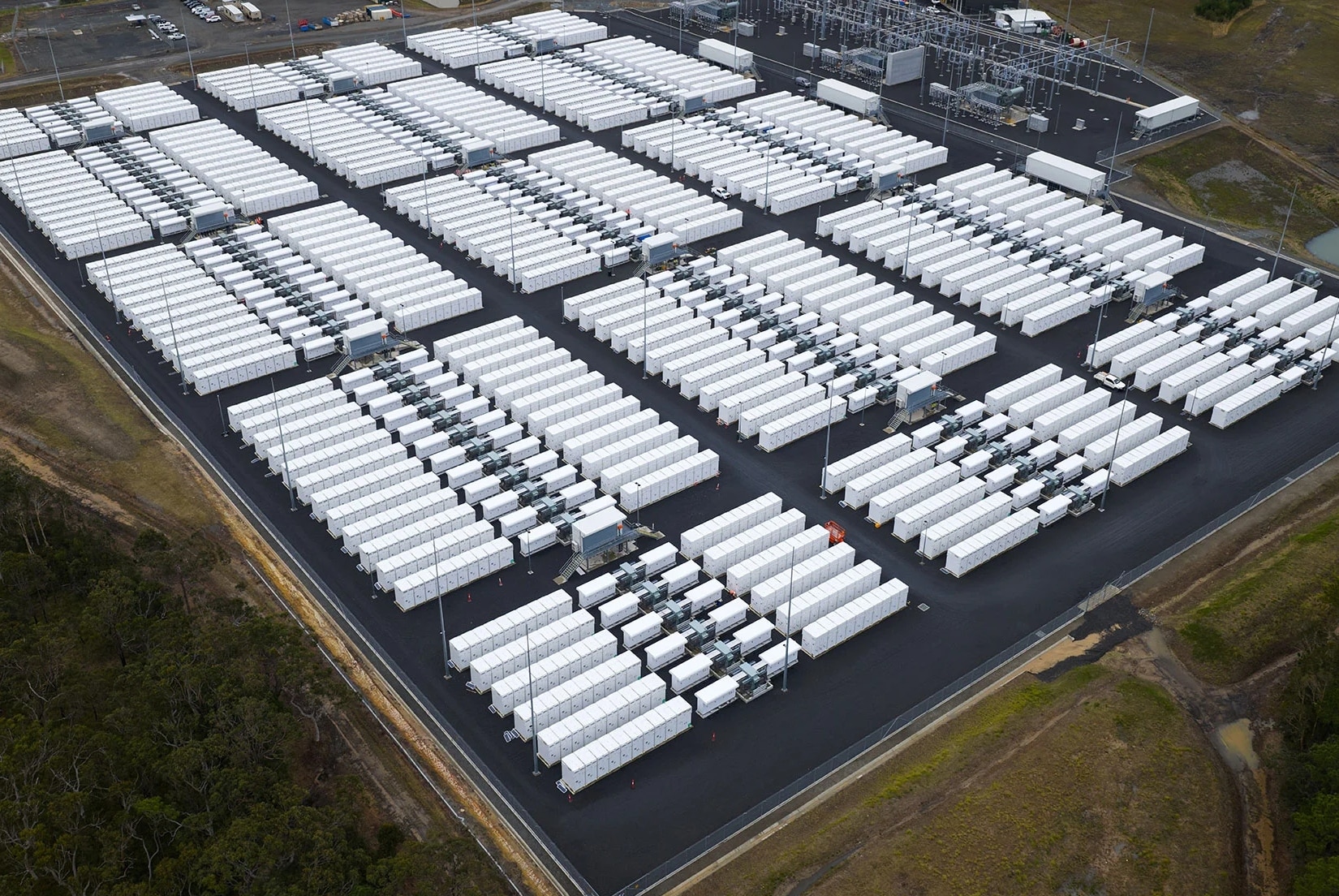
The Waratah Super Battery in NSW is now operational, adding 850MW of dispatchable power and 1680MWh of storage capacity to the grid.
Where this fits
Battery storage is a firming layer, not a generation source. It smooths hourly and daily weather mismatches but cannot bridge the multi-day, multi-week calm that forces reliance on gas. The Waratah project underscores a structural cost: a renewables-heavy grid requires not just panels and turbines, but equivalent or greater storage and transmission capacity to make that weather-dependent output dispatchable. That layered cost, generation plus firming plus interconnection, is the real system price. A firm, energy-dense alternative like nuclear requires neither. Australia has banned it by law.
What it means
Each battery installation is a data point in the answer to a simple question: how much does it cost to replace dispatchable fossil fuel with dispatchable renewables-plus-firming? Batteries are made from lithium, cobalt, nickel, manganese and processed minerals. Most processing capacity for those minerals sits in China. As Australia builds more storage, it deepens dependence on Chinese supply chains for grid resilience. A single weather event or supply disruption that delays battery imports directly threatens grid stability. This is not merely a cost curve issue. It is a preparedness issue. The battery is working as intended. The system it props up, weather-dependent generation backed by Chinese minerals and supplemented by gas, is the constraint, not the solution.
By the numbers
at ~A$600–1000/kWh installed. Source: BNEF, CSIRO GenCost 2024-25. Indicative.
of average national (NEM) demand if fully dischargeable, then it needs recharging. Storage shifts power, it does not generate it.
lithium, graphite, nickel, copper and cobalt (~168 t lithium content). Replaced roughly every 12 years. Source: IEA, Argonne GREET. Indicative.
~75% of cells are China-made. Source: IEA cell-manufacturing share.
enough for 1–2 TWh a year of firm, always-on power, generating for ~60 years. Source: CSIRO GenCost 2024-25 (A$8.5–13.2bn/GW), IAEA capacity factor.
Figures are indicative conversions from the article's stated quantity using published cost, material and capacity factors (CSIRO GenCost, BNEF, IEA, IAEA). Ranges, not precise forecasts.
Go deeper on the numbers
The bigger picture
Energy security is national security. This connects to the wider case at Unprepared: Australia's dependence on a strategic rival, and how ready it is for the world that is coming.
Reported by Utility Magazine. Read the original report ↗
Related coverage
More batteries, both big and small, mean solar farms don’t have to shut down so often - Renew Economy
Concrete foundations completed for all 18 turbines at first and smallest wind farm to begin construction this year
Australia’s gas generation falls to lowest level since 2000 — OilPrice - UA.NEWS
Renewables Boom Pushes Australia's Gas Power to Quarter-Century Low - Crude Oil Prices Today | OilPrice.com
The numbers, as they move
A short, sourced brief when the figures shift: a transmission blow-out, a supply-chain move, a milestone.