“Big savings:” Fortescue signs first 3rd party customer for its giant Pilbara “green grid”
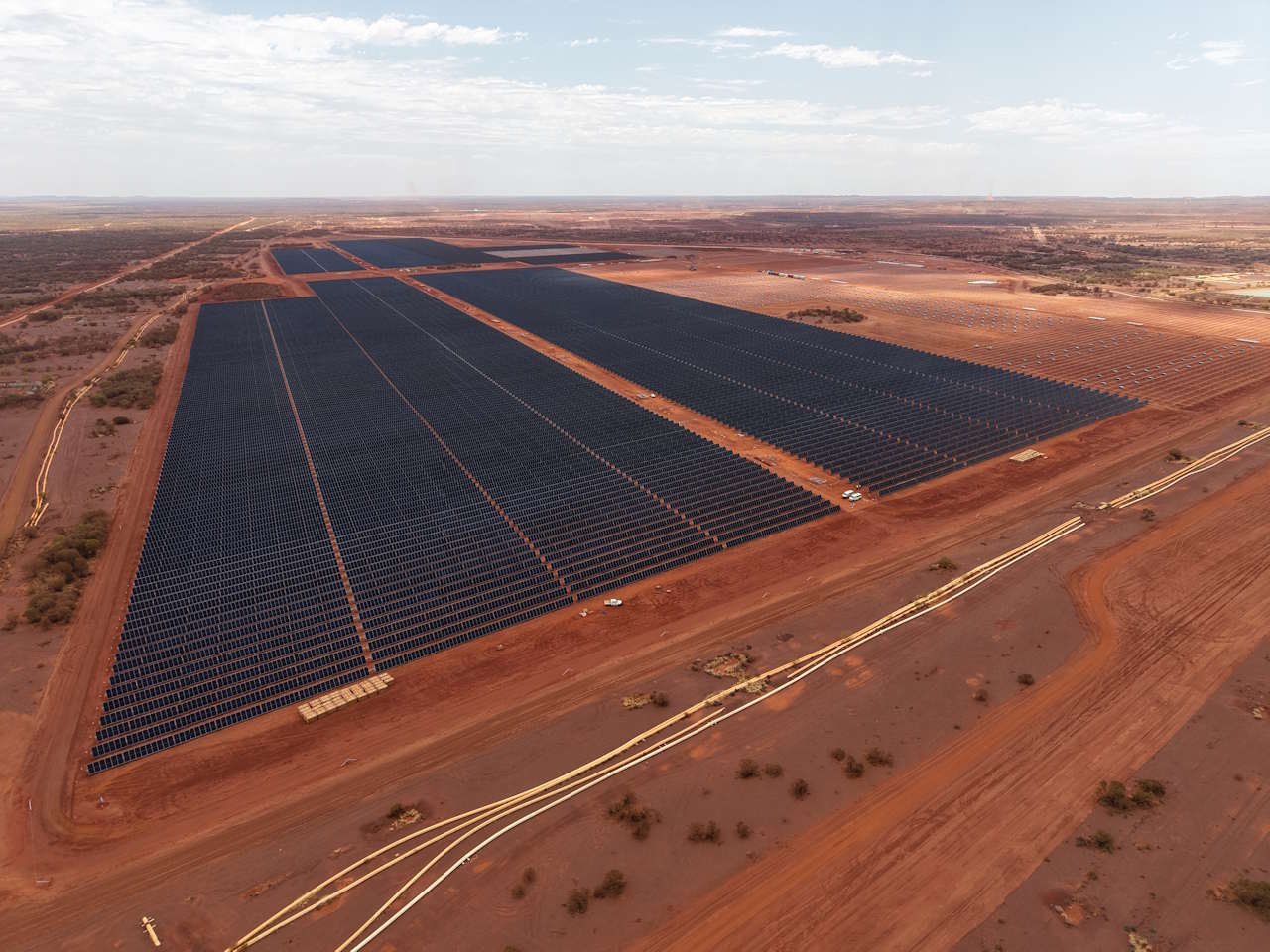
Fortescue has signed a lithium mine operator as the first third-party customer for its proposed "green grid" in the Pilbara, a large-scale renewable energy project designed to supply industrial users in Western Australia. The move signals commercial interest in co-locating renewable generation with energy-intensive mining operations.
Where this fits
This is a cost and sovereignty story. Fortescue is building renewable capacity to reduce energy bills for heavy industry, which is honest: solar and wind are cheap per megawatt-hour, and a mine with predictable daytime load can capture that value. But the Pilbara's geography and Australia's latitude mean weather-dependent supply. A "green grid" serving mining cannot avoid the whole-system cost of firming. That firming, whether gas, battery, or hypothetical storage, is not free, and batteries are manufactured on a supply chain dominated by China. The project also locks in a model where Australia's critical minerals are processed using infrastructure tied to weather, not the firm, dense, low-material nuclear alternative that remains legally barred.
What it means
If Fortescue's grid proves reliable and cost-effective, it will be because the mine's load is flexible enough to absorb weather variation, or because firming costs are absorbed as part of industrial competitiveness. Either way, the Pilbara project is a test of renewables' real whole-system cost in a hard industrial setting, not a consumer grid. For national energy security, the signal is that Australia continues to build processing capacity around renewable intermittency and Chinese battery supply chains, rather than pursuing the firm domestic alternatives available. This pattern, cheap renewables, expensive firming, China's supply chain, no nuclear option, repeats across every major grid project.
Go deeper on the numbers
The bigger picture
Energy security is national security. This connects to the wider case at Unprepared: Australia's dependence on a strategic rival, and how ready it is for the world that is coming.

Xi Jinping and the Purge That Built an Army
The PLA that Xi Jinping inherited in 2012 was modernising, and the one he commands in 2026 is transformed. Part IV of the Unprepared series.
Reported by RenewEconomy. Read the original report ↗
Related coverage
Energy Minister Chris Bowen confirms EV and battery subsidies in firing line - AFR
Data centre giant lines up solar, wind and battery deal to power its plans for former smelter site - Renew Economy
Energy bills set to unleash hell on battling families - The Australian
Rio Tinto (ASX:RIO) Share Price: Bell Bay, Tomago and Boyne Power Deals Reset Australian Aluminium - Kalkine
The numbers, as they move
A short, sourced brief when the figures shift: a transmission blow-out, a supply-chain move, a milestone.