Xi Jinping and the Purge That Built an Army
The PLA that Xi Jinping inherited in 2012 was modernising, and the one he commands in 2026 is transformed. Part IV of the Unprepared series.

The transformation described in the previous part of this series was real but incomplete. By the time Xi Jinping assumed power as both CCP General Secretary and Central Military Commission Chairman on November 15, 2012, the PLA was qualitatively better than it had been in 1991 but still plagued by institutional rot that no amount of Russian hardware or stolen blueprints could fix. The officer corps was riddled with corruption so endemic that promotions were literally bought and sold. The command structure was a relic of the 1950s, organised around seven military regions designed to fight a Soviet land invasion that was never going to come. Xi's contribution to the PLA's transformation was not primarily technological. It was organisational, political, and ruthless.
The anti-corruption purge came first, and its scale was without precedent in modern Chinese military history. Xi's primary targets were General Xu Caihou and General Guo Boxiong, both former Vice Chairmen of the Central Military Commission and both loyalists of former leader Jiang Zemin. Xu had run what amounted to a cash-for-ranks syndicate in which officers paid enormous bribes for promotions. Guo Boxiong was sentenced to life imprisonment on July 25, 2016. In total, more than eighty senior officers were brought down between 2012 and 2016.
The purge served two purposes simultaneously. It cleaned out a command structure in which professional competence had been subordinated to patronage networks and personal enrichment, and it consolidated Xi's personal control over the military to a degree not seen since Mao. Every officer who rose to replace the Jiang Zemin loyalists owed his position to Xi personally. The PLA that emerged was both cleaner and more obedient, which was precisely the combination Xi needed for what came next.
The structural reforms implemented from February 1, 2016 were the most sweeping military reorganisation since the founding of the People's Republic. The seven military regions, which had functioned as semi-autonomous fiefdoms, were replaced by five theatre commands. The principle was that the CMC exercises overall leadership, theatre commands focus on fighting, services focus on building. It was a deliberate mirror of the American military, and it reflected a conclusion that Chinese strategists had drawn from two decades of studying American operations since Desert Storm.
The other policy shift was the elevation of civil-military fusion to a formal national strategy in 2014. Under it, the boundary between China's civilian economy and its defence industrial base was deliberately erased. Civilian factories were authorised and incentivised to produce military components. The practical consequence was that China's military production capacity was no longer limited to the output of dedicated defence firms. It was backed by the entire manufacturing economy of the world's largest industrial power.
The effects began to show within years rather than decades. Between 2016 and 2024, the PLA Navy grew from approximately 271 ships to over 370, surpassing the United States Navy in total hull count. The nuclear arsenal doubled from approximately 300 warheads in 2020 to 600 by mid-2024.
The PLA that Xi inherited in 2012 was modernising. The PLA he commands in 2026 is transformed.
The arsenal
In 1996, when the United States sailed two carrier groups into the Taiwan Strait, the PLA Navy was a coastal force of aging frigates, patrol boats, and Romeo-class submarines that had been obsolete for decades. Thirty years later, it is the largest navy on earth by hull count, with over 370 warships and submarines in service, and the US Office of Naval Intelligence projects 435 by 2030 and 475 by 2035. The fleet includes three aircraft carriers and a submarine force of approximately sixty boats.

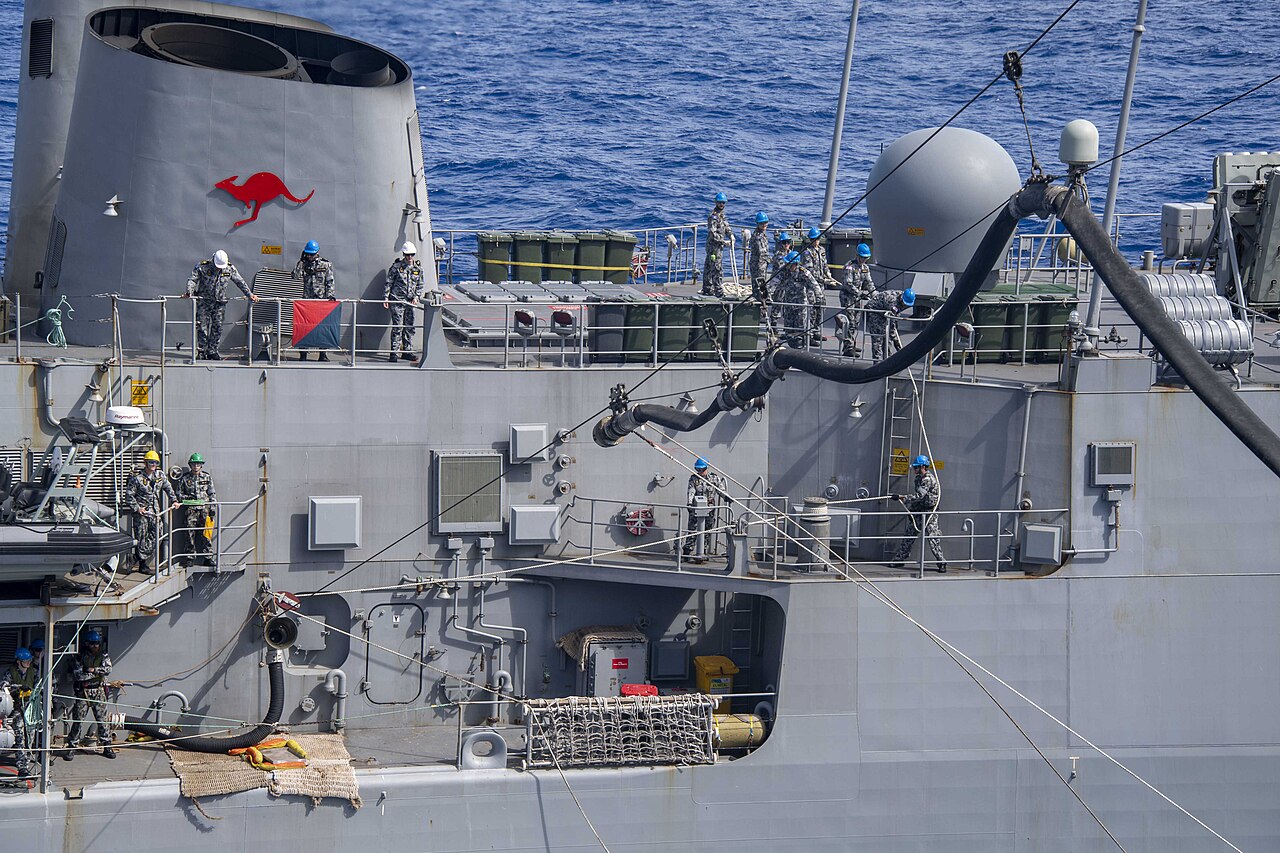
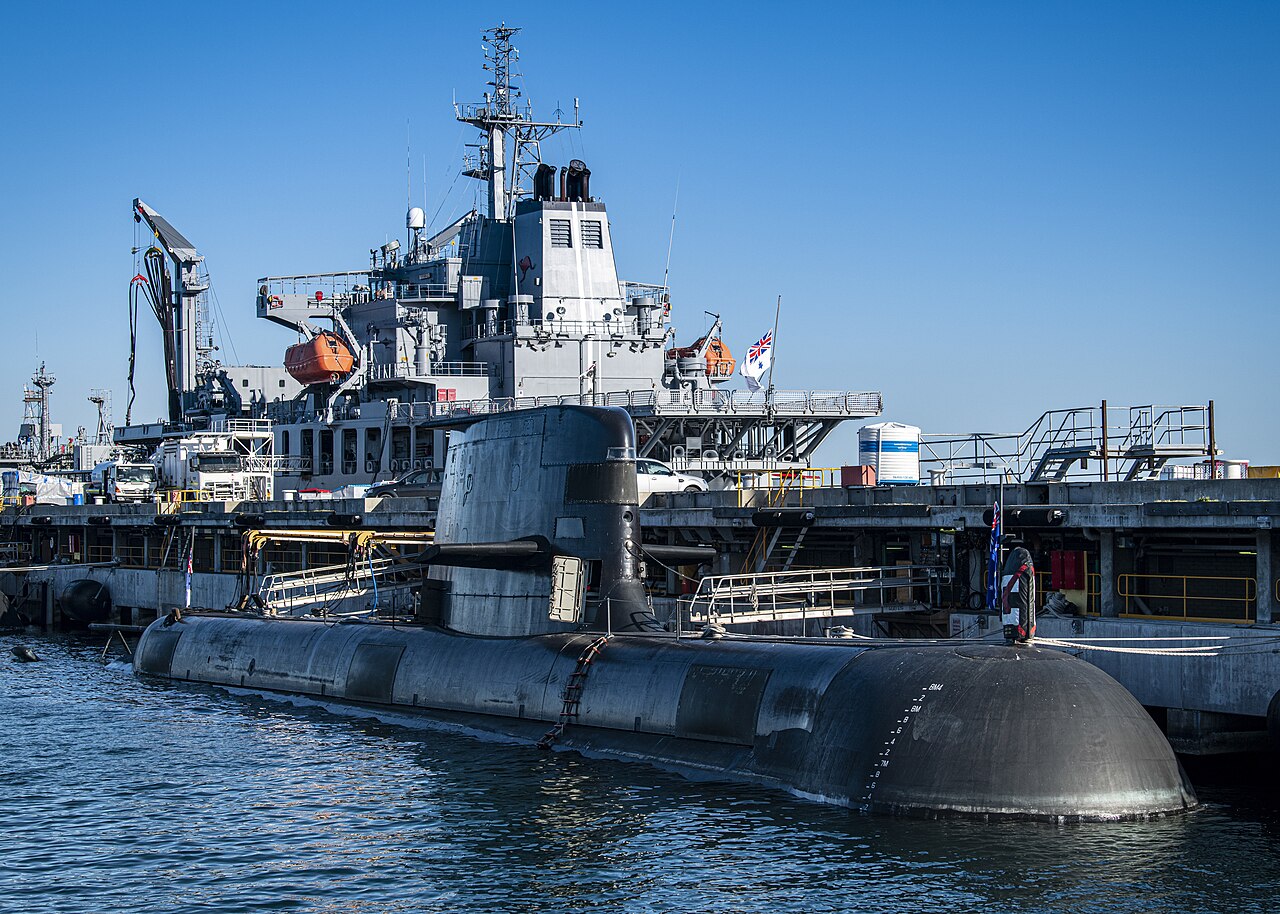
The Royal Australian Navy, by comparison, fields six ageing Collins-class submarines of which only one was fully operational in late 2024, three Hobart-class destroyers, and eight Anzac-class frigates. It has no aircraft carriers, no nuclear submarines, and no prospect of receiving its first Virginia-class boat under AUKUS until approximately 2032. The numerical ratio between the two navies is not a gap that can be closed by clever tactics, alliance commitments, or incremental budget increases.
The missile forces are designed to negate the single most important military advantage the United States has held in the western Pacific since 1945: the aircraft carrier. The DF-21D, with a range exceeding 1,500 kilometres and a manoeuvrable re-entry vehicle, was the world's first weapon specifically designed to destroy carriers at long range. In hypersonic weapons, the Pentagon has concluded that China possesses the world's leading arsenal.
The nuclear expansion behind these delivery systems is the most rapid in history. By mid-2024, the Pentagon estimated 600 warheads. Projections point to over 1,000 by 2030 and 1,500 by 2035. Australia possesses zero nuclear weapons and relies entirely on the credibility of American extended deterrence, a credibility that erodes with every warhead China adds and every silo it fills.
Every one of these capabilities was developed within the professional lifetime of a single generation of military planners. An officer who watched Desert Storm as a young lieutenant in 1991 and concluded that his country could not fight a modern war would now, thirty-five years later, command forces equipped with stealth fighters, hypersonic missiles, electromagnetic-catapult aircraft carriers, a rapidly expanding nuclear arsenal, and the industrial base to sustain and replace all of it at a pace no Western nation can match. The PLA has not fought a war since 1979 and its capacity for joint operations under fire remains untested. But the trajectory is unmistakable.
Next in the series: The Factory Floor.